PESHAWAR/ISLAMABAD: Khyber Pakhtunkhwa (KP) Chief Minister Muhammad Sohail Afridi on Monday accused the federal and Punjab governments of pursuing discriminatory and unconstitutional policies against Khyber Pakhtunkhwa.
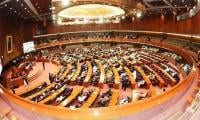
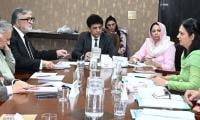
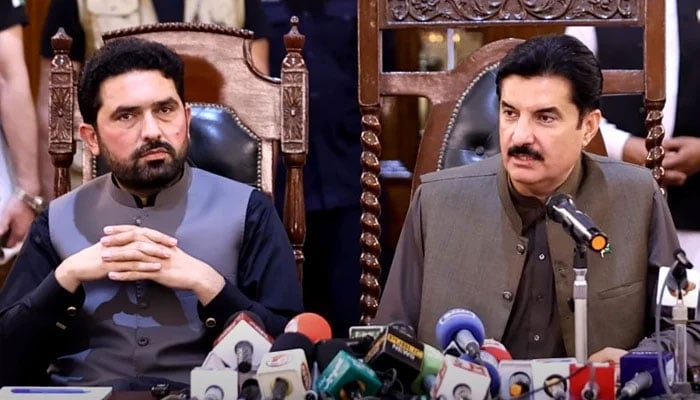
He said this while addressing a joint press conference alongside Governor Faisal Karim Kundi and Speaker of the Provincial Assembly Babar Saleem Swati after a consultative meeting at the KP Assembly.
The meeting focused on the suspension of wheat supply and the curtailment of gas supply to the Compressed Natural Gas (CNG) sector.
The chief minister stated that under Article 151 of the Constitution, no province is authorized to impose restrictions on the movement or trade of food items and essential commodities across provincial boundaries.
He lamented that despite clear constitutional provisions, the Punjab government continues to restrict the supply of wheat and flour to KP, adversely affecting millions of people in the province.
The chief minister said the KP government has repeatedly written to the Punjab government and raised the matter with the federal government; however, no meaningful action has been taken to reverse the restrictions.
He added that despite contributing significantly to national electricity generation, natural gas production, and other resources, the people of KP are being forced to purchase flour at inflated prices due to artificial supply disruptions.
The chief minister said such treatment reflects a persistent pattern of discrimination against the province and undermines national cohesion and the spirit of federation.
On the issue of gas supply to the CNG sector, the chief minister said KP currently produces surplus natural gas compared to its own consumption.
Despite this surplus, he said, the province is not being provided gas in accordance with its constitutional entitlement.
He termed the continued suspension of gas supply to CNG stations a violation of Articles 151 and 158 of the Constitution, calling it unconstitutional, unlawful, and economically damaging.
Speaking on development matters, Afridi noted that the KP government is fulfilling its financial obligations for the Chashma Right Bank Canal Project, while the federal government has failed to honour its commitments.
He said the provincial government is even extending bridge financing for federally sponsored projects despite severe fiscal constraints, yet federal support remains insufficient.
Referring to urban infrastructure, he said a state-of-the-art bus terminal has been constructed in Peshawar, but the federal government has yet to provide the required access linkages for it to become fully operational.
He also revealed that out of Rs 37 billion allocated under the Accelerated Implementation Programme, the federal government deducted Rs 12 billion, adversely affecting development initiatives in the merged districts.
The chief minister said the KP government, in consultation with opposition parties, has developed a joint strategy to defend the province’s financial and constitutional rights.
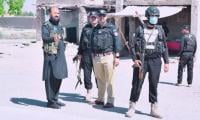
On law and order, the chief minister said the deteriorating security situation in KP is a direct result of failed federal policies.
He added that the provincial government had previously proposed practical measures to counter terrorism, but those recommendations were not implemented.
Sohail Afridi maintained that if the proposed strategy is implemented in letter and spirit, sustainable improvements in security could be achieved within 100 days.
He stressed that durable peace requires a coherent, unified, and long-term national policy framework.
Earlier, the KP Assembly meeting reviewed the implications of Punjab’s restrictions on wheat and flour supply, as well as curtailment of gas supply and closure of CNG stations.
The meeting was attended by the leader of the opposition, parliamentary leaders of various political parties, MPAs, the chief secretary, senior officials of SNGPL, and representatives of flour mills and CNG associations.
Participants expressed concern over disruptions in interprovincial supply chains and the continued denial of gas to the CNG sector.
Officials briefed the meeting that KP requires approximately 5.3 million metric tons of wheat annually, while provincial production stands at 1.7 million metric tons, making it heavily dependent on supplies from Punjab and Sindh.
They added that the province currently has storage capacity of around 414,000 metric tons, with nearly 160,000 metric tons in stock.
The meeting was informed that restrictions on wheat and flour transportation from Punjab have disrupted supply chains and contributed to rising flour prices in KP.
On gas supply, participants were told that KP produces surplus natural gas compared to its consumption, while only 40–45 MMCFD is required to keep the CNG sector operational.
Despite this limited requirement, gas supply to CNG stations remains suspended, adversely impacting transport, businesses, and economic activity.
Participants reaffirmed their resolve to protect KP’s constitutional rights and pursue the matter through all constitutional, legal, political, and institutional forums.
Meanwhile, Federal Minister for Information Attaullah Tarar called out the Khyber Pakhtunkhwa government for its bloated cabinet expansion, saying the new additions would not bring about any difference to the province’’s management.
The minister, in a post on X, said governance in the province was at its lowest ebb and virtually non-existent.
He said that the province was plagued by rampant corruption and ‘’royal’’ expenditures while public funds were diverted towards political interests.
He further questioned the criteria for the expanded cabinet, asserting that the appointments were based on incompetence rather than merit.
Tarar expressed serious doubt that increasing the number of ministers and advisers could fix a system that had failed to deliver for over twelve years, noting that the province s affairs have never been in such worse state.