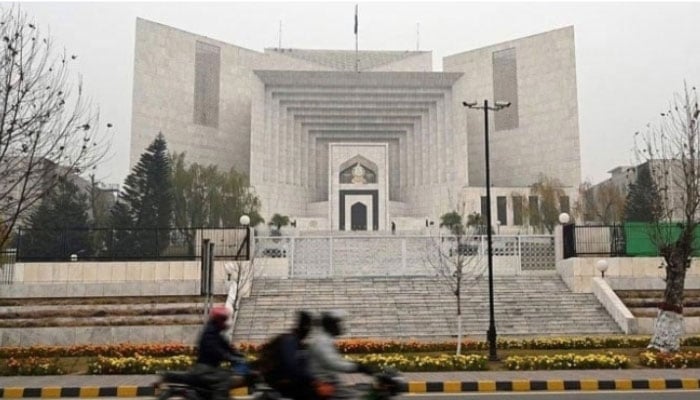
ISLAMABAD: The Supreme Court on Tuesday observed that politicians in general, and parliamentarians in particular, were unfortunately so vulnerable that they could even be accused of capital charges with mala fide intention by a public servant.
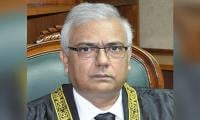
A three-member bench of the apex court, headed by Justice Jamal Khan Mandokhail, issued a detailed judgment on an appeal filed by Ahmed Saeed against a judgment passed by the Sindh High Court (SHC) on May 20, 2019. Justice Shahid Waheed and Justice Irfan Saadat Khan were the other bench members. On March 10, 2026, the Supreme Court allowed the appeal, set aside the Sindh High Court judgment dated May 20, 2019, and the Anti-Terrorism Court conviction dated June 13, 2017, and acquitted the appellant, ordering his release if not required in any other case.
The case stemmed from FIR No. 330/2009 registered in Karachi over the murder of Syed Ibrar Hussain, which remained untraced for years. The appellant later allegedly confessed in Rangers custody in 2016, with a Section 164 CrPC statement recorded, leading to his conviction by the Anti-Terrorism Court and dismissal of his appeal by the High Court before the apex court ultimately overturned both rulings.
In its eight-page judgment authored by Justice Jamal Khan Mandokhail, the court noted irregularities in the recording of the Section 164 statement, observing that the magistrate failed to properly handle allegations involving named individuals. The court held that if such serious allegations were being recorded, the magistrate was required under Section 164(2) CrPC to ensure due process by allowing those named an opportunity to be heard, which was not done. It questioned why the magistrate had incorporated such portions of the statement, noting that this damaged the reputation of individuals without proper scrutiny.
“During the arguments, we have been informed that they are seasoned politicians and presently some of them hold government portfolios,” the court noted, adding that it was unfortunate that politicians in general, and parliamentarians in particular, were so vulnerable that they could be accused of even capital charges, without any justification, with mala fide intention, by a public servant. The court held that parliamentarians represent the people of their respective constituencies. Therefore, the magistrate was supposed to be vigilant and remain within the parameters of Section 164 CrPC, but he ignored this important aspect and continued to incorporate their names in the statement. “It is a settled principle of law that a statement recorded under Section 164 CrPC has to be accepted or rejected as a whole,” the judgment said, adding that courts cannot pick and choose by accepting only the parts that implicate the accused.
Surprisingly, the court noted that both the trial court and the high court, without considering established criminal jurisprudence, relied upon the statement in its entirety. In practice, this meant the lower courts accepted the portion of the appellant’s statement that incorporated the names of the above-mentioned persons with their specific roles, the court ruled. It questioned why the magistrate had incorporated such portions of the statement, noting that this damaged the reputation of individuals without proper scrutiny “This act of both courts violated the fundamental rights of those persons guaranteed by Article 10A of the Constitution,” the judgment said, adding that it was necessary to do so because such a statement could have been misused against them in the future. Since such allegations had no corroboration, they cannot be accepted as true and correct, yet both courts failed to address this aspect of the statement.
Thus, in view of the above, the court concluded that the prosecution failed to prove its case against the appellant beyond a reasonable doubt, and both lower courts came to a wrong conclusion. Their judgments are therefore not sustainable. These are the reasons for our short order dated March 10, 2026, which is reproduced below:
“For the reasons to be recorded later, this appeal is allowed. The judgment dated May 20, 2019, passed by the High Court, as well as the judgment dated June 13, 2017, passed by the learned Judge, Anti-Terrorism Court No. IX, Karachi, are set aside. The appellant is acquitted of the charge. He shall be released from jail forthwith if not required to be detained in connection with any other case.”