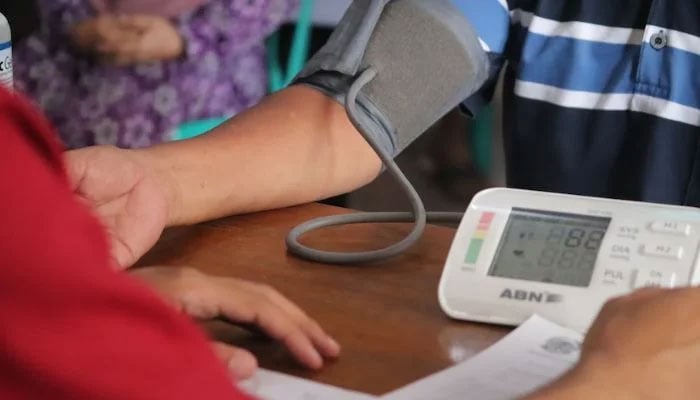
The image shows a patient getting their blood pressure checked.— Unsplash/File
High blood pressure is a silent but deadly public health issue. On the occasion of World Hypertension Day, Sunday, 17 May 2026, whose theme is “Let Us Work Together to Control High Blood Pressure”, we remind all citizens to get their blood pressure checked properly and keep it under control so they may live long and healthy lives. Timely diagnosis and careful monitoring of hypertension are essential.
Objectives of World Hypertension Day
Encourage the public to have their blood pressure checked regularly at least once a year.
Motivate people suffering from hypertension worldwide to seek regular checkups and proper treatment from healthcare professionals.
Encourage people, especially youth and children, to improve their physical health, maintain healthy body weight, cholesterol levels, and normal blood pressure through a healthy lifestyle, balanced diet, and regular exercise.
Blood Pressure Levels You Should Know
Normal: Less than 120/80
Pre-Hypertension: 120/80 to 139/89
Hypertension Stage 1: 140/90 to 159/99
Hypertension Stage 2: 160/100 or higher
Hypertensive Crisis: More than 180/110
People should also be encouraged to avoid harmful habits such as alcohol consumption, inactivity, fatty foods, fried and spicy meals, smoking, obesity, and excessive weight gain.
Hypertension or high blood pressure is a condition in which the force of blood flowing through the arteries remains consistently high. It is often called the “silent killer” because it may not produce symptoms and can remain undiagnosed and untreated for years.
How to Observe World Hypertension Day
Get your blood pressure checked.
Exercise regularly and adopt healthy eating habits.
Encourage neighbors, relatives, and friends to seek treatment for high blood pressure.
Eat simple food and live a simple life.
Keep a blood pressure monitoring device at home and learn how to use it properly.
Avoid smoking and fatty foods.
Diabetic patients should keep their blood sugar fully controlled.
Control stress and anger.
Get cholesterol levels checked and use medicines as advised by doctors if cholesterol is high.
Pakistan Hypertension League
The World Hypertension Day initiative was launched under the leadership of the World Hypertension League (WHL). Continuing this mission, the Pakistan Hypertension League was established in 1998 under the leadership of Professor Dr. Azhar Farooqui, former Executive Director of NICVD, to develop hypertension guidelines and create awareness among the Pakistani public about high blood pressure.
Global Statistics on Hypertension
Approximately 1.28 billion adults aged 30–79 worldwide suffer from hypertension, with most living in low- and middle-income countries.
About 46% of adults with hypertension are unaware of their condition.
Less than half (42%) of adults with hypertension are diagnosed and treated.
Only around 1 in 5 adults (21%) with hypertension have it under control.
Hypertension is a major cause of premature death globally.
One of the global targets for non-communicable diseases is to reduce the prevalence of hypertension by 33% between 2010 and 2030.
Hypertension Statistics in Pakistan
According to a survey by the Pakistan Hypertension League:
Approximately 18% of adults aged 15 years and above in Pakistan suffer from high blood pressure.
The prevalence is 21.6% in urban areas and 16.2% in rural areas.
Nearly 70% of affected individuals are unaware of their disease.
Blood pressure control rates are only around 3%.
The prevalence of hypertension increases with age. Studies show that more than 33% of adults over the age of 45 suffer from hypertension.
Untreated hypertension can lead to severe complications such as stroke, heart attack, heart failure, kidney damage, and other serious health problems.
Symptoms of High Blood Pressure
Established risk factors include unhealthy diet (high salt and low fruits/vegetables), physical inactivity, tobacco and alcohol use, obesity, diabetes, high cholesterol, and family history.
Emerging risk factors include pollution (air, water, noise, and light), urbanization, and reduction of green spaces. Most people with hypertension do not experience symptoms. However, extremely high blood pressure may cause headache, blurred vision, chest pain, and other serious symptoms.
The best way to know whether you have hypertension is to check your blood pressure regularly. Untreated hypertension can lead to kidney disease, heart disease, and stroke.
Severe symptoms of very high blood pressure (usually 180/120 or higher) include severe headache, chest pain, dizziness, difficulty breathing, nausea, vomiting, blurred vision, anxiety, confusion, ringing in the ears, nosebleeds, irregular heartbeat, and weakness or numbness in limbs. If you experience these symptoms along with high blood pressure, seek immediate medical attention.
Diagnosis, Screening, and Prevention
Since primary hypertension often has no symptoms, everyone should have their blood pressure checked during routine medical examinations. Repeated blood pressure readings in a clinical setting are considered the best method for diagnosis. Doctors should:
Assess cardiovascular disease (CVD) risks related to blood pressure.
Ensure accurate blood pressure measurement and recording.
Evaluate associated organ damage and related medical conditions.
Modern techniques such as:
Ambulatory Blood Pressure Monitoring (ABPM)
Home Blood Pressure Monitoring (HBPM) have proven more reliable in diagnosing and managing hypertension.
Lifestyle Changes and Prevention
The most effective treatment for hypertension is lifestyle modification.
Current recommendations suggest:
At least 75 minutes of vigorous exercise or 150 minutes of moderate exercise per week.
Stress reduction through:
Yoga
Meditation
Warm baths
Long walks
People should avoid using alcohol, drugs, nicotine, or junk food to cope with stress, as these can worsen hypertension.
Smoking increases blood pressure and the risk of major heart diseases. Quitting smoking significantly reduces these risks.
Medications
Specific medicines may be prescribed by physicians for hypertension treatment. Doctors usually begin treatment with low doses. Most antihypertensive medicines have only mild side effects. Many patients eventually require a combination of two or more medications to control blood pressure effectively.
Need for Immediate Action
Urgent measures are required to improve hypertension diagnosis, treatment, and control rates. It is extremely important that people:
Monitor their blood pressure properly,
Manage their health conditions,
Adopt positive lifestyle changes.
Hypertension and its complications increase inequality and place financial burdens on patients, families, healthcare systems, and national economies.
A multi-sectoral approach is needed to address this challenge. Global initiatives, including WHO technical packages for non-communicable diseases and universal health coverage campaigns, are helping Pakistan and all provinces, including Gilgit-Baltistan and Kashmir, combat hypertension and other non-communicable diseases.
Governments should:
Establish strong national healthcare systems,
Develop comprehensive risk-reduction programs,
Ensure adequate healthcare workforce and funding,
Strengthen data collection and monitoring systems.
Traditional Prayer for Blood Pressure Patients
“And those who restrain anger and pardon people — and Allah loves the doers of good.”
(Surah Aal-e-Imran, Verse 134)
It is believed that if patients with high blood pressure recite this verse daily, God willing, it may bring benefit and peace of mind.
Final Message
On the occasion of World Hypertension Day 2026, let us prioritize our health and well-being. Let us work together toward building a healthier, happier, and hypertension-free world for future generations.
Recommendations for Hypertension Monitoring Institutions in Pakistan
Institutions working on hypertension control, including the Pakistan Hypertension League and Pakistan Cardiac Society, should:
Properly document recommendations and findings from national, provincial, and regional medical conferences.
Share these reports with:
National Assembly Speaker,
Parliamentary Health Committees,
Provincial Assemblies,
District and Municipal Councils.
Updates should also be regularly communicated to:
Pakistan Medical and Dental Council (PMDC),
Higher Education Commission (HEC),
Provincial Health Ministers,
Health Secretaries,
Drug Regulatory Authority of Pakistan (DRAP).
This will help formulate national guidelines for non-communicable diseases, particularly hypertension, according to the needs of the Pakistani population.
A national or provincial working group should also be established comprising:
Government health officials,
Medical experts,
Policymakers,
PMDC representatives,
DRAP representatives,
Pharmaceutical industry representatives.
The purpose of this group would be to ensure regular updates and training for general practitioners.
The writer is associated with Tabba Heart Hospital Karachi as a Consultant Cardiologist and serves as Coordinator of the Pakistan. He is Convener Health FPCCI, Coordinator Pakistan Cardiac Society Karachi Chapter, Health Advisor OIC Comstech and Chief Editor Heart Beat Official Bulletin of PCS Karachi Chapter.