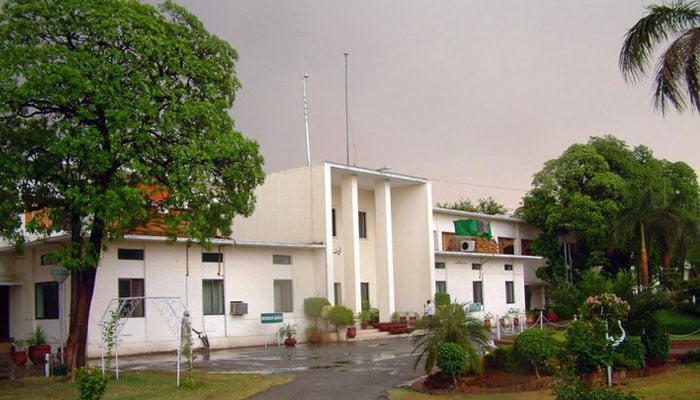
LAHORE: A high-powered delegation of senior civil servants from Bangladesh visited the Pakistan Administrative Service (PAS) Campus of the Civil Services Academy (CSA) in Lahore as part of the Pakistan–Bangladesh Knowledge Corridor Programme, continuing a series of professional training engagements after earlier sessions at the academy’s Walton Campus.
The day long visit formed part of a broader initiative aimed at promoting institutional cooperation, administrative learning and governance collaboration between Pakistan and Bangladesh, while also reviving long-standing historical linkages between the civil service institutions of the two countries.
The visiting delegation was warmly received by Director General Civil Services Academy Farhan Aziz Khawaja, Additional Director PAS Usman Ali and Additional Director MCMC Nazia Jabeen. Senior faculty members and academy officials also attended various interactive sessions held during the visit.
Officials described the programme as a reflection of the growing emphasis being placed by both countries on regional cooperation, knowledge sharing and people to people engagement through professional and institutional exchanges.
The Bangladeshi delegation comprised senior officers representing important ministries and divisions of the Government of Bangladesh, including the Ministry of Public Administration, Cabinet Division, Ministry of Commerce, Ministry of Home Affairs, Ministry of Disaster Management and Relief, Local Government Division, Health Services Division and the Bangladesh Civil Service Administration Academy.
The visit assumed added historical significance as the PAS Campus has remained one of the subcontinent’s premier civil service training institutions where officers from the then East Pakistan also received professional training from the batches of 1948 to 1972. Officials noted that the interaction symbolised not only contemporary cooperation but also the revival of historical academic and administrative ties rooted in a shared institutional legacy dating back decades.
As the flagship institution responsible for the specialised training of Pakistan Administrative Service officers, the PAS Campus played a central role in presenting Pakistan’s governance framework, administrative structure and institutional training model before the visiting delegates.
During detailed briefing sessions, the Bangladeshi officials were introduced to Pakistan’s district governance mechanisms, field administration structure, public service delivery systems and the academy’s sustainable development oriented training philosophy. The delegates were also informed about the “learning through immersion” approach being practised at the PAS Campus, under which officers are exposed to practical field experiences alongside academic instruction.
Officials said the exchange provided an important opportunity for senior Bangladeshi civil servants to directly engage with Pakistan’s premier training institution and gain first hand insight into governance practices and administrative reforms being implemented in the country.
The programme also featured presentations by prominent public and private sector organisations that highlighted successful Pakistani models of governance, social welfare and public-private collaboration.
Representatives of the Punjab Food Authority briefed the delegation on modern food regulation mechanisms, quality control systems and enforcement strategies aimed at ensuring food safety standards across Punjab.
Officials of Rescue 1122 shared their experiences regarding emergency response systems, disaster management preparedness, rescue operations and integrated public safety mechanisms, which have been widely recognised as a successful model of emergency service delivery in Pakistan.
Briefings by Allah Walay Trust, Chughtai Foundation and Akhuwat Foundation focused on philanthropy, healthcare outreach, poverty alleviation, social welfare and community based support systems. Delegates were informed about initiatives aimed at expanding healthcare access, supporting underprivileged communities and promoting interest-free microfinance for low-income groups.
Participants said the sessions collectively presented successful examples of Pakistani institutions working in collaboration with communities to address governance and welfare challenges through innovative and sustainable approaches.