ISLAMABAD: Leading strategic affairs experts on Monday warned that future conflicts in South Asia could become far more complex and dangerous due to rapid technological advances, hybrid warfare and shrinking decision-making timelines, stressing the need for Pakistan to maintain a credible and adaptive deterrence posture.
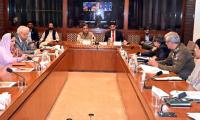
The remarks were made during the launch of the book ‘Marka-e-Haq: Deterrence, Provocation, and Strategic Maturity in South Asia’, hosted by the Centre for International Strategic Studies (CISS) as part of the first anniversary commemorations of Marka-e-Haq.
The publication features contributions from scholars, diplomats and retired military officials on deterrence stability, crisis management, strategic doctrines and evolving regional security dynamics. Organisers described it as an academic effort examining the pressures created by Indian military posturing, disinformation campaigns and changing geopolitical realities.
Former Chairman Joint Chiefs of Staff Committee (CJCSC) Zubair Mahmood Hayat said future conflicts would increasingly involve cyber capabilities, hybrid tactics and narrative warfare alongside conventional military operations, adding that strategic maturity and institutional preparedness were essential for maintaining regional stability.
Senator Mushahid Hussain stressed the importance of intellectual discourse and regional engagement in tackling emerging security challenges.Lt Gen (retd) Khalid Ahmed Kidwai said recent developments had exposed both strengths and vulnerabilities in deterrence stability and underscored the importance of responsible nuclear stewardship and strategic restraint.
Lt Gen (retd) Mazhar Jamil and Lt Gen (retd) Sarfraz Sattar, both advisers to the National Command Authority, highlighted the need for calibrated deterrence, coordinated political and military signalling, and a deeper understanding of adversarial behaviour to avoid escalation during crises.
Ambassador (retd) Zamir Akram said India’s evolving strategic posture and growing militarisation were increasing regional insecurity and deepening mistrust between the two nuclear-armed neighbours.Brigadier (retd) Dr Zahir Kazmi said modern deterrence depended not only on military capability but also on strategic communication, political resolve and cognitive resilience.
CISS Executive Director Ambassador (retd) Ali Sarwar Naqvi warned that South Asia’s strategic environment was becoming increasingly volatile, stressing the need for responsible statecraft, credible deterrence and sustained dialogue to preserve peace.
The book’s editor, Dr Zafar Khan, said the publication aimed to document changing patterns of coercion, deterrence and crisis behaviour in South Asia while highlighting the risks posed by unilateral actions and disinformation warfare. Other speakers, including Zafar Nawaz Jaspal, Dr Rizwana Abbasi and Brigadier (retd) Dr Naeem Salik, also warned of rising risks stemming from covert operations, unresolved disputes, water insecurity and accelerated crisis escalation due to technological advancements.