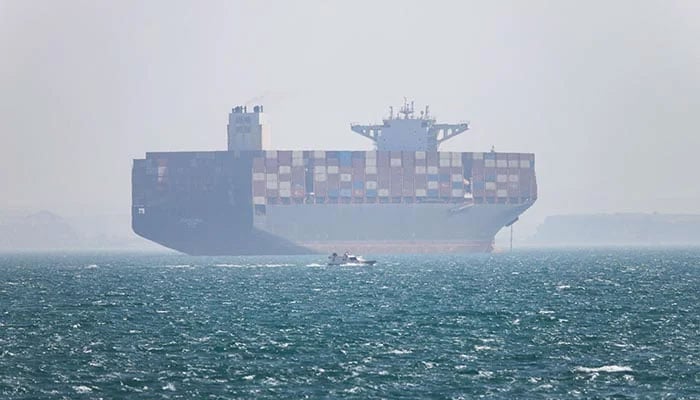
The Strait of Hormuz is no longer just a route, but a choke point where trillions of dollars in trade, energy and other goods needed by the modern economy can be disrupted with a single order from the Iranian top command.
The closure has brought a storm, a tornado in the oil and energy markets, the effects of which are being felt from Europe to Asia to Australia. More than one-quarter of seaborne oil, one-fifth of oil-product consumption and nearly one-fifth of LNG trade pass through it. As Iran responded with the closure of Hormuz, crude oil crossed $125, while Barclays lifted Brent from $85 to more than $100. Pakistan is no exception in this regard, as the Strait of Hormuz is no longer a distant geopolitical theatre for Pakistan.
Why is the closure of Hormuz so crucial as far as the energy market is concerned? The logic is simple: Pakistan is dependent on the Gulf for over 85 per cent of its oil and nearly all of its LNG requirements. Moreover, more than 50 per cent of Pakistan’s remittances originate from the Gulf countries, threatening our reserve cushion to a sizeable extent. In Pakistan, the oil price shock led to a more than 20 per cent repricing in the oil market, which has stunned the Pakistani economy due to its highly energy-intensive import structure. For instance, in the case of LNG, which mostly originates from Qatar, Pakistan’s imports from Qatar were around 6.64 million metric tons, routed through the Strait.
During July–March FY2025, Pakistan imported 12.53 million metric tonnes of petroleum products worth $8.40 billion, including crude oil worth $4.11 billion and motor spirit worth $3.04 billion. Since transport consumes around 80 per cent of petroleum demand, any oil-price shock quickly travels from petrol pumps into freight, food prices, agriculture, school transport, cold chains and urban mobility.
This is not just a delay or disruption of a shipment. It is a very strong signal and a visible sign that this war, centred around Iran and the US, has the potential to, and in some ways has already started to, become a Pakistan problem. It drives energy prices up, increases inflation, raises logistical costs and widens the gap in our balance of payments. This became visible in the fuel price hike of about 20 per cent on March 6, 2026, placing petrol prices at Rs321.17 and diesel at Rs335.86 per litre.
Later, in April, diesel prices were increased by 54.9 per cent per litre and petrol prices by 42.7 per cent. This matters severely in Pakistan because fuel prices shape freight, food supply, transport, commuting and daily living costs. Further, Pakistan also had to issue a spot tender for LNG, the first of its kind since December 2023. This was the direct result of supply shortfalls caused by the war. Asian spot LNG prices were already high, around $16.05 per mmBtu, and they went up by 54 per cent.
Pakistan’s official estimates had anticipated a surge up to $20–30 per mmBtu. The power sector has its own wounds inflicted by the Iran-US war. Pakistan’s electricity shortfall doubled to 3,400MW, about one-sixth of demand, and this caused hours of power outages, in some places up to six hours a day. The reason for the electricity shortfall is Pakistan’s dependence on furnace oil for power generation.
The economic damage goes beyond inflation: higher oil bills pressure reserves and the rupee, fuel costs worsen power tariffs and circular debt, outages hurt industry and exports, investors face uncertainty and transport-led price rises crush purchasing power, retail demand, services and small manufacturing. Pakistan’s already weak position in merchandise trade does not provide much cushion against an external shock of the scale of the Hormuz war. As of March 2026, there was a huge gap between exports of $2.275 billion and imports of $5.114 billion. The cumulative trade deficit for July to March 2026 amounted to $27.913 billion. The logistics issue, though worsened after the Hormuz war, is not a product of the war; $30.7 billion has remained unutilised, according to a recent policy viewpoint by PIDE. The country’s ranking in the Logistics Performance Index has also been quite dismal: 122 out of 160 countries.
In addition, remittances still contribute heavily to the Pakistani economy. In fact, it would not be wrong to say that one of the factors helping Pakistan remain resilient is the steady flow of foreign remittances. If the war prolongs, an economic slowdown is expected across the Gulf, manifesting in project cancellations, payment delays and perhaps even labour nationalisation at the most critical moment.
A prolonged Gulf slowdown would not only reduce future job opportunities for Pakistani workers; it could also delay wage increases, cancel projects and weaken household incomes in Pakistan that depend on Gulf remittances. The Iran-US war is not a random event or remote spectacle. It was an expected event and a real war with real effects. The current crisis has made it abundantly clear that the war in Hormuz is almost a domestic economic variable for Pakistan. Local fuel prices have moved up. Missiles being fired over the Strait of Hormuz have led to power outages in Pakistan.
The strategic lesson is straightforward: Pakistan needs to measure Hormuz exposure as an economic-risk variable. The country should monitor global crude prices, LNG spot prices, freight rates, war-risk insurance, fuel stocks, expected cargo arrivals, furnace oil availability, power shortfalls and remittance flows together rather than in separate bureaucratic compartments. The next crisis will not wait for ministries to exchange files; it will first arrive in prices, then in shortages, and then in social pressure.
Pakistan cannot afford another reactive and option-short policy that exposes its vulnerability. The country cannot remain passive. It has to play its role through prepared neutrality, backed by energy buffers, logistics reform, labour protection and disciplined economic diplomacy.
Dr Karim Khan is a professor of economics at the Pakistan Institute of Development Economics (PIDE).
Dr Syed Fida Muhammad Khan is an assistant professor at PIDE.