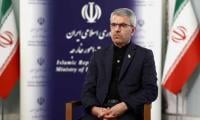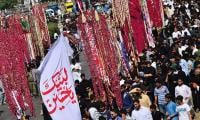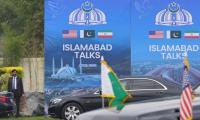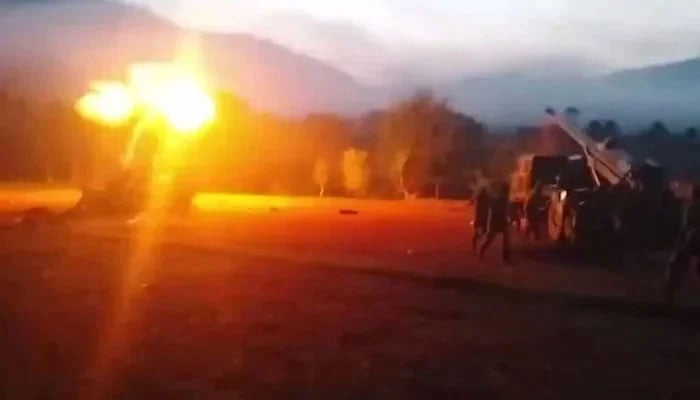
There are moments when a country looks grand. Pakistan has had such moments. After the military exchange with India in May 2025, much of the public responded with relief and applause. More recently, diplomatic manoeuvring around the US and Iran has allowed Islamabad to present itself as a useful regional actor rather than a perpetual supplicant.
These are not small matters. A country that can defend itself and talk to adversaries has assets that should not be dismissed. But states are not built for ceremonies. They are built for people. A strong defence is not an end in itself. It is meant to protect lives, homes, jobs, schools, hospitals, farms, streets and futures. Diplomacy is not only about visibility in foreign capitals. It should create space for citizens to live less anxious lives. If the state can perform under pressure at the border and in negotiating rooms, it must also perform in the bazaar, the classroom, the clinic, the bus stop and the katchi abadi.
That real test of government is not whether it can manage a crisis for a few dramatic weeks but whether it can make daily life bearable for millions who do not appear in official photographs. There are two sides to the same coin: angry young populations whose material lives are insecure, while macroeconomic stability remains too fragile to generate livelihoods on the scale required. The first basic problem is livelihood. Every year, Pakistan adds roughly two million people to the working-age or labour-seeking population. Even when the economy is said to be recovering, it does not create enough dignified work.
Too many young men drift between temporary jobs, motorcycle deliveries, underpaid sales work, call centres, tuition work and family dependence. Too many young women study hard only to discover that the labour market was never designed to welcome them. Pakistan’s unemployment rate reportedly rose from 6.3 per cent in 2020-21 to 6.9 per cent in 2024-25, with youth and women facing the worst joblessness. The second problem is inflation. It is not an abstract number. It is the shrinking of meals, the postponement of medicine, the cancellation of visits to relatives, the argument at the kitchen table and the quiet humiliation of borrowing before the month ends.
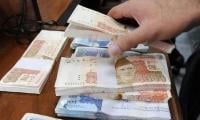
In April 2026, Pakistan’s annual inflation was reported at 10.9 per cent, up from 7.3 per cent in March, amid sharp increases in housing, utilities, food and transport prices. For the middle class, this means anxiety. For the poor, it means hunger. For the lower middle class, it means the terror of falling into poverty despite years of respectability. The third problem is education. Pakistan speaks endlessly of youth as a demographic dividend. But a dividend is paid only when an investment has been made. Unicef estimates that 25.1 million children aged five to 16 are out of school in Pakistan, around 35 per cent of that age group, giving the country one of the world’s largest populations of out-of-school children.
This is a constitutional, economic, moral and security crisis. A child out of school today becomes tomorrow’s underpaid worker, resentful citizen or easy recruit for demagogues, sectarian entrepreneurs and online hate machines. The fourth problem is health. A government that leaves citizens to sell jewellery, borrow from relatives or delay treatment cannot honestly claim to be protecting them. Pakistan’s public health system remains too weak, too crowded and too uneven. A serious illness in a poor household can undo years of labour.
World Bank health data show that out-of-pocket spending remains a major part of health expenditure in Pakistan, meaning households carry a heavy direct burden when sickness strikes. A republic in which illness so easily becomes debt has not yet understood social protection. The fifth problem is housing and urban dignity. Islamabad, Lahore, Karachi, Rawalpindi, and other cities are full of people who clean homes, drive cars, guard buildings, cook food, build plazas, sweep roads and deliver parcels, yet are treated as illegal when they need a place to live. The poor are useful as workers but offensive as neighbours.
Katchi abadis are blamed for ugliness while elite encroachments are regularised, beautified and supplied with utilities. The bulldozer has become an instrument of class policy. It arrives not where the law is most violated, but where the violator is weakest. This is where peace with India and attention to basic needs become part of the same argument. The young Pakistani and the young Indian are encouraged to hate each other while both face insecure jobs, unaffordable housing, polluted air, poor public transport, expensive education and shrinking hope. The Indian establishment has its own majoritarian project, its own propaganda factories and its own injustices against Muslims, Dalits, Adivasis and other vulnerable groups.
Pakistan has its own imagination in which India is eternally useful as the enemy that explains everything. But ordinary people on both sides have more in common with each other than with the elites who instruct them. Cheap governance requires no functioning school, no primary health unit, no fair wage policy, no clean drinking water and no credible local government. It only requires a screen, a slogan and a target. Social media has made this easier. The outrage machine feeds on young frustration. A jobless young man can be made to feel powerful by abusing another nation online.
A politically abandoned citizen can be offered the narcotic of pride. But pride does not pay rent. It does not lower school fees, make insulin affordable, make buses safe for women or drain sewage from a settlement after rain. The government’s defenders will say that macroeconomic stabilisation had to come first. That is partly true. No serious person wants another balance-of-payments crisis, runaway inflation or empty petrol pumps. Recent economic management has avoided some immediate disasters. The official accounts note tactical successes, such as timely fuel price adjustments and efforts to safeguard the energy supply chain.
Yet tactical success is not the same as a social contract. A state cannot keep telling citizens that they must endure pain today so that stability may arrive tomorrow, when tomorrow never becomes a decent job, a working hospital or a school that actually teaches. Nor should social spending be treated as charity. It is productive investment. Feeding children improves learning. Educating girls raises incomes, improves health outcomes and increases civic participation. Primary healthcare reduces catastrophic expenditure. Public transport expands labour-market access. Affordable housing stabilises families. Clean water prevents disease. Local governments solve small problems before they become crises.
These are not soft issues but rather hard infrastructure for a functioning society. Pakistan also needs to rethink security itself. Security is not only a missile, a tank or an intelligence file. Security is the confidence that a child will not be stunted by malnutrition, a daughter can reach college safely, a father’s illness will not bankrupt a family, a worker will be paid on time, an old woman will not be evicted before dawn and a farmer will not lose land, water and livelihood to the next speculative scheme. Climate change makes this broader meaning unavoidable.
Floods, heatwaves, smog and water stress will not respect borders, provinces or party slogans. They will punish the poor first and most. The government should therefore make a simple pivot. It should stop measuring success mainly by foreign praise, stock phrases about resilience or temporary calm in financial indicators. It should publish and pursue a people’s dashboard: jobs created in the formal economy, children enrolled and retained in school, basic medicines available in public facilities, buses added to city routes, low-income houses protected from eviction, union councils with clean water, women entering paid work and households lifted above poverty without falling back.
This would not replace defence or diplomacy. It would give them meaning.
The writer is dean of the faculty of liberal arts at a private university in Karachi. He tweets/posts @NaazirMahmood and can be reached at: [email protected]