Holy and blessed personalities, due to their spiritual power, attain a distinguished status in the world. From their words and actions, spiritual grace flows, and for people seeking sustenance and blessings, it is essential to visit such sacred personalities.
Hazrat Peer Shah Jeewna (R.A) was also among those chosen individuals. Through his teachings and spiritual efforts, he brought countless people closer to Islam. He taught humanity the values of love, tolerance, and brotherhood. His life was a practical example of simplicity, humility, and devotion.
He always emphasized helping the poor and the needy. His gatherings were open to all, regardless of status or background. People from every walk of life used to come to him and benefit from his guidance. Even today, his teachings continue to inspire people and provide spiritual comfort, to his followers.
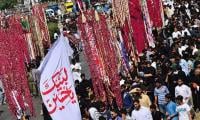
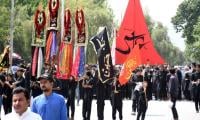
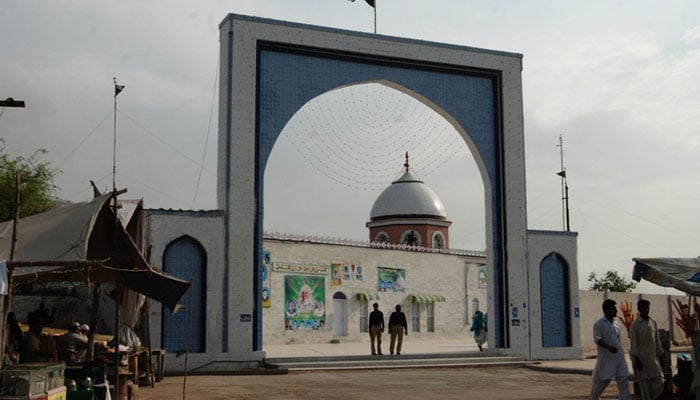
His shrine remains a centre of faith and devotion, where thousands of devotees visit daily. People find peace and hope by coming there. During the days of the Urs, special prayers and gatherings are held, and devotees come from all over the world to pay their respect.
The Urs is observed every year on the 10th, 11th, 12th, 13th and 14th May and this year marks the 468th Urs. Hazrat Peer Shah Jeewna R.A is considered among the early great saints of the region.
It is highlighted that Hazrat Qutbuddin Bakhtiar Kaki (RA) and Khawaja Nizam ud din Dehlvi are also amongst the descendants of Hazrat Jaffar Tewwab Bin Imam Ali Naqi. Hazrat Peer Shah Jeewna R.A is considered among the earliest great saints in subcontinent and through him, a magnificent spiritual chain continued.
Hazrat Peer Shah Jeewna R.A. was the son of Syed Muhammad Jamal al Din Surkh Bukhari R.A. He was born in Uch Sharif (Bahawalpur) in era of prominent scholars and saints, including Hazrat Baha al-Haq Zakariya Multani (RA), Hazrat Sheikh Bahauddin Zakariya (RA) and Hazrat Shah Rukn-e-Alam (RA).
Hazrat Peer Shah Jeewna (RA) also became a great saint and spiritual guide. He received spiritual training from Hazrat Jalal ud Din Surkh Bukhari (RA), a famous Sufi of his time. Under his guidance, Hazrat Peer Shah Jeewna (RA) attained high spiritual ranks. He served humanity, and people would come to him from to listen to him. He had a special love for Surah Muzammil. He himself would recite Surah Muzammil and also use to teach its lessons to people, encouraging them to recite it regularly. Once he recited Surah Muzammil ten million times, and that is why people began calling him “Karoriya.”
One of the names of Hazrat Shah Jeewna is also “Mal Qattal”. Here, the word “Mal” can mean impurity or filth. In the Holy Qur’an, the word “Rijs” is used multiple times for this, where it refers both to impurity and to sinful or wicked people.
Additionally, “Mal” can also mean brave, courageous, or a warrior. Generally, this term was used among Hindus to refer to warriors. The term “Mal Qattal” means “the one who fights the most” or “the one who takes up jihad”. In this sense, it refers to someone who struggles against disbelievers.
Hazrat Shah Jeewna remained engaged in jihad for the sake of Islam against the disbelievers; therefore, he become well known by the title “Mal Qattal.” This shows that he was always ready to strive in the path of religion. He was an embodiment of Maulana Rumi couplet — Maslehat dar din-e ma jang o shukuh; Maslehat dar din-e ‘Isa ghar o kuh (interpretation: the great saint contrasts two spiritual temperaments: the active, world-engaging ethos associated with Islam, and the contemplative, secluded asceticism associated with monastic life).
Hazrat Shah Jeewna (RA)’s faqr (spiritual poverty) was not monasticism; rather, it was the faqr of the Qur’an. He devoted his life to the service of Islam. He was a “Dervish Bil-Saif” (a Dervish with the sword). The Title “Mal Qattal” clearly reflects that Hazrat Shah Jeewna (R.A) exercised authority within a distinct spiritual domain governed by the principles of the Qur’an and Sunnah.
He was a practicing faqir who constantly strove for Islam. At times, he would be seen in the centers of learning, teaching the Qur’an and Hadith, and at other times in the valleys of the River Chenab, raising the call of Surah Muazmmil.
The light his path of faqr still shines in the world, especially in the hearts of the tribes of District Jhang. People have not forgotten the blessing of Islam brought to them by this humble, simply clothed faqir. They pay tribute to his greatness and take pride in visiting his blessed shrine. —Haji Ghulam Raza (late)/Kavish Hassan Raza