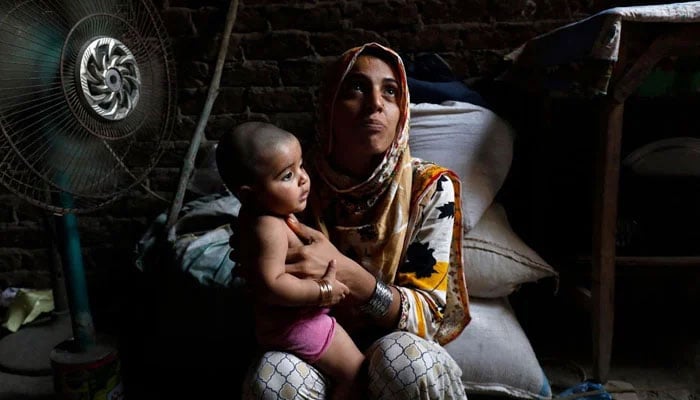
During my gynaecology residency, I encountered a mother whose postpartum depression left me deeply unsettled. I watched her sit in a heavy, dark silence, seemingly unreachable even by the presence of the beautiful baby girl at her side.
At the time, I could not bridge the gap between my clinical training and her profound withdrawal. It was only after I became a mother myself that I felt that same silence echoed within my own body. While my experience was not as severe, there were moments of helplessness and detachment that felt like a quiet betrayal of the ‘sunny’ transition I had been promised. This was my revelation: motherhood is not a seamless performance of joy, but a profound and often defeating threshold that we are rarely prepared to cross.
This year, World Maternal Mental Health Day was observed on May 6. The day serves as a vital reminder of what the WHO describes as a state of well-being where a mother can realise her own potential, cope with the normal stresses of life and contribute to her community. This concept is often referred to interchangeably as perinatal mental health, a term that specifically encompasses the emotional and psychological journey from pregnancy through the first year after childbirth.
The scale of this challenge is significant, as roughly 20 per cent of mothers worldwide experience some form of perinatal mood or anxiety disorder. These conditions do not discriminate, affecting women across every culture, age, and income level, with consequences that can deeply impact both the mother and the developing child.
In Pakistan, maternal distress is a widespread but unacknowledged reality. Every year, roughly six million women give birth, yet the emotional weight of this transition is frequently dismissed as a mere test of character. While the global average for postnatal depression is roughly 15 per cent, research indicates that the figure in Pakistan is nearly double, affecting up to 40 per cent of new mothers.
This neglect has serious consequences, as nearly one in five of these women faces thoughts of self-harm. Despite these alarming numbers, the societal expectation remains one of quiet resilience, effectively isolating women from the support they require.
This lack of intervention carries a severe price for the economy and the nation’s future. The World Bank estimates that untreated mental health disorders cost Pakistan $1.5 billion annually through lost productivity and increased healthcare strain. Beyond the financial impact, the developmental health of the next generation is at stake.
Untreated maternal depression severely disrupts infant bonding and breastfeeding, creating a ripple effect that leaves children significantly more likely to face cognitive delays, academic hurdles and stunted physical growth. Addressing maternal mental health is therefore more than a personal concern; it is a critical policy requirement for national progress.
Global public health is shifting from mere survival toward fostering a higher quality of life. While reducing mortality remains essential, modern frameworks now prioritise Universal Health Coverage and healthy life expectancy. This evolution requires weaving mental health support directly into the existing fabric of maternal and child health services.
This necessity is particularly urgent in developing nations where low-cost models are already showing results. Ghana has demonstrated that non-specialised community health workers can deliver impactful programmes, proving that investing in a mother’s psychological well-being directly correlates with her child’s long-term development.
To achieve this, we must stop treating mental health as a separate speciality. The current disconnection between obstetric and psychological services creates barriers of stigma and logistics. By following the WHO’s Gap Intervention Guide, we can train frontline providers to manage mental health within existing clinics, ensuring emotional care becomes a foundational part of every routine check-up.
Evidence from Pakistan proves that community-based models are both feasible and highly effective. The ‘Thinking Healthy Program’, pioneered here and later adopted by the WHO, demonstrates that Lady Health Workers can successfully deliver structured cognitive behavioural therapy, reducing depressive symptoms in new mothers by nearly half. This success illustrates that clinical efficacy does not always require a surplus of specialists; instead, we can leverage the workforce already embedded within our communities to provide life-saving intervention.
This grassroots momentum is finally translating into high-level policy. In March 2025, the Senate Standing Committee approved the Mental Health Amendment Act, which formally recognises postpartum depression as a critical medical condition. This landmark legislation mandates the establishment of specialised maternal mental health units staffed by multidisciplinary teams of psychiatrists, psychologists and counsellors. By moving from isolated pilots to a formal legal framework, the state is acknowledging that maternal well-being is a core public health pillar rather than a private struggle.
However, infrastructure alone cannot overcome the cultural silence surrounding perinatal distress. Sustainable progress requires strategic communication through mass media and digital platforms to dismantle stigma and normalise help-seeking behaviour. Shifting the public narrative from judgment to active support transforms maternal mental health into a collective responsibility. This cultural evolution is essential to ensure that the services provided by new legislation actually reach the mothers who need them most.
Ultimately, advancing this agenda requires a coordinated national policy prioritising universal screening and integrated clinical care. By weaving these programs into the national health framework and allocating dedicated resources, we can transition toward a sustainable future for maternal well-being.
Investing in mothers’ psychological resilience is a strategic necessity; it is a fundamental requirement to secure both the developmental health of our children and the long-term prosperity of the nation.
The writer is an obstetrician & gynaecologist. She can be reached at: [email protected]