Against the backdrop of intensifying global conflicts, rising nuclear anxieties and renewed military confrontations across South and West Asia, leading academics, legal experts and strategic affairs analysts warned on Thursday that the international system was entering an increasingly dangerous phase marked by weakened deterrence stability, erosion of international law and the growing threat of multi-domain warfare.
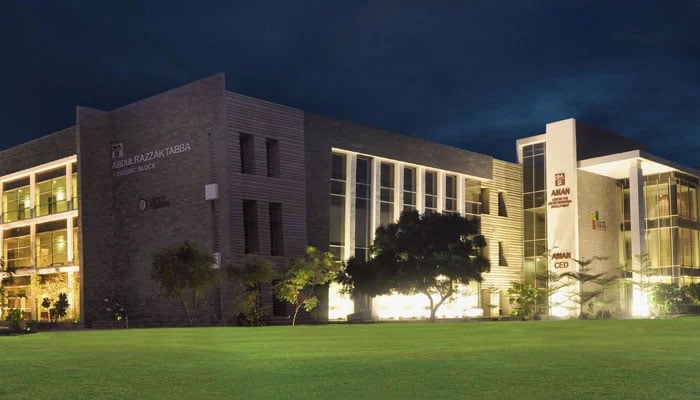
The stark warnings came during a high-level panel discussion titled “Wars, Crisis, and Deterrence Stability in South and West Asia”, hosted by the Institute of Business Administration, Karachi, under the auspices of the IBA School of Economics & Social Sciences at its main campus on Thursday.
The session brought together some of Pakistan’s prominent voices on strategic affairs, international law and regional politics to examine the rapidly changing character of warfare and the mounting security challenges confronting the region amid what speakers described as a dangerously unstable global order.
The panel featured Dr Zafar Nawaz Jaspal, Interim Vice Chancellor and Meritorious Professor at Quaid-e-Azam University, who joined the discussion online; Reema Omer, lawyer and human rights professional; and Dr. Sajjad Ahmed, Assistant Professor at the IBA’s Department of Social Sciences and Liberal Arts. The discussion was moderated by Dr Farhan Hanif Siddiqi, Professor and Chairperson of the same department.
Opening the session, Dr Siddiqi situated the discussion within the broader context of escalating international crises, including the Russia-Ukraine war, the devastating humanitarian catastrophe in Gaza, mounting tensions between Iran and Israel, and the recurring cycle of military escalation in South Asia.
He noted that the world was witnessing a profound transformation in the nature of conflict, where conventional military competition, cyber warfare, drone technology and strategic signalling were increasingly intersecting to produce highly volatile security environments.
Prof Dr Jaspal described the emerging global environment as the “Fourth Nuclear Age,” arguing that the post-Cold War assumptions surrounding deterrence stability were steadily eroding.
He said the return of state-centric conflicts, growing militarisation, renewed emphasis on hard power and weakening arms control regimes had fundamentally altered the strategic landscape.
He warned that the proliferation of advanced missile systems, autonomous weapons, cyber capabilities and hybrid warfare strategies had complicated crisis management mechanisms and increased the risks of unintended escalation between rival states, particularly in nuclearised regions such as South Asia.
Speaking on the legal dimensions of contemporary conflicts, Reema Omer stressed that despite accusations of selective enforcement, international law remained an indispensable instrument for accountability and protection of vulnerable populations, especially in the Global South.
She discussed legal principles governing the use of force, self-defence and international navigation, while underscoring concerns over the humanitarian consequences of modern warfare and the diminishing respect for established international norms.
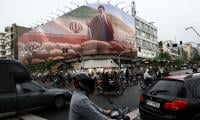
Dr Sajjad Ahmed, meanwhile, offered a detailed assessment of Iran’s foreign policy orientation, domestic resilience and strategic calculations in an increasingly polarised Middle East. He said Iran’s historical experiences, sanctions regime and national security concerns had significantly shaped its regional posture and resistance-oriented foreign policy approach.
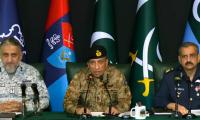
The panel also examined India-Pakistan relations, deterrence-by-denial strategies, the role of emerging military technologies and the dangers posed by multi-domain warfare to crisis stability in South Asia.
The discussion assumed added significance amid heightened regional tensions, continuing instability in the Middle East, growing great-power rivalry and persistent fears that future conflicts may no longer remain geographically contained. Analysts at the session warned that without robust diplomatic engagement, effective arms control frameworks and adherence to international law, the region could face deeper instability in an era increasingly defined by strategic uncertainty and perpetual crisis.