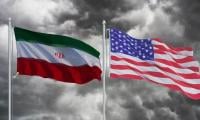
The US continues to pressure Iran to halt its nuclear programme, despite the fact that Iran has not carried out aggression or genocide anywhere. It has merely positioned itself as a critic of Israeli actions in Palestine and Lebanon.
Iran remains a signatory to the Nuclear Non-Proliferation Treaty (NPT), which guarantees the peaceful use of nuclear energy. Israel, meanwhile, maintains an undeclared nuclear program without offering similar transparency, and the US and Europe have never subjected it to comparable scrutiny. Western scrutiny appears solely focused on Iran.
This raises broader questions: why does Israel receive such consistent indulgence from Western countries? Why does the West maintain a practised passivity towards Israeli actions in Palestine and Lebanon? Why are protests against Israeli brutality in the US and Europe often dispersed by police? And why do individuals from other countries sometimes face visa restrictions in places like the US, Canada or Australia for speaking out against Israel’s alleged violations of human rights?
The explanation lies in Zionist cultural and educational influence. Over the 19th and 20th centuries, Zionist networks expanded their presence in trade, banking, media, academia, scientific research and the arts. Building on the Jewish community’s historical emphasis on education and scholarship, Zionism positioned itself within Western thought as a force associated with intellectual and cultural leadership, embedding itself within power structures in countries such as Britain and the US.
Within this framework, Israeli PM Benjamin Netanyahu is portrayed as drawing on religious narratives while advancing visions of a greater Israel extending from the Nile to the Euphrates, including claims regarding Al-Aqsa Mosque. At the same time, in Western discourse, Zionism has also been framed as a defender of secular values.
By leveraging Jewish intellectual contributions, Zionist influence reshaped educational systems across the US, Britain and Europe. Its imprint on literature, art and cinema has helped define global perceptions of modernity. In this narrative, alignment with Zionist perspectives is associated with progress, while dissent is cast as backwardness.
In response to perceived civilizational hierarchies, Friedrich Nietzsche’s philosophy of the ‘Ubermensch’ was misappropriated by Adolf Hitler, leading to the genocide of Jews in Europe. Intellectual challenges must be met with ideas, not violence. The Holocaust later became a foundation for the establishment of Israel. Through ‘memory politics’, the tragedy of the Holocaust was used to justify the Nakba, while the West remained largely indifferent. Expressions of grief over the Holocaust are widely embraced, whereas criticism of the Nakba is often framed as ideological bias.
Many Jewish rabbis, scholars and younger generations worldwide have challenged what they view as contradictions within Zionist politics. However, within Israel, political and cultural narratives continue to emphasise Holocaust remembrance. This reinforces a sense of historical entitlement, it helps justify violence against Palestinians, reinforces among Israelis the belief in a Greater Israel as a legitimate right and reduces sensitivity to contemporary suffering in Palestine and Lebanon.
Generations in the US and Europe raised after World War II have been shaped by these educational and cultural narratives. Through decades of media, particularly Hollywood films, themes of Jewish victimhood and German culpability have been deeply embedded. As a result, criticism of Israeli policies is often equated with antisemitism, a perception that has influenced Baby Boomers, Generation X and Millennials alike.
Zionist-aligned political actors continue to hold significant influence in governments across the US, Britain and particularly Germany, illustrating how cultural hegemony can translate into political power.
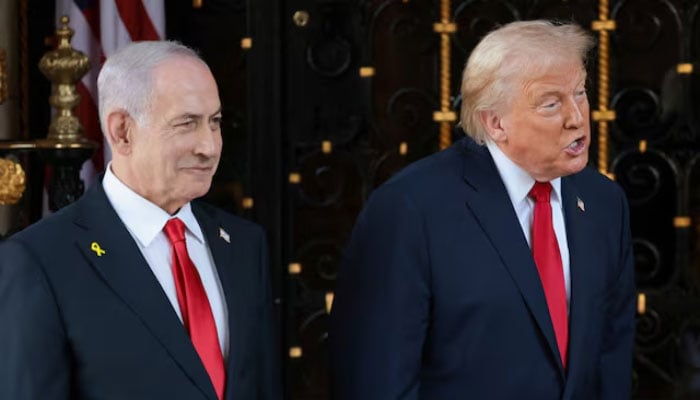
While economic strength and military capability are often seen as the primary sources of national power, control over education and culture ultimately shapes global influence. Even leaders such as US President Donald Trump are portrayed as operating within this broader framework in their approach to Iran, clearly suggesting that Netanyahu holds the reins of this geopolitical dynamic.
During the Iran-US negotiations in Islamabad, there are widely accepted claims that Vice President JD Vance received communication from Netanyahu urging that no agreement be reached. In parallel, deliberate escalation of military actions in Lebanon was used to disrupt diplomatic efforts. Zionists believe the legacy of the Holocaust effectively grants Netanyahu such impunity: exclusive ownership over grief, commitment to religious ambitions and a lasting claim over secular legitimacy.
All the while, much of the world, shaped by this Zionist cultural project, remains a passive observer, accepting Israel’s religious nationalism and acts of violence in order to preserve its own sense of modernity and moral authority.
The writer is the editor-in-chief of E-SouthAsia. He can be reached at: [email protected]