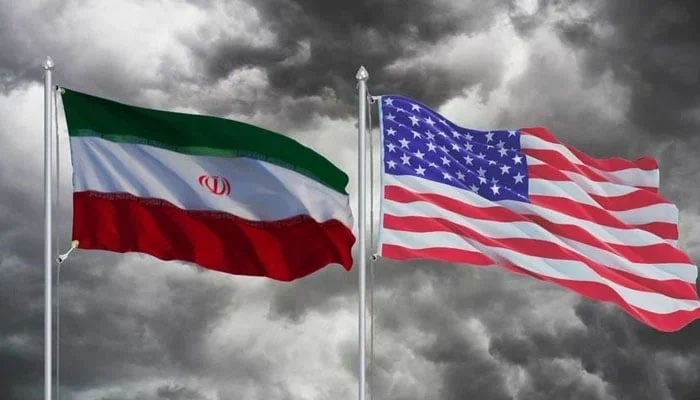
Somehow, there is this sense of a pause in the Iran war as what was supposed to be a two-week ceasefire has completed three. Or call it a deadlock. Perhaps Pakistan’s quiet diplomacy is setting the stage for a deal between the United States and Iran.
Meanwhile, the energy crisis is deepening amid the continued blockade of the Strait of Hormuz. The world is holding its breath for an outcome that will certainly change the world and confront individual countries with some new realities.
So, what should we, in Pakistan, be worrying about? While we have a genuine reason to rejoice in our global projection as a mediator, the consequences of this war may worsen our economic difficulties, particularly in the context of foreign remittances.
A lot of attention is justifiably being devoted to matters related to the war and its global reverberations. But I believe it is very necessary for a country like Pakistan to critically reflect on this situation and build national solidarity to face the emerging challenges. We need a rational national discourse to foster informed public opinion and strengthen our society’s capacity to maintain social harmony in a time of crisis.
Sadly, Pakistan’s societal deficits are pronounced, as international surveys in related sectors would attest. Our human capital is very defective and one has only to look at the state of education to endorse this observation. And the pity of it is our inability to seriously and sincerely examine the prevailing shortcomings of the Pakistani society.
One measure of this inability is the quality of discourse in our media and on the campuses of our universities. Incidentally, I read a newspaper report this week that highlighted the restrictions now imposed on the press.
Actually, it was an account of a session of ‘APNS Talks’ featuring Dawn’s former CEO Hameed Haroon, held in Karachi on Wednesday. As the president of All Pakistan Newspaper Society (APNS), Senator Sarmad Ali, stated at the outset, the idea was to discuss the challenges faced by the media industry and also to celebrate life and achievements of Hameed Haroon.
Now, one piece of information that the rulers have not been able to suppress is that the media survives under very severe restrictions. It is really a bad situation. It has been so for long years, but Hameed Haroon said that the government’s “anti-media attitude” had now reached new limits. He used the expression: “law of the jungle”.
However, he thought that the media organisations could improve their position by working together and that the newspapers needed to change and innovate to attract young readers.
Without quoting more from the published report of the APNS event, I would say that the suppression of media freedom is just one aspect of how the Pakistani society has been brutalised and de-intellectualised. The situation is equally or even more grim when it comes to the implementation of other fundamental human rights. This is an environment in which religious extremism and intolerance have flourished.
Here is another instance of how the government’s mind works in these matters. Just over two weeks ago, in fact on April 17, the Federal Constitutional Court (FCC) of Pakistan upheld the government’s ban on importing books from India and Israel. It said that the right to read is not absolute and must bow to national security and foreign policy considerations.
The ruling by the three-judge bench validated the relevant SROs, affirming the executive’s exclusive authority over trade policies with other nations. The FCC set aside a previous Lahore High Court (LHC) ruling that had challenged the restrictions on book imports.
It is significant that the judgment noted that while the “right to read” falls under the right to life, it is not absolute and subject to laws imposed by the government. In an additional note, one judge highlighted the practical challenges of banning books in a digital age, noting its limited effectiveness.
That we are also not free in the digital domain is another subject. But the very thought of banning books is forbidding, whatever be any executive or juristic considerations. The irony here is that reading habits in Pakistan are already very poor and books, from wherever, are not avidly sought after by a substantial number of people from the educated middle-class. I have consistently invoked this theme and feel that this deprivation is also a barrier to our economic, social and cultural progress.
There are cogent reasons for not imposing a total ban on importing books from India, even if India is certified as an enemy. Well, I am tempted to quote Sun Tzu from his ‘The Art of War’: “Know thy enemy and know yourself; in a hundred battles, you will never be defeated”. Besides, there are so many complexities in our relations with India and our literatures and histories and languages overlap in so many ways.
Again, this is one more issue that should be freely debated. Let me just say that instead of banning books, our rulers should take innovative steps to encourage the writing, production and reading of books. Libraries would only be one manifestation of this process. If they, the rulers, had read the right kind of books – classics, for example – they would know that books, too, are a weapon for national security.
This brings me back to my concern about the spiritual, intellectual, and moral strength of our society, which is now likely to be ushered into a new world that will bring new challenges. What are the abiding values of our society? What kind of commitment do our people have for their country and their fellow citizens and also for truth and justice?
Hard times call for hard choices on the part of both the rulers and the citizens. In the face of increasing economic inequality and growing polarisation, we must find ways to reinvent and civilise our society.
The writer is a senior journalist. He can be reached at: [email protected]