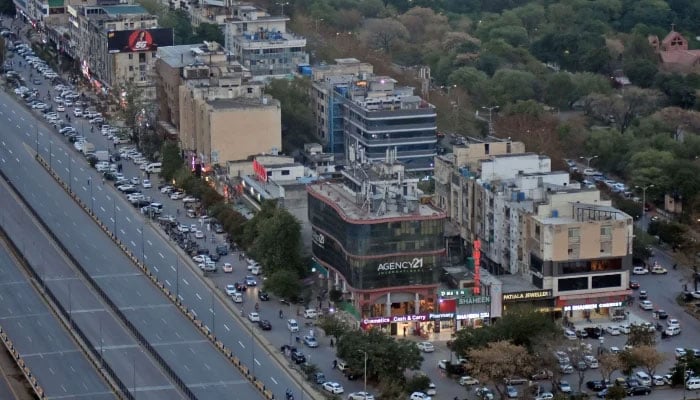
On a recent visit to Islamabad, a city where I lived for nearly 20 years, I was once again struck by a painful contradiction. Islamabad has become cleaner, shinier and more carefully manicured, but much of this beautification has taken place at the expense of the poor and the underprivileged.
When I moved to Islamabad from England in 2005, the city was not as openly anti-poor as it appears today. It was always unequal, of course, but over the years successive governments and the Capital Development Authority have become more callous and ruthless towards the very people who keep the capital running. These are the workers who sweep its roads, trim its hedges, guard its houses, wash its cars, cook its food, raise its children, repair its drains, build its offices and make the city as beautiful as it can be. Yet they themselves are pushed into settlements without secure tenure, without adequate sanitation and proper water supply and without the basic amenities that any humane society should guarantee.
The state enjoys their labour but refuses to acknowledge their right to shelter. It wants Islamabad to look orderly, but it does not want to see the people whose labour produces that order. My friend Aasim Sajjad Akhtar and his fellow activists have been relentless in defending the rights of Islamabad’s poor. For years, they have challenged evictions, mobilised residents, written petitions, gathered evidence and reminded a complacent middle class that katchi abadi dwellers are not trespassers in their own city. They are workers, citizens and rights-bearing human beings.
Aasim’s recent appeal to residents of Islamabad is a moral challenge to all those who benefit from the labour of the poor while remaining silent when their homes are demolished. Islamabad was built to look planned. Its avenues are wide, its sectors numbered, its official buildings placed with geometric confidence against the Margalla Hills. Yet behind this planned serenity lies a cruel disorder. The city that houses the Supreme Court, parliament and the offices of the federal government has become a theatre of state violence against the poor.
In recent months, the CDA and the Islamabad Capital Territory administration have demolished homes in katchi abadis and historical villages, leaving working families to rescue children, bedding, schoolbooks and cooking pots from the rubble. This is not urban planning. It is punishment dressed up as regulation. The moral failure is made worse by the legal one. The demolitions have taken place despite long-standing litigation over Islamabad’s katchi abadis and despite judicial restraint against summary evictions.
The case goes back to the 2015 demolition of the I-11 katchi abadi, where thousands were displaced. The Supreme Court admonished the authorities for a military-style operation and issued a stay order against further evictions. According to those involved in the case, that stay order remains intact. Yet the bulldozers continue to move. The CDA’s defence rests on a familiar word: encroachment. It is a convenient word because it dehumanises before it destroys. Once a settlement is declared illegal, the people living in it become administratively invisible. Their labour may clean homes, build roads, sell vegetables, guard offices, cook food and maintain the city, but their homes are treated as stains on the master plan.
This is hypocrisy of a high order. Islamabad cannot function for a single day without the workers it refuses to house. The proposed ICT Urban Regeneration/Renewal Regulations 2025 deepen rather than solve the injustice. The objections submitted to the CDA argue that the regulations violate the spirit of court orders because the federal government was required to create a primary statutory framework for katchi abadis, not allow the CDA to write rules that suit its own demolition logic. The regulations cover only ‘recognised’ katchi abadis while leaving the vast majority outside protection.
The objections note that around 450,000 unrecognised katchi-abadi dwellers have no provision for regularisation, relocation or compensation. The numbers reveal the absurdity. The CDA recognises only ten katchi abadis in Islamabad and claims that four have already been relocated, leaving only six currently recognised settlements. Even within those six, it recognises merely 2,324 ‘eligible dwellers’, defined by survey lists prepared between 1995 and 2002. Everyone else is pushed beyond the pale. A city of nearly 2.4 million people is being governed through a housing imagination frozen in the 1990s.
The poor have grown in number as the city has grown, yet the official categories remain fixed, allowing demolition to masquerade as legality. This is class policy. Islamabad’s population has expanded dramatically since 1998. The demand for low-income housing has risen with it. Yet instead of producing affordable housing, serviced plots, rental options and community upgrading, the state has relied on bulldozers. It has left workers to improvise shelter, only to criminalise the shelter they built. The state first withdraws from its duty, then punishes citizens for surviving the withdrawal.
The contrast with the National Housing Policy 2025 is striking. That policy speaks of adequate, affordable and sustainable housing for all. It acknowledges the reality of underserved slums even in Islamabad and points towards upgrading, regeneration and planned services. Yet the CDA’s proposed regulations move in the opposite direction. They do not treat housing as a right, let alone a legitimate social need. They treat it as a privilege granted only to those who fit an old and narrow bureaucratic category.
The most revealing clause is Section 9.4 of the proposed regulations. According to the objections, no survey, eligibility processing or interim service provision will be undertaken for ‘illegal settlements’, except for public safety measures pending removal. In plain language, this means the CDA does not want to count people unless it is preparing to remove them. A survey, in any humane policy, is the first step towards recognition. In this framework, it becomes unnecessary because the outcome has already been decided. The poor are not to be upgraded. They are to be erased.
The government of Pakistan cannot hide behind the CDA. Islamabad is the federal capital. The authority acts under federal law and federal political protection. If demolitions continue, responsibility lies not only with municipal officers and enforcement teams, but also with the cabinet, the Ministry of Interior, the Ministry of Housing and the PM’s Office. The federal government cannot issue elegant housing policies in one document and tolerate violent evictions in another corner of the same capital. Nor can this be defended as a campaign for rule of law. If illegality is the concern, then the state should begin with powerful land grabbers, illegal farmhouses, elite clubs, commercial violators and housing societies that mock planning rules while enjoying political patronage.
The pattern is unmistakable. The poor face demolition. The rich face regularisation. A worker’s one-room house is an encroachment. A developer’s violation is a technical issue. A vendor’s cart is confiscated. A commercial plaza negotiates. This is why the demolitions have rightly been called elitist planning. A city planned only for the salaried elite, the security state and speculative capital is not a city. It is an exclusionary estate. The state’s language of ‘clearance’ is dishonest. What is being cleared is not debris but neighbourhoods. These places contain memories, graveyards, shrines, schools, shops and social networks.
Old villages such as Saidpur, Malpur, Nurpur Shahan and settlements around Bari Imam are part of Islamabad’s older social geography. To destroy them in the name of beautification is to falsify history. The capital did not begin when bureaucrats drew sectors on paper. A decent policy would begin with a moratorium on demolitions. It would respect existing court orders. It would conduct an independent, transparent survey of all informal settlements, not merely those the CDA finds convenient to recognise. It would provide municipal services immediately because water, sanitation, electricity, drainage and waste collection are not rewards for legal status. They are basic conditions of human life.
The writer is dean of the faculty of liberal arts at a private university in Karachi. He tweets/posts @NaazirMahmood and can be reached at: [email protected]