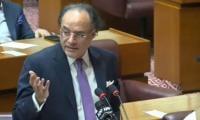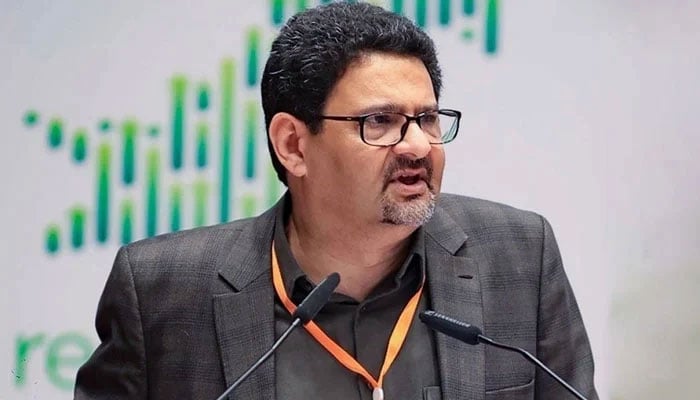
Former federal finance minister Miftah Ismail has said that despite the ongoing conflict, the long-term outcome of tensions between Iran and the United States is likely to favour Tehran, adding that any ease of sanctions could significantly boost Iran’s economy and benefit regional countries, including Pakistan.
He was speaking at a seminar titled ‘Iran-US War: Academia’s Perspective’ held at the NED University of Engineering and Technology. He observed that since the Iranian Revolution, Iran had faced continuous economic sanctions. “If an agreement is reached now, Iran’s economy could grow rapidly, emerging as a major power in the Persian Gulf,” he said.
He noted that the next six months would be economically challenging for Pakistan, but added that the removal of sanctions on Iran could open avenues of economic cooperation, particularly through the long-delayed Iran-Pakistan gas pipeline and expanded trade opportunities.
Discussing the economic fallout of the conflict, Ismail claimed that Israel had suffered the highest losses, estimating per capita daily losses at $32, followed by Qatar ($11), the UAE ($9), Kuwait ($7.5), Iran ($5.5), the United States ($2.25), Saudi Arabia (around $2) and Pakistan (10 cents).
He remarked that significant financial resources had been spent during the conflict, citing the use of expensive defence systems against relatively low-cost drones. He also referred to fluctuations in US markets and suggested that public opinion trends could influence upcoming elections.
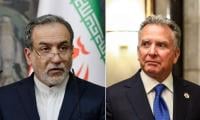
According to the university spokesperson Farah Hassan, the seminar was chaired by Registrar Syed Ghazanfar Hussain, while Dr Saeed Talibi Nia, director general of the Khana-e-Farhang of the Islamic Republic of Iran, attended it as the chief guest.
Other speakers included journalist Dr Tauseef Ahmed, Dr Fakhar Raza, Dr Asghar Dashti, Dr Kamran Zakaria and Munawar Abbas.
The seminar was jointly organised by the Sindh Professors and Lecturers Association (SPLA), NED University Teachers Association, Federal Urdu University Teachers Association and Karachi University Teachers Society. Proceedings were conducted by Shafaq Zahra and Syed Muhammad Haider.
Dr Ahmed argued that the conflict should not be viewed as a religious war, noting that countries such as Cuba, China, Russia, and parts of Latin America were aligned with Iran, while the United States was supported by Gulf monarchies. He also highlighted Iran’s advancements in science and technology, comparing institutions like Sharif University to leading global universities.
Dr Raza criticised what he described as the US opposition to Iran’s progress in medicine and technology, particularly referencing Iran’s collaboration with Cuba in producing affordable vaccines. He alleged that Iranian laboratories, pharmaceutical infrastructure and scientists had been targeted, calling such actions war crimes.
Dr Dashti termed the situation an ‘academic genocide’ against Iran and suggested that broader geopolitical objectives, particularly concerning China, were influencing US policy.
An Iranian delegation from Mashhad also visited the university during the event. Concluding the session, the registrar appreciated the government’s diplomatic efforts, while Dr Talibi Nia expressed gratitude to the people of Pakistan for their support.