LAHORE: Pakistan’s economic management has long been trapped in a cycle of short-term fixes and missed opportunities. Governments scramble to stabilise the present but fail to design the future. The result is a fragile economy that lurches from one crisis to another.
When the current government assumed office, the priorities were clear: shore up foreign exchange reserves, arrest the rupee’s decline, boost exports, and curb imports. Instead of undertaking difficult structural reforms, policymakers opted for the easier path — securing foreign inflows from friendly countries such as Saudi Arabia, China, and Gulf states. These inflows bought time, but they also bred complacency. Rather than using this breathing space to overhaul a broken system, the government relied on the same bureaucratic machinery that has consistently failed to deliver.
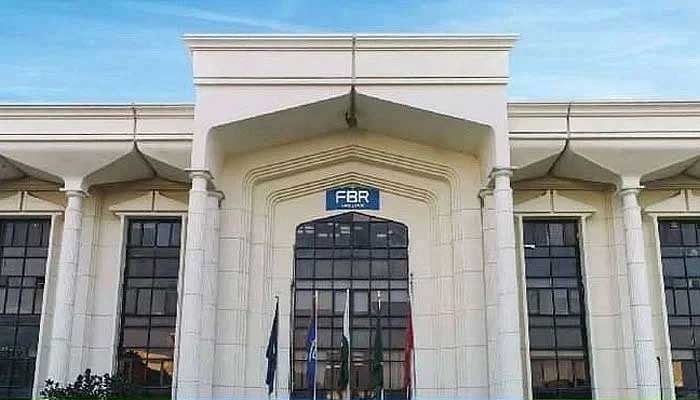
At the centre of this failure stands the tax system. The Federal Board of Revenue (FBR) claimed access to vast data, millions of individuals living beyond declared means, identified through computerised national identity records. The narrative was compelling: documented evidence of wealth, from property and vehicles to travel and luxury consumption, would finally bring untaxed segments into the net.
This data has existed for over two decades. Every transaction — property purchases, vehicle registrations, utility bills, airline tickets — is already linked to national identity records. The problem has never been the absence of information; it has been the absence of intent and integrity.
After over two years in power, the tax collection has not surged; in fact, it has weakened. The promised crackdown on evasion has yielded only marginal gains. A system that thrives on discretion and opacity has little incentive to reform itself. Many tax officials benefit from informal arrangements with evaders, creating a parallel economy where corruption substitutes for compliance. Bringing these individuals fully into the tax net would dismantle a lucrative, if illicit, ecosystem.
Successive governments have been misled into believing that administrative effort alone can solve a structural problem. They have ignored comprehensive reform proposals prepared by credible experts over the past two decades. These recommendations — centred on transparency, simplification and automation — remain largely unimplemented. As a result, Pakistan’s tax-to-GDP ratio, after modest improvements in recent years, is once again under pressure.
The federal government faces chronic cash flow shortages, despite imposing high tax rates on compliant sectors. A large part of this crisis could be resolved by fixing tax administration, eliminating incompetence and corruption and enforcing accountability where documented evidence of evasion already exists.
Equally damaging is the continued drain from loss-making state-owned enterprises. These entities bleed over Rs2 trillion annually — resources that could otherwise fund development, reduce debt, or ease the tax burden. Yet meaningful privatisation or restructuring remains politically contested and administratively stalled.
Many critical reforms require broad consensus. The introduction of a value-added tax, for instance, cannot succeed without opposition support. Similarly, agricultural income, one of the largest untaxed segments, must be brought into the formal tax system through coordinated federal and provincial action. Without equitable taxation across sectors, the burden will continue to fall disproportionately on documented businesses and salaried individuals.
The fiscal imbalance between the federation and the provinces further complicates matters. The federal government collects most taxes but transfers a significant share to provinces under the National Finance Commission arrangement. A pragmatic approach is needed: provinces should be guaranteed a baseline transfer equivalent to historical averages, while additional revenues generated through reforms could be shared in a manner that incentivizes higher federal collection.
Pakistan must shift from a culture of firefighting to one of planning. Stabilisation efforts must be accompanied, immediately, by medium- and long-term reforms. Tax collection should align with the true potential of the economy, with incremental gains coming from those who currently evade the system, not from squeezing those already compliant.
Without this shift, Pakistan will remain caught in a familiar loop: borrowing to stabilise, stabilising without reform, and sliding back into crisis. The country does not lack resources or data. What it lacks is the political will to confront entrenched interests and dismantle a system that rewards inefficiency and punishes compliance.