On February 1, petrol in New Delhi was Indian Rs94.72 per litre. It remains Indian Rs94.72 per litre (approximately Rs280 in Pakistani rupees).
On February 1, petrol in Bangladesh was approximately BDT 130 per litre. It remains largely unchanged.
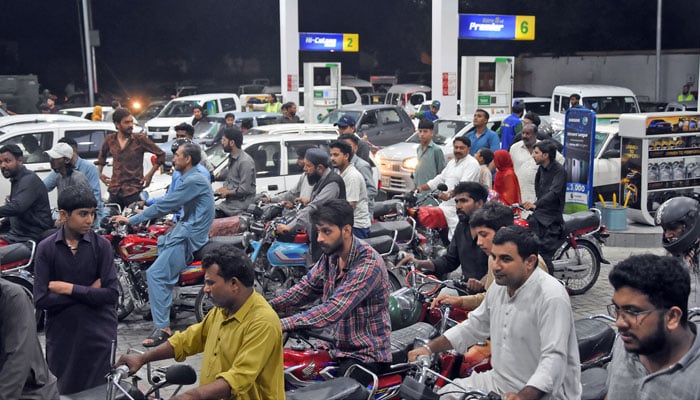
On the same day, petrol in Pakistan was Pakistani Rs257 per litre. It now stands at Rs399.86 - a 56 percent increase. Meanwhile, Brent crude oil rose from $68-70 per barrel to $105-$115 - an increase of 54 to 64 percent.
Hard truth: Prices unchanged in India and Bangladesh. Pakistan up 56 percent.
How does India do it? The government cuts taxes, and state-owned oil companies - Indian Oil Corporation (IOCL), Bharat Petroleum (BPCL) and Hindustan Petroleum (HPCL) - absorb the losses. Prices are managed. The consumer is protected while the cost is shifted to company balance sheets.
How does Bangladesh do it? Prices are administered. The government-owned Bangladesh Petroleum Corporation (BPC) absorbs the shock, adjusting prices infrequently. The consumer is protected, while the cost is shifted to the public balance sheet. Pakistan does it differently. Prices are passed through immediately, petroleum levy is raised, and domestic refineries are paid import parity prices. The consumer absorbs the shock, the government collects the tax, and refineries make billions.
The same pattern holds for diesel. On February 1, diesel in New Delhi was around Indian Rs88 per litre and remains unchanged. In Bangladesh, diesel was approximately BDT 109 per litre and is still at similar levels. In Pakistan, however, diesel has risen from about Rs267 per litre to around Rs399.58 - an increase of 50 percent.
Red alert: Three countries. One oil shock - different choices. The oil price is global. The pain is a policy choice.