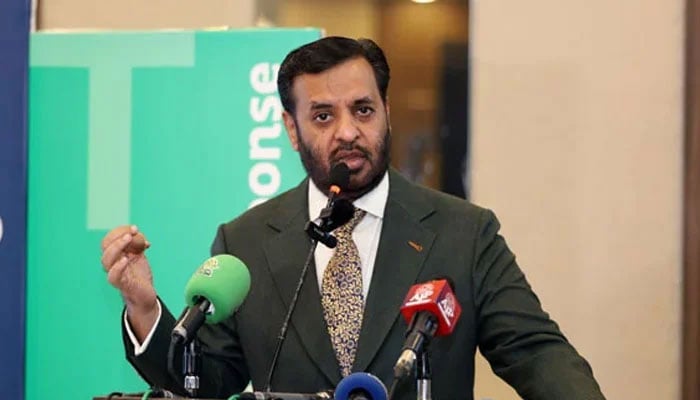
ISLAMABAD: Pakistan has approved its first-ever National Vaccine Policy, introducing buyback guarantees to incentivise pharmaceutical firms to invest in local vaccine manufacturing, Federal Health Minister Mustafa Kamal said on Thursday.
The initiative aims to strengthen domestic production capacity and reduce the country’s reliance on imported vaccines.
The development comes alongside a major regulatory milestone, as the Central Drugs Laboratory (CDL) of Drug Regulatory Authority of Pakistan (DRAP) has achieved prequalification from the World Health Organisation (WHO) for the first time, a step expected to strengthen confidence in the quality of Pakistani medicines and ease their entry into global markets.
Addressing a press conference at DRAP headquarters, the minister said the newly approved vaccine policy fills a long-standing gap, providing a structured framework to promote local vaccine production and attract foreign investment.
He said the government’s decision to offer buyback guarantees would ensure that manufacturers have a secure market for their products, making investment in vaccine production commercially viable.
“This is a critical step towards self-reliance in vaccines and strengthening Pakistan’s health security,” he said, adding that no comprehensive national policy on vaccines existed in the past despite growing demand and repeated public health challenges.
Highlighting the significance of WHO prequalification of the Central Drugs Laboratory, the minister said it would substantially reduce regulatory scrutiny for Pakistani pharmaceutical exports, allowing exporters to access international markets with fewer documentation requirements and faster approvals.
He said Pakistan is currently exporting medicines to around 51 countries, but with further regulatory strengthening and expected advancement to WHO Maturity Level 3 status within the next six to eight months, the country could expand its pharmaceutical exports to as many as 150 countries.
“Pakistan has the capacity, expertise and manufacturing strength. The missing link was international recognition, which is now being addressed,” he said.
The minister termed the dual developments of vaccine policy approval and CDL prequalification as significant for the country’s pharmaceutical sector, with potential to enhance exports and improve regulatory credibility.
Officials accompanying the minister included DRAP Chief Executive Officer Dr Obaidullah, along with senior officials Akhtar Abbas, Fakhruddin Amir and others.
Mustafa Kamal also said DRAP’s regulatory system has been digitalised, replacing manual processes, while a barcode system is being introduced to enable citizens to verify medicines through mobile phones, including details such as price and expiry.
Commenting on medicine pricing, he said that after deregulation, companies would not be able to sustain unjustified price increases, warning that action would be taken against those exceeding reasonable limits.
He added that around 85 per cent of pharmaceutical raw material is imported and added that huge investment is required for the establishment of Naphthacracker facility for the local production of Active Pharmaceutical Ingredients (API), underscoring the country’s potential to expand manufacturing capacity further under a supportive policy framework.