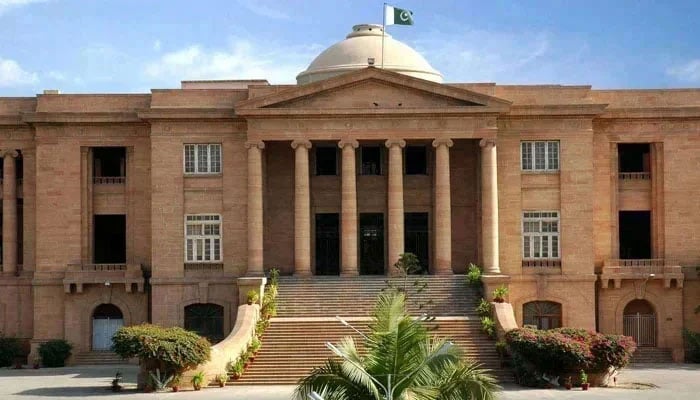
The Sindh High Court has directed the Pakistan Medical and Dental Council (PMDC), and public and private medical colleges to ensure grant of a full free-ship to 10 per cent of total strength of admitted students in compliance with the Rule 13 of the Sindh Private Educational Institutions (Regulation & Control) Rules, 2005.
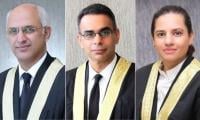
Issuing detailed judgment on a petition against minimum requirement of 55 per cent marks in the Medical & Dental College Admission Test (MDCAT), the SHC’s division bench headed by Justice Mohammad Saleem Jessar ordered the PMDC to obtain undertakings from medical colleges at the time of granting accreditation, recognition or registration of the private medical colleges / universities, to the effect that the institution shall offer full free-ship education to at least 10 per cent of the total strength of the admitted students in both the MBBS and BDS programmes.
The high court observed that failure to comply with it may entail penal consequences under the provisions of the PMDC Act. The bench also directed the PMDC to issue an admission policy each year in advance, fixing a definite eligibility criteria and a final deadline for admissions to the MBBS and BDS programmes in public and private medical colleges. The high court observed that the prescribed eligibility criteria and admission schedule once fixed shall not be altered under any circumstances.
It, however, observed that in the event when the PMDC found that a number of eligible candidates was less than the number of seats available on merit, it may reconsider and revise the eligibility criteria, but only in consultation with and subject to prior approval of the federal and provincial governments.
The SHC directed the provincial health department to initiate a consultative process with the PMDC, private medical colleges and others to devise a policy for admissions against the vacant seats in public and private medical colleges each year at the conclusion of the admission deadline.
The high court observed that the vacant seats in the MBBS and BDS programmes in both public and private medical colleges shall be filled strictly on merit. The bench ordered that private medical colleges/universities in Sindh, instead of seeking relaxation in the eligibility criteria, may consider and provide appropriate financial relief in educational fees so as to facilitate the admission of meritorious yet needy students, thereby ensuring that vacant seats were duly filled on merit.
The high court observed that in the present case, the petitioners intended to get reduction in merit criteria, which had no statutory support. The SHC observed that though the PMDC had granted such concession partially by reducing the minimum merit threshold, such an action by PMDC too was without statutory backing and could not be appreciated at all as it was tantamount to assassinate the future of medical education in Pakistan.
The high court observed that it was a huge dilemma that in a period when Pakistan had already been facing dearth of qualified doctors, allowing the practice of admissions to non-meritorious candidates would further aggravate the gravity of situation and may result in collapse of the health system.
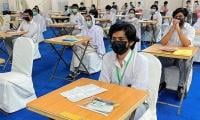
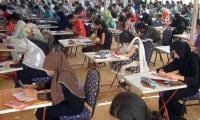
The SHC observed that it did not find merit in the request of the petitioners to reduce the eligibility criteria of the MDCAT marks for admissions to the MBBS and BDS programmes. A counsel for the PMDC, Zeeshan Abdullah, said MDCAT had been held wherein about 14,300 candidates from Sindh secured 55 per cent and above marks. He submitted that in public medical colleges all the seats on merit and self-financing scheme were duly filled and about 284 seats in MBBS programme were lying vacant in private medical colleges due to their exorbitant fees.
The SHC observed that the PMDC had extended full cooperation to private medical colleges by granting extension to the admission deadlines and lowering the eligibility threshold, thereby facilitating money minting.
The bench observed that the Sindh government as yet had not devised any policy to fill the vacant seats in medical colleges. It observed that although a large number of seats remained vacant, the absence of an enabling policy constituted a significant impediment to the admission of meritorious candidates, particularly those belonging to underprivileged segments of society.
The SHC observed that rather than seeking a reduction in the prescribed eligibility criteria, private medical colleges, having failed to attract the requisite number of candidates, ought to have taken proactive measures to admit available eligible candidates by extending meaningful financial assistance, including reduction in tuition fees, to deserving and needy students.
The SHC observed that record reflected that neither the provincial government nor the PMDC had devised a comprehensive policy governing the manner in which the vacant seats were to be filled.
The high court observed that the issue of vacant seats hovered over the fee structure of private medical colleges, which was out of the reach of poor families. The bench observed that in order to accommodate needy meritorious students and to fill the vacant seats, the health department must ensure that private medical institutions adhered to the principles articulated under the law of land.