Islamabad:Long-term official statistics reveal that Punjab’s education system underwent a profound transformation over the past five decades marked by major growth in secondary schools, higher education institutions and female participation in education.
Administrative data covering the period 1971–72 to 2020–21 by Gallup Surveys show that while the number of primary schools increased modestly, secondary education expanded rapidly and higher education institutions multiplied many times over.
At the same time, enrollment grew significantly across most levels of education, and female participation rose sharply. These trends reflect the gradual expansion of educational infrastructure and the increasing demand for schooling across the province.
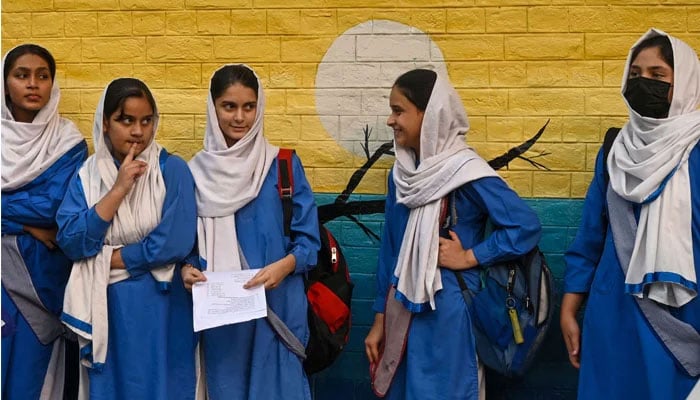
One of the most significant long-term changes in Punjab’s education landscape has been the dramatic increase in female participation across multiple levels of schooling. In the early 1970s, female participation in education was comparatively limited. For example, in 1971–72, girls accounted for 204,000 students enrolled in high schools, representing a relatively small portion of total secondary enrollment.
Over the following decades, however, female participation expanded substantially. By 2020–21, female high school enrollment had increased to approximately 2.29 million students, representing more than a tenfold increase over the five-decade period. This growth reflects major improvements in access to education for girls, as well as broader social and policy shifts that encouraged female participation in schooling.
Similar patterns are visible at other levels of education. Female enrollment in middle schools increased from approximately 177,000 students in 1971–72 to more than 1.00 million students in 2020–21, while primary school enrollment for girls rose from 617,000 students to about 1.73 million students during the same period.
The expansion of girls’ schools and improved access to secondary education likely played an important role in driving these trends. Taken together, the data suggest that female participation in education has been one of the most significant structural transformations within Punjab’s education system over the past five decades.
Enrollment trends, however, reveal a more complex trajectory. Primary school enrollment rose sharply during the late 1990s and early 2000s, reaching a peak of 5.24 million students in 2006–07. This surge likely reflects the combined impact of population growth, expanded school access, and education policy initiatives during that period aimed at increasing basic literacy and school participation.
The most dramatic structural change in Punjab’s education system over the past five decades occurred at the secondary education level, where both institutional capacity and student participation expanded at a much faster rate than in primary schooling.