Islamabad:A new policy analysis, published by the Peace & Justice Network (PJN), has presented gaps over a key provision in Pakistan’s cybercrime law, warning that the vague criminalisation of “false or fake information” under recent amendments to the Prevention of Electronic Crimes Act (PECA) could undermine freedom of expression and enable arbitrary enforcement.
One of the key concerns highlighted by the paper is Section 26-A, introduced through the 2025 amendments, which imposes criminal penalties, including imprisonment and fines, for disseminating “false or fake information.”
The provision, however, does not clearly define what constitutes such information, creating broad interpretive space for authorities. Legal experts and digital rights advocates caution that the absence of precise definitions risks conflating misinformation with legitimate criticism, satire or journalistic reporting.
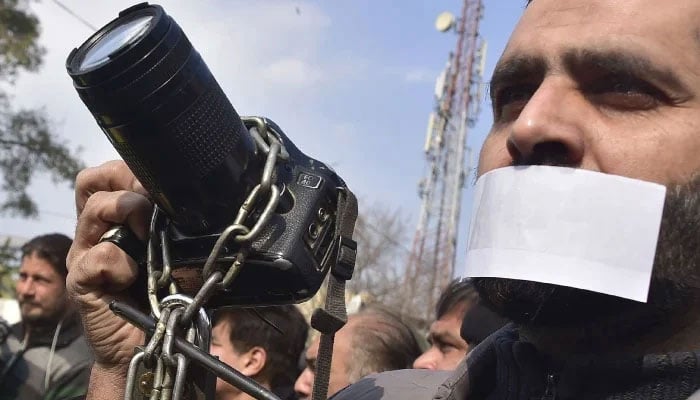
The analysis highlights that without clear legal thresholds, such as intent to cause harm or demonstrable public impact, the provision may be used to target dissenting voices, including journalists, activists, and political commentators.
“The issue is not whether misinformation should be addressed, but how,” the paper notes. “Criminal law must be narrowly tailored to prevent harm, not broadly framed in a way that chills democratic discourse.”
The analysis situates the provision within Pakistan’s constitutional framework, emphasising that any restriction on speech must meet established tests of legality, necessity, and proportionality. Vague or overly broad offences, it argues, are unlikely to meet these standards and may be vulnerable to constitutional challenge.
The report also points to emerging enforcement patterns, including cases involving journalists and online commentators, where speech-related provisions have been invoked. These developments, it suggests, demonstrate how unclear legal language can translate into inconsistent and potentially rights-infringing enforcement practices.