The world faces significant challenges. Countries are struggling to navigate difficult conditions. The global order, originally designed to resolve problems through dialogue and to share benefits of development, has become fragile. Its own supporters are undermining it by twisting the rules for their benefit at the expense of others. They manipulate institutions and conceal their motives under the cover of regulations. Recently, they have even begun bypassing global institutions to achieve their objectives. A notable example is US trade war, which exposed weaknesses in the system and permanently altered its dynamics, leading to fragmentation. Global economic and trade organisations, such as WTO, have become less relevant, while United States increasingly pursues bilateral trade agreements.
The Global North is adopting these measures to counter rise of Global South, particularly China’s peaceful emergence. Global North has struggled to maintain its dominance due to rapid advancement of Global South. It is evident Global South has outpaced Global North, with China leading Fourth Industrial Revolution. The region has become a new hub for innovation, technology, and economic activity, driving global growth. Even Western institutions acknowledge future growth momentum will largely come from this region. In its emerging role, Global South is becoming more open and actively seeking stronger economic ties with Global North markets. For instance, China has implemented policies of comprehensive reform and opening-up, creating new opportunities for foreign investment.
However, instead of reciprocating, Global North has increasingly targeted Global South. The United States stands out, as it not only targets Global South but also pressures its allies within Global North. Its trade policies pose risks to both allies and rivals alike. Economic and social challenges within Global North, especially in US, have further complicated the situation. The US has adopted coercive tactics to achieve its goals, as seen in its dealings with Japan and European Union.
Japan, for example, agreed to terms set by President Trump, committing to invest approximately $550 billion, with the condition 90pc of profits — after recovering initial investments — would go to United States. Additionally, Japan accepted if US secures more favourable tariff agreements for sectors like semiconductors and pharmaceuticals with other countries, Japan would be bound to accept those same terms. As a result, Japan is now dependent on US negotiations with other nations.
Similarly, European Union has faced pressure under US trade policies. Among other commitments, EU agreed to purchase $750 billion worth of energy and is expected to invest around $600 billion in US by 2028. This agreement has been widely criticised as unfavourable and even humiliating for EU. Analysts argue it has weakened EU’s credibility as a defender of a rules-based global system, prompting calls within Europe to reconsider or revoke the deal.
Despite internal differences, Global North countries remain united in restricting rise of Global South. In addition to United States, European Union has also introduced various barriers aimed at slowing growth of developing economies.
Given this context, Global South should not expect concessions from US or its allies. Instead, it must develop its own strategies to respond to current global trends and shape its future. One viable solution is establishment of a Global South Trade Organisation (GSTO). China could take the lead, given its experience with major initiatives such as Belt and Road Initiative (BRI) and China International Import Expo (CIIE).
Through BRI, China is reshaping global trade and infrastructure. According to World Bank assessments, 71 countries involved in the initiative are expected to benefit through higher GDP growth, improved welfare, increased trade, greater foreign direct investment, and better economic returns. Even countries not directly involved in BRI are projected to benefit. Travel times are expected to decrease by 12pc in participating countries and 3pc elsewhere. Trade could grow by 2.7pc to 9.7pc in BRI countries and 1.7pc to 6.2pc in others. Real incomes are also expected to rise significantly.
These projections are based on an estimated $575 billion in investments. However, since total BRI investments are expected to exceed $8 trillion, actual benefits could be far greater.
Another important initiative is China International Import Expo (CIIE), which promotes open markets and shared prosperity. It is a unique concept, as there is no historical precedent for an import-focused expo. President Xi Jinping personally initiated and supported CIIE as part of China’s commitment to openness. The expo has become a platform for introducing new products, exchanging ideas, and fostering innovation. China’s supportive policies encourage companies and investors worldwide to participate. Notably, the event has also supported least-developed countries by offering free exhibition spaces.
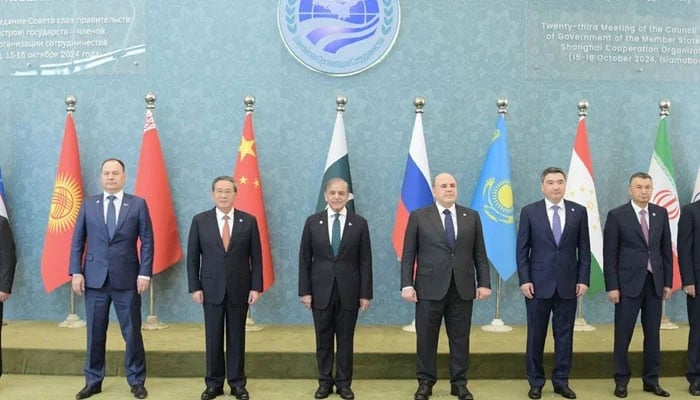
China is also actively engaged in Global South cooperation frameworks such as BRICS, Shanghai Cooperation Organisation (SCO), and Arab League. It has extensive experience in negotiating multilateral agreements, including Regional Comprehensive Economic Partnership (RCEP), and in dealing with major economic blocs like EU and ASEAN. These factors position China as a strong candidate to lead such an initiative.
However, proposed GSTO must learn from existing global trade systems, particularly WTO. Several key lessons emerge: the organisation must operate fairly; larger economies should act with generosity; cooperation should be mutually beneficial; national sovereignty must be respected; systems should be harmonised rather than made identical; and shared prosperity should be a central goal.
In conclusion, a Global South Trade Organisation built on these principles could foster a more peaceful and prosperous world, ultimately contributing to creation of a global community with a shared future.