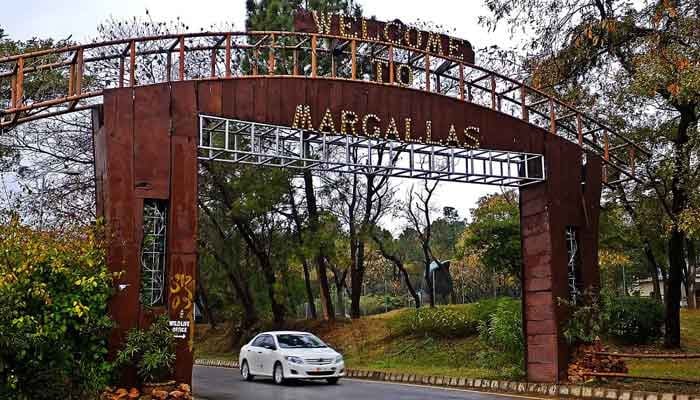
Islamabad : Leading environmental organisation WWF-Pakistan has raised serious concern over ongoing and proposed development activities in Islamabad's areas adjoining the Margalla Hills National Park, warning that continued expansion into ecologically sensitive foothill zones could lead to irreversible environmental damage.
It called for immediate precautionary measures, stronger regulatory oversight and strict environmental safeguards to ensure that development does not compromise the ecological integrity of the national park and its surrounding habitats.
According to WWF-Pakistan, recent assessments on tree removal and land clearing in Islamabad published by it indicate that large-scale vegetation clearance and infrastructure expansion are underway across multiple locations within the Islamabad Capital Territory.
It added that those developments had triggered concern among environmental experts, civil society groups and local observers.
The WWF-Pakistan said the Margalla Hills National Park formed a critical ecological system for the federal capital, as it supported diverse plant and animal species and played a key role in regulating air quality, groundwater recharge and local climate conditions.
It warned that development activity in close proximity to the park, regardless of administrative boundaries or buffer zone classifications, posed significant risks including habitat fragmentation, disruption of wildlife movement and gradual degradation of essential ecosystem services.
Field observations cited by the organisation suggested that ongoing expansion of road networks, land clearing and associated construction, particularly along corridors such as the Margalla Enclave Link Road and adjacent foothill regions, had already contributed to measurable ecological stress.
It said while some interventions could be linked to invasive species removal, the overall scale and pattern of land disturbance indicated broader development pressure that warrants closer scrutiny.
The WWF-Pakistan objected to proposed projects in the Margalla foothills, saying these proposals reportedly extend beyond limited park-related interventions and include large-scale infrastructure such as hotels, sports facilities and supporting developments.
It highlighted gaps in publicly available environmental impact assessments, limited evidence of structured stakeholder consultation and the absence of clearly defined ecological mitigation and restoration plans for several of those initiatives.
In view of the ecological sensitivity of the region, the WWF-Pakistan urged authorities to ensure that all development is subject to rigorous environmental review processes grounded in scientific evidence and transparency.
It specifically called on the local civic agency Capital Development Authority, with support from relevant institutions including the Islamabad Wildlife Management Board, to identify and enforce clearly defined no-go zones within and around the national park, particularly in critical wildlife habitats and migration corridors where development should not be permitted.
The organisation stressed that any proposed development outside those protected areas must undergo independently reviewed Environmental Impact Assessments, with findings made fully public and subject to meaningful consultation before approvals are granted. It also recommended that all ongoing and proposed construction activities in sensitive foothill zones be placed under immediate review until such safeguards are in place.