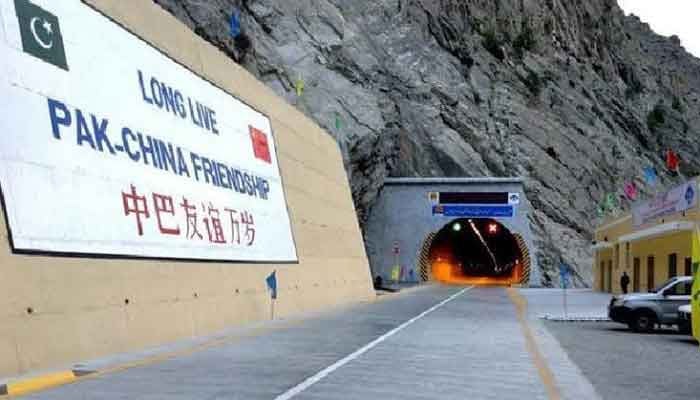
Islamabad: As China and Pakistan mark the 75th anniversary of diplomatic relations, their “all-weather strategic cooperative partnership” has delivered $25.93 billion in investment, major infrastructure and more than 261,000 jobs under the China-Pakistan Economic Corridor.
According to a fact sheet released by the Chinese Embassy in Islamabad, and reported by Gwadar Pro on Tuesday, CPEC — a flagship project of the Belt and Road Initiative — has added more than 8,000 megawatts of power generation capacity, built over 510 kilometres of roads and installed 886 kilometres of core transmission lines.
Gwadar has emerged as the corridor’s central hub. Expansion works at Gwadar Port include deep-water berths able to handle large cargo vessels and oil tankers. The new Gwadar International Airport, described as state of the art, is designed to accommodate some of the world’s largest aircraft.
Social projects have also been rolled out in the coastal city. The China-Pakistan Friendship Hospital has treated more than 350,000 patients. A seawater desalination plant produces about 3,000 tonnes of fresh water a day to ease local shortages. More than 10,000 households have received solar panels.
In education and skills, the Chinese-aided Technical and Vocational Institute in Gwadar provides thousands of training places each year. Local schools have been upgraded to widen access to education.
Across Pakistan, CPEC projects span energy, transport and industry. In Punjab, the Sahiwal coal power plant, 1,320 MW, and the Karot Hydropower Plant, 720 MW, have strengthened supply, while Lahore’s Orange Line Metro has improved urban mobility.
In Sindh, nuclear and wind projects have raised generation, and the Sukkur–Multan Motorway has cut travel times. In Khyber Pakhtunkhwa, the Suki Kinari Hydropower Project generates 884 MW of clean energy, saving an estimated 1.28 million tonnes of coal and cutting 3.2 million tonnes of CO2 each year.