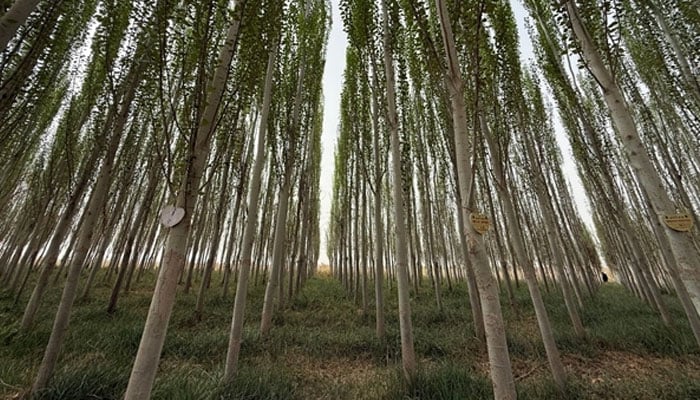
Islamabad : Pakistan’s deserts may look more formidable than China’s, yet in key respects they are not. For a Pakistani delegation visiting Xinjiang last week, the question was not how China had greened the Taklimakan Desert, but whether the model could be adapted at home.
Pakistan is not starting from scratch. Over the past decade, federal and provincial governments have run afforestation drives, tree-planting campaigns and programmes to improve water management and agricultural resilience on degraded land.
Progress, however, has been uneven. Funding gaps and the difficulty of coordinating across varied ecological and administrative zones have slowed delivery. Still, the knowledge base and the institutions, though imperfect, do exist.
Unlike the Taklimakan, often called the “Sea of Death” for its extreme aridity and shifting dunes, the Thar Desert receives higher rainfall and seasonal monsoons. It has long supported settlement, farming and livestock.
Yet those natural advantages have not produced large-scale restoration.
The challenge in Thar is less about halting an advancing desert than managing a fragile, inhabited ecosystem under strain. Erratic rainfall, poor water storage and pressure from human activity have degraded land that could otherwise support vegetation.