History is not subtle about what separates prosperous nations from failing ones. Strip away geography, culture, and accident and you find a single variable that predicts more than any other: whether a state managed, over time, to make its rulers answerable to the ruled. Every country that achieved sustained prosperity did so by solving this problem. Every country that failed to solve it is still waiting.
Pakistan is still waiting.
The story begins not in the lecture halls of Enlightenment philosophers but in the mud of political conflict. England’s Magna Carta of 1215 was not the birth of democracy. It was a barons’ rebellion against a capricious king. But its genius lay in a single proposition that would echo through centuries: even the sovereign is subject to law. For the first time, power was placed inside a cage.
The cage was tested repeatedly. The English Civil War of the 17th century ended with something history had rarely witnessed: the trial and execution of a sitting king. Charles I went to the scaffold in 1649 not because parliament hated him personally, but because it had concluded that unchecked authority was incompatible with a free society. The Glorious Revolution of 1688 completed the project – parliamentary supremacy was entrenched and authority began its long migration from persons to institutions.
The intellectual architecture followed. John Locke argued that governments derive authority from the consent of the governed. Montesquieu warned that concentrating power in one hand was the very definition of tyranny. Rousseau located sovereignty in the people; Kant imagined a rational, rule-bound order; J S Mill defended representative government as the school in which citizens learned to govern themselves. These were the intellectual foundations of institutional arrangements that transformed economic life.
When power became predictable, contracts could be enforced, property could be secured, and the rules of the game could be stable across changes of government. Capital moved. Investment followed. Over two centuries, a small island that had learned to discipline its own rulers built the largest empire the world had seen – not through conquest alone, but through the superior productive capacity that rule of law made possible.
Across the Atlantic, the lesson was applied with even greater deliberateness. The American Founders were clear-eyed about human nature. James Madison, principal architect of the US constitution, wrote that if men were angels, no government would be necessary – and since they were not, government must be designed to constrain them.
The constitution that emerged in 1787 remains, nearly two and a half centuries later, the supreme law of the US. It has survived civil war, depression and repeated tests of its institutions because it embedded one mechanism above all others: power must return to the people at regular, inviolable intervals. That mechanism, more than any policy or personality, built the world’s largest economy.
Pakistan’s founding was not devoid of vision. Muhammad Ali Jinnah articulated a state anchored in rule of law, parliamentary democracy and equal citizenship regardless of religion. The tragedy is that the institutions capable of delivering that vision were never built in time.
The constitution was delayed until 1956. In the intervening years, power became negotiable rather than rule-bound. Precedents of executive discretion and bureaucratic supremacy substituted for constitutional clarity. Such precedents, once set, acquire the force of unwritten law. They reshape expectations, recalibrate ambitions and make democratic culture progressively harder to cultivate.
Then came a moment that deserves more recognition than history has given it. In 1973, Zulfikar Ali Bhutto achieved something that Jinnah’s own team – despite the genius of the founder – had been unable to accomplish: a constitution framed and unanimously approved by an elected constituent assembly. Think of what that required: a fractured, newly traumatised polity, barely recovered from the catastrophe of 1971, coming together to agree on a charter. It was a parliamentary, federal and democratic compact – one that defined fundamental rights, balanced powers and gave Pakistan a constitutional foundation worthy of its aspirations.
That Bhutto – the most electorally popular leader Pakistan has ever produced, the man who succeeded where the creators of the state had failed – was subsequently removed by a military coup and executed by a judiciary widely regarded as neither independent nor impartial is one of the cruellest ironies in the country’s history. It sent a message that reverberated for generations: that in Pakistan, the ballot could be overridden, the constitution suspended and the people’s verdict reversed. The consequences of that message have never fully dissipated.
What followed was a pattern so familiar it has become almost invisible: elections held but delayed or held but manipulated; constitution suspended, and when in force, selectively honoured; authority exercised but not accountable. Military interventions alternated with civilian governments, each era ending in crisis. Democratic mandates were contested before the votes were counted. The one institution that could have broken the cycle – the ballot box – was never allowed to function without interference long enough to establish its own legitimacy.
The economic cost of this political instability is neither abstract nor trivial. When power is uncertain, policy becomes inconsistent. When rules are malleable, investment hesitates. When mandates are contested, reform lacks the authority to be implemented. The result is a stop-start economy: periods of stabilisation followed by relapse, growth without depth, opportunity without durability. Pakistan has been to the IMF more times than almost any other country. It has never consolidated the gains of its better periods. The reason is not a shortage of talent, resources, or strategic location. It is the absence of the one thing that makes sustained development possible: accountable governance.
It is tempting, in this context, to reach for technocratic solutions – tax reform, energy restructuring, industrial policy, trade liberalisation. All are necessary. None is sufficient. History is unequivocal: economic reform follows political accountability, not the other way around. The countries that got rich did not first get their economics right. They first got their politics right and the economics followed.
Pakistan does not need a new constitution. It has one. The 1973 constitution – born of consensus, tested by time, amended many times but still standing – is a viable foundation. What is missing is not design, but discipline: the discipline to hold elections on time, every time; to ensure they are free, fair and credible; and to accept their outcomes as the final word on who governs.
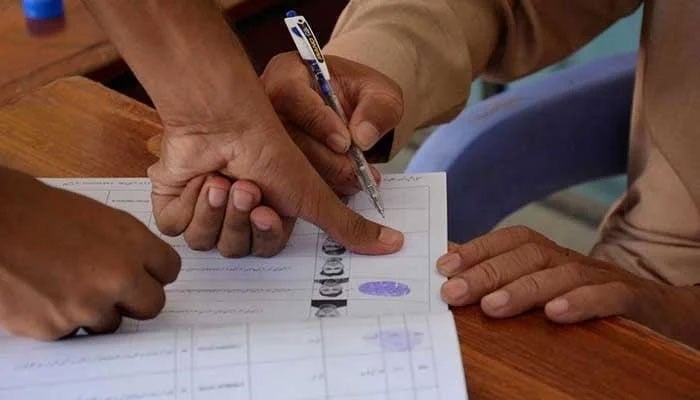
Regular, genuine elections matter for reasons that compound over time. They align incentives – governments that must face voters have powerful reasons to manage inflation, create employment and deliver services. They legitimise difficult decisions – fiscal reform is sustainable only when undertaken by governments with undisputed mandates. They discipline all actors – when the ballot box is sovereign, every institution must answer to public consent. And they generate, through repetition, the one resource no policy can manufacture: trust.
Citizens who believe their vote matters are more willing to accept outcomes, pay taxes and invest in the future. Trust is not sentiment. It is a public good – generated by credible processes, destroyed by their absence and almost impossible to rebuild once lost.
Pakistan’s path to economic revival, institutional strength and social stability does not begin in any ministry or market. It begins with an idea older than Magna Carta, proven across centuries and continents and still waiting to be consistently honoured in this country: That the governed must be able to choose – and change – their governors.
Make that real, without exception or interruption, and much else will follow. Fail to do so, and no other reform will be enough.
The writer is a former managing partner of a leading professional services firm and has done extensive work on governance in the public and private sectors. He tweets/posts @Asad_Ashah