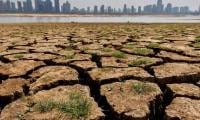
There is growing recognition in the global climate debate that climate change is not merely a matter of reducing emissions but also of addressing the production of fossil fuels. For decades, climate negotiations have focused largely on managing the consequences through emission and demand reduction while overlooking the supply side.
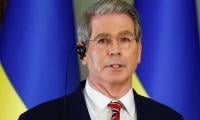
An important milestone in this debate occurred recently in Santa Marta, Colombia, where delegates from around 60 countries gathered at the first international meeting dedicated specifically to reducing fossil fuel production. It surprised many that in nearly three decades of climate talks, including under the UNFCCC and the Paris Agreement, fossil fuel phase-out had never been a stand-alone agenda item. Santa Marta went further, bringing together academics, indigenous leaders, youth representatives, entrepreneurs and civil society groups to discuss the technical, social, economic and political dimensions of a fossil fuel transition.
One of the most notable things that came out of this conference was that the participants wanted to move away from a focus on ‘net zero’ – another deeper issue related to the problem of fossil fuels, as fossil fuels cannot be viewed simply as a matter of energy but also as a matter of geopolitics, economy, and historic injustices. In other words, wealth and influence created in the so-called global north were based on the fossil fuel economy. Hence, a transition to other energy sources would imply profound changes in finance and other spheres.
One of the crucial insights that emerged concerned the political nature of the transition from fossil fuels. The fact is that such a process raises numerous issues, including those related to justice, equity and global solidarity. Indeed, many countries in the Global South are burdened by various problems, such as ‘immortal debts’.
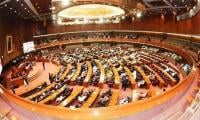
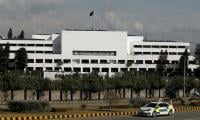
For Pakistan, the emerging shift in global conversations presents both a strategic opportunity and a challenge for internal policy reimagining. We, as a country that contributes minimally to global emissions yet remains among the most climate-vulnerable nations, prepare ourselves to advocate equally and then benefit from any emerging global framework that prioritises equity, climate finance, and a just transition. Also, our high-level and civil society engagement in such discussions can strengthen the country’s negotiating position by aligning its priorities with calls for loss and damage financing, concessional climate finance, and technology transfer.
At the same time, our ministries must proactively prepare by aligning their domestic policies with this evolving agenda. This includes strengthening the implementation of the national climate change policy, advancing the national adaptation plan (NAP), and accelerating the transition toward renewable energy under the alternative and renewable energy policy. Phasing down reliance on imported fossil fuels, improving energy efficiency, reducing economic strain on ordinary citizens and promoting nature-based solutions can position us as a credible advocate for climate justice.
One particularly encouraging and often under-recognised development in Pakistan is the rapid emergence of a citizen-led solar revolution. Across urban centres and rural communities alike, households, small businesses and farms are increasingly investing in rooftop and field-based solar systems. This transition has been largely organic, driven by soaring electricity costs, unreliable grid supply and growing public awareness of the need to break free from the burden of expensive energy arrangements. In many ways, this grassroots shift represents a silent but powerful transformation, with citizens shaping the energy transition themselves rather than waiting for policy direction.
This momentum deserves appreciation and strategic support rather than government antagonism. Policymakers must recognise, incentivise and scale this unprecedented public-led movement. Streamlined net-metering policies, lower import duties on solar technologies, easier access to green financing and regulatory stability can accelerate adoption while reducing import bills. At the same time, investment in grid modernisation and energy storage will be essential for effectively integrating distributed renewable energy into the national system.
Cherishing this citizen-led transition, the government in fact has a compelling narrative to showcase in the global climate arena. It demonstrates that even in resource-constrained settings, communities are willing to embrace clean energy, regardless of how disabling the conditions are. We can leverage this experience to advocate for decentralised renewable energy financing, climate justice and access to technology at platforms such as COP, Santa Marta, and multilateral climate forums. By positioning its unique solar uptake as a model of bottom-up climate action, the country can attract targeted international support, including from the Green Climate Fund and other global financing mechanisms.
To remain relevant in future negotiations, we must integrate a clearer stance on the fossil fuel transition into our policy architecture, while safeguarding our development priorities. At the same time, we need to institutionalise mechanisms for inclusive policy dialogue – particularly incorporating youth, civil society, scientific academia, practitioners and provincial voices, which will further strengthen our position at global forums. Ultimately, preparedness will depend on the ability to translate vulnerability into diplomatic leverage through our innovative, unique transition model. The alignment of national development pathways with the emerging global consensus on fossil fuel phase-out is absolutely sine qua non.
While the outcomes of the Santa Marta conference are still unfolding, its broader impact lies in reframing global conversations going forward. However, it has begun to normalise the idea that fossil fuel production itself must be addressed directly, not indirectly through emissions targets alone. This shift could influence future climate negotiations, including upcoming COP31 processes, or another Santa Marta proceedings in the following years by introducing new expectations and raising the level of ambition.
The road ahead remains complex. Resistance from powerful economic interests, institutional inertia and geopolitical tensions continues to shape the pace of progress. Yet, the conference signalled that old instruments have failed miserably, and new narratives are emerging that recognise the scale of the challenge and the need for bold, coordinated action.
In many ways, this moment represents a turning point. After years of incremental progress, the global climate community appears to be grappling more honestly with the root causes of the crisis. Whether this momentum translates into concrete outcomes will depend on sustained engagement, political will, and the ability of world leaders to transform ideas into enforceable commitments.
The writer is a climate governance expert. He can be reached at: [email protected]