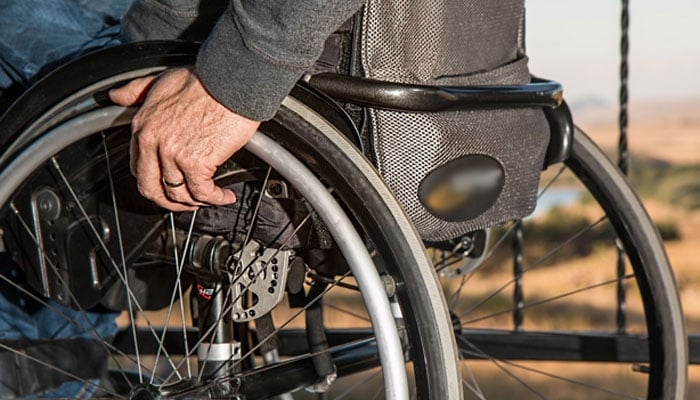
Sindh Chief Minister Syed Murad Ali Shah on Thursday distributed Rs800 million among 105 partner organisations and NGOs to provide assistive devices to disabled persons, terming the initiative a significant step toward inclusion, dignity and equal opportunity.
Speaking at the ceremony organised by the Department of Empowerment of Persons with Disabilities (DEPD) at the CM House, Shah said that the true measure of a society lies in how it treats its most vulnerable residents.
The initiative reflects the government’s commitment to building an inclusive and compassionate society where every individual can live with dignity, independence and confidence, he added.
He said that in collaboration with credible partner organisations, the government is ensuring the provision of wheelchairs, hearing aids, prosthetics and other assistive devices that can significantly improve the quality of life for disabled persons.
Reiterating that disability does not mean inability, he said that with the right support systems, disabled persons can actively contribute to society and the economy. He said the government is working on a broader inclusion agenda, including expanding DEPD services to the taluka level, strengthening implementation of the five percent job quota in the public sector, and encouraging its adoption in the private sector.
He also underlined initiatives aimed at inclusive education, teacher capacity-building in collaboration with international partners, and enhanced coordination for autism rehabilitation centres at the federal and provincial levels.
He appreciated the role of NGOs and partner organisations, saying that their grassroots outreach ensures support reaches those who need it most. Transparency, accountability and effective implementation remain central to the success of the initiative, he added, and commended the DEPD for advancing disability inclusion policies across Sindh.
Highlighting the importance of evidence-based policymaking, he announced plans for a comprehensive disability census to ensure accurate data for improved planning and service delivery.
Earlier, DEPD Secretary Tauha Farooqi gave a presentation, outlining the department’s performance, ongoing initiatives and future roadmap. The DEPD is operating through a wide network of 67 government special education & rehabilitation centres, 90 partner NGOs, braille press facilities and audio-visual libraries, all aimed at promoting inclusion and accessibility.
Enrolment in special education institutions increased from 4,794 in 2023 to 6,046 in 2025, marking a growth of over 26 per cent, though 2,033 students remain on waiting lists. Karachi recorded the highest increase, while Hyderabad, Sukkur and Larkana also showed notable progress.
After the DEPD took over the Agosh centre at the Pakistan Steel Mills, new admissions were made, though a significant number of students are still awaiting placement. Services are being provided to individuals with diverse needs, including autism, Down syndrome, ADHD, dyslexia, visual and hearing impairments, cerebral palsy, and other neurological and physical disabilities.
To modernise learning, 20 digital classrooms are functional, with 28 more planned. The DEPD is offering a comprehensive range of services, including free education, stipends, uniforms, assistive devices, transportation, meals, textbooks, braille materials and access to audio-visual libraries.
Skill development and vocational training programmes are also being implemented to create employment pathways and promote economic independence among disabled persons. Under the Centre for Autism, Rehabilitation & Training Sindh, 5,359 children have been registered, with 1,069 enrolled and 512 awaiting admission. New centres are nearing completion in multiple cities. The government has approved an endowment fund of Rs1 billion to ensure the sustainability of these centres.
Similarly, the Sindh Institute of Physical Medicine & Rehabilitation is expanding its services, with new facilities operational in Hyderabad and additional centres under construction in several cities.
Under the CM’s flagship Inclusive City project, 75 acres have been allocated to develop a fully accessible and integrated urban environment tailored to the needs of disabled persons. For the financial year 2025-26, the CM allocated Rs800 million for assistive devices, with a significant portion already released for distribution through partner NGOs. Through these collaborations, 15 new centres have been established, services have expanded province-wide, and approximately 120,000 individuals have benefited directly or indirectly.
The ceremony featured inclusive performances by special children from various institutions, showcasing their talent and creativity. An MoU was also signed by the Benazir Bhutto Shaheed Human Resource Research & Development Board and the DEPD to strengthen cooperation in disability empowerment initiatives.
The event concluded with the distribution of cheques to partner organisations and assistive devices to beneficiaries. Disabled children presented tableaus that highlighted their abilities and talents, demonstrating their readiness to learn and contribute meaningfully to society.