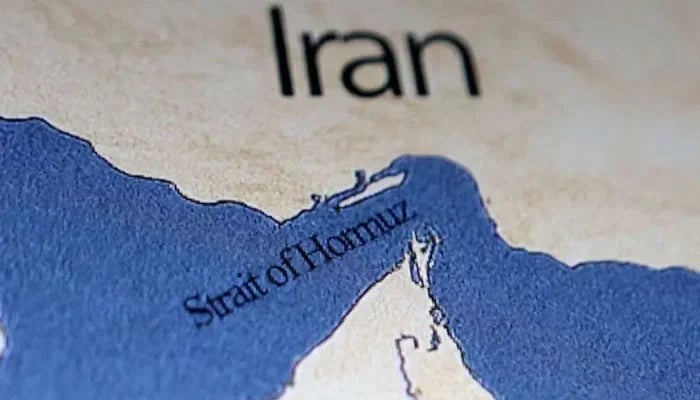
WASHINGTON: Hours after Donald Trump declared a naval blockade, multiple tankers emerged from Iranian ports and left the Strait of Hormuz, testing the resolve of US forces waiting on warships in the Gulf of Oman, the Financial Times reported.
The response of the US military — given orders to enforce the blockade, itself an act of war — will represent another pivotal moment in a weeks-long conflict that has become a battle to control the world’s most important energy waterway. The US operation requires a host of naval, air and intelligence resources, and raises complex questions around when and where to board ships — and what to do with them afterwards. The US deployed many of these tactics in a recent partial blockade of Venezuela.
The US military has committed a substantial force to the blockade, with more than a dozen warships, over 100 fighter jets and surveillance aircraft, and upwards of 10,000 troops enacting it.
But there are just eight days to go in Washington and Tehran’s two-week ceasefire, and it could take longer for Iran to feel the economic pain from a slowdown in oil exports, experts said. “Blockades rarely achieve an outcome in any short period of time, historically. They take time to have weight,” said retired vice-admiral Kevin Donegan, former deputy chief of naval operations.
By Tuesday afternoon, the blockade appeared to be influencing ships’ movements: a sanctioned tanker travelling through the strait had U-turned and others that passed through had subsequently stopped, ship-tracking data showed. US Central Command, which oversees American military operations in the region, said no ships coming from Iranian ports went through the US blockade in its first 24 hours and six commercial vessels turned around when ordered to do so.
Once US troops have boarded a ship, they can inspect the cargo and the vessel’s records to see where it has been, where it might be going and where goods on board came from, said Donegan.
If there is evidence the ship was going from or to an Iranian port, or carrying Iranian cargo, the US would then have to decide what to do with the vessel — at present the most opaque element of the US plans for the blockade. The US could also seize the vessel and hold it in a local or neutral port with permission from that third country. A third possibility is seizing the cargo, selling any oil on board, and eventually releasing the ship, as the US did with some tankers travelling from Venezuela. However, seizing a vessel could present complex legal issues, said retired vice-admiral John Miller, who commanded US naval forces in the Middle East: Any nation that “accepts those ships then becomes a belligerent in the conflict”.