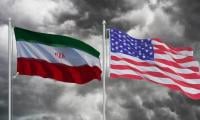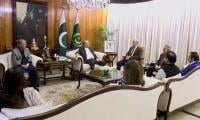
ISLAMABAD/ WASHINGTON/DUBAI: Talks to end the Iran war could resume in Pakistan over the next two days, US President Donald Trump said on Tuesday, after the collapse of weekend negotiations prompted Washington to impose a blockade on Iranian ports.Gulf, Pakistani and Iranian officials also said negotiating teams from the US and Iran could return to Pakistan later this week, though one senior Iranian source said no date had been set.
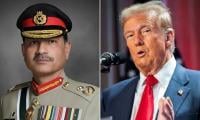
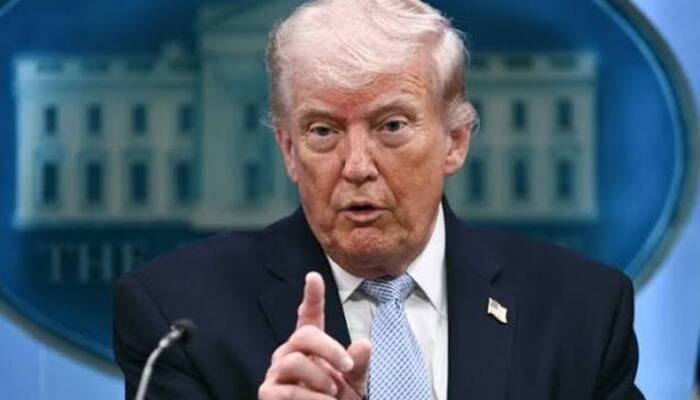
“You should stay there, really, because something could be happening over the next two days, and we’re more inclined to go there,” Trump was quoted as saying in an interview with the New York Post. After saying in an initial call that talks were unlikely to return to Pakistan, the Post said Trump called back minutes later to say it was “more likely” they would go back to Islamabad because Field Marshal Asim Munir “is doing a great job.”
“He’s fantastic, and therefore it’s more likely that we go back there,” Trump said. “Why should we go to some country that has nothing to do with it?” “I just think he’s a great guy. that guy. The field marshal. You know he ended the war with India, saved 30 million people,” he added.
Trump did not say who would represent the US in a potential second round of talks, but confirmed he would not take part. President Trump will not be in the US delegation attending the likely second round of in-person peace talks with Iran in Pakistan, New York Post reporter quoted the US president as saying in a post on X.
The US president also indicated he was not pleased with reports that the US had asked Iran to suspend its uranium enrichment programme for at least two decades during this past weekend’s unsuccessful talks.
While the US blockade drew angry rhetoric from Tehran, signs that diplomatic engagement might continue helped calm oil markets, pushing benchmark prices below $100 on Tuesday.
The highest-level talks between the two adversaries since the 1979 Islamic Revolution ended in Islamabad without a breakthrough, raising doubts over the survival of a two-week ceasefire that still has a week to run.
Since the United States and Israel began the war on February 28, Iran effectively shut the Strait of Hormuz to nearly all vessels except its own, saying passage would be permitted only under Iranian control and subject to a fee. Nearly a fifth of global oil and gas supplies previously flowed through the narrow waterway, making the fallout widespread.
In a countermeasure, the US military said it began blocking shipping traffic in and out of Iran’s ports on Monday. Tehran has threatened to hit naval ships going through the strait and to retaliate against its Gulf neighbours’ ports.
US Central Command said the blockade of Iranian ports involved more than 10,000 US military personnel, more than a dozen warships and dozens of aircraft.
“During the first 24 hours, no ships made it past the US blockade and 6 merchant vessels complied with direction from US forces to turn around to re-enter an Iranian port on the Gulf of Oman,” CENTCOM said in a statement posted on X. The three Iran-linked vessels that transited the strait were not heading to Iranian ports and were not affected by the blockade.
Shipping data showed the blockade had made little difference to Strait of Hormuz traffic on Tuesday, with at least eight ships crossing the waterway. More than 20 commercial ships have passed through the Strait of Hormuz in the past 24 hours, the Wall Street Journal reported late on Tuesday, citing US officials. Reuters could not immediately verify the report.
The latest standoff has further clouded the outlook for global energy security and the supply of goods that rely on petroleum.
On Tuesday, the International Monetary Fund cut its growth outlook and said the global economy would teeter on the brink of recession if the conflict worsens and oil stays above $100 per barrel into 2027.
The International Energy Agency slashed its forecasts for global oil supply and demand growth, saying both are now expected to fall from 2025 levels.
The US’ NATO allies including Britain and France said they would not be drawn into the conflict by taking part in the blockade, although they have offered to help safeguard the strait by drawing together a defensive multilateral mission to assist when an agreement is in place.
China, the main buyer of Iranian oil, said the US blockade was “dangerous and irresponsible” and would only aggravate tensions. President Xi Jinping vowed that China will play a “constructive role” in promoting peace talks in the Middle East as he urged respect for sovereignty of nations in the war-torn region, state media reported.
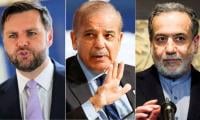
US Vice President JD Vance, who led Washington’s delegation in Pakistan, has said Trump was adamant that any enriched nuclear material must be removed from Iran and a mechanism be established to verify that Iran is not developing nuclear weapons.
A source briefed on the matter confirmed reports that the US had proposed a 20-year suspension of all nuclear activity by Iran “with all sorts of restrictions.”
Two Iranian sources said Iran had rejected the proposal, suggesting a halt of just three to five years.
One source involved in the negotiations in Pakistan said backchannel talks since the weekend had produced good progress in closing the gap on the nuclear issue, bringing the two sides closer to a deal that could be put forward at a new round of talks.
Complicating Pakistan’s mediation efforts, Israel has continued targeting Iran-backed Hezbollah in Lebanon. Israel and the United States say that campaign is not covered by the ceasefire, while Iran has insisted it is.
Regarding Iran, Israeli Foreign Minister Gideon Saar told reporters in Jerusalem on Tuesday: “We will never allow Iran to obtain nuclear weapons ... The enriched materials must be removed from Iran.”
With the war unpopular at home and rising energy prices causing political blowback, Trump paused the US-Israeli bombing campaign last week after threatening to destroy Iran’s “whole civilisation” unless it reopened the strait.
The ceasefire has largely held over its first week despite sharp rhetoric from both sides.
UN Secretary-General Antonio Guterres said on Tuesday the indication the United Nations had was that it was highly probable talks to end the Iran war will restart.
Asked what the United Nations knew about such prospects, Guterres told reporters at the UN, “The indication we have is that it is highly probable that these talks will restart.” Guterres said he spoke on Tuesday to the deputy prime minister of Pakistan, Ishaq Dar, and praised Pakistan’s peace efforts. “I consider it essential that these negotiations go on,” Guterres said.
“I think it would be unrealistic to expect... such a complex problem, long-lasting problem, could be resolved in the first session of a negotiation. So we need negotiations to go on, and we need a ceasefire to persist as negotiations go on.”
Guterres said international freedom of navigation must be respected “by all parties” in the Strait of Hormuz. He said the ceasefire between the United States and Iran “must be preserved”.
US Secretary of State Marco Rubio urged Israel and Lebanon to seize a “historic opportunity” for peace as direct talks between the two opened on Tuesday despite objections from Hezbollah, which announced fresh attacks on Israel just as negotiations got underway.
Tuesday’s meeting in Washington—the first high-level, direct talks since 1993 -- was mediated by Marco Rubio and involved the Israeli and Lebanese ambassadors to the United States. “This is a historic opportunity,” Rubio said as he welcomed the ambassadors, acknowledging the “decades of history” complicating the process. “The hope today is that we can outline a framework upon which a current and lasting peace can be developed.”
Lebanon’s President Joseph Aoun said he hoped the talks “will mark the beginning of the end of the suffering of the Lebanese people”. But expectations of any major breakthroughs were low, with Hezbollah’s leader Naim Qassem calling for the talks to be scrapped before they even began, describing them as “futile”. Shortly after the talks began, Hezbollah said it had launched “simultaneous rocket salvos” at 13 northern Israeli towns. Israel’s Foreign Minister Gideon Saar said his country was seeking “peace and normalisation” with Lebanon.
Foreign ministers from 17 countries, including the UK urged Israel and Lebanon to “seize this opportunity” in a statement. It was signed by ministers from Britain and Australia and European countries such as France, Belgium, the Netherlands and Spain, but not Germany, Austria, Hungary or Italy.
French President Emmanuel Macron said Tuesday he had urged US President Donald Trump and his Iranian counterpart Masoud Pezeshkian to resume stalled talks towards ending the Iran war. “I urged the resumption of the negotiations suspended in Islamabad, the clearing up of misunderstandings, and the avoidance of any further escalation,” the French president wrote on X, after speaking to both leaders on Monday. “It is essential, in particular, that the ceasefire be strictly respected by all parties and that it include Lebanon,” Macron said. “It is equally important that the Strait of Hormuz be reopened unconditionally, without restrictions or tolls, as soon as possible,” he added.
Iranian authorities have sentenced to death four more people, including a woman, over protests in January this year, several rights groups said on Tuesday.
A drone struck an Iranian Kurdish group on Tuesday wounding three people, a party official told AFP, in the first such attack in northern Iraq since a fragile ceasefire took effect in the region. Commander Mohammed Hakimi from the exiled Komala party blamed the attack on “Iran and its affiliated militias.”
An American-Kuwaiti journalist has been detained for weeks and charged in Kuwait, the Committee to Protect Journalists said on Tuesday, as Gulf countries crack down on people sharing footage documenting the US-Iran war.
Ahmed Shihab-Eldin, a journalist who has contributed to The New York Times, PBS, and Al Jazeera English, has not posted online or been seen in Kuwait since March 2, the press freedom watchdog said.
The international Red Cross movement said Tuesday that a shipment of life-saving medical supplies and other aid has crossed the border into Iran, its first since the start of the war.
Demand for crude oil will likely decline this year for the first time since the Covid pandemic slammed the global economy six years ago, weighed down by Mideast war disruptions, the IEA warned Tuesday.
Spanish inflation jumped to a 21-month high of 3.4 percent in March as the Middle East war caused fuel prices to spike, revised data showed on Tuesday.
The European Commission said it fears Europe could face jet fuel supply issues “in the near future” with no end in sight to the Iran war roiling global energy markets.
Baghdad’s oil ministry said it has “understandings” with the United States and Iran to reduce the impact of the blockade of the Strait of Hormuz on Iraqi oil exports. The ministry did not elaborate or say when these reported understandings were reached.
The Israeli military said Tuesday that a soldier had been killed in Lebanon, the first since a US-Iran temporary truce came into force that Israel insisted does not include the country where it is fighting Tehran-backed Hezbollah.
The US Treasury Department said Tuesday it does not plan to renew a temporary easing of sanctions on Iranian oil that aimed to ease war-related supply shocks. “The short-term authorization permitting the sale of Iranian oil already stranded at sea is set to expire in a few days and will not be renewed,” the Treasury Department said in a statement.
European countries are putting together a plan for a broad coalition of countries to help free up shipping through the Strait of Hormuz, including sending mine-clearing and other military vessels. But the plan would only come after the war and may exclude one country in particular: the US. French President Emmanuel Macron said Tuesday the plan is for an international defensive mission that doesn’t include the “belligerent” parties, meaning the US, Israel and Iran. European diplomats familiar with the plan say European ships wouldn’t be under American command, the Wall Street Journal reported.
The goal of the European plan is to give shipping companies confidence to use the strait after the fighting has ended, which officials say could be some time away.
The European plan is likely to include Germany, which had until now been publicly reluctant to even contemplate any military involvement, according to a senior German official. Germany, which has faced high political and legal hurdles to take part in overseas military ventures since World War II, could spell out its commitment as early as Thursday, according to the official.