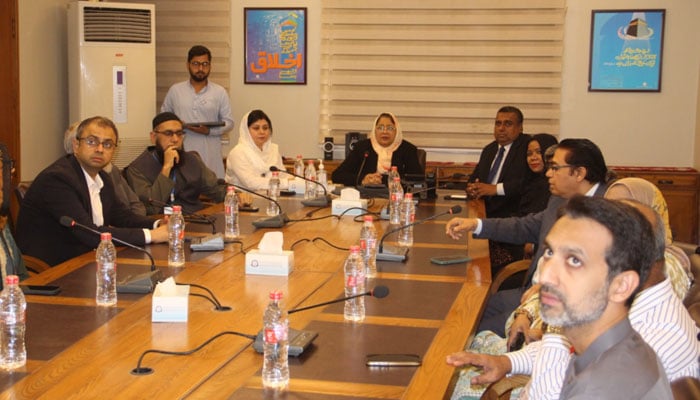
Pakistani and Bangladeshi experts have held detailed discussions on cost-effective treatment options for various types of cancers, focusing on sustainable and affordable oncology solutions for developing countries where a majority of patients cannot afford expensive modern therapies.
The deliberations took place during the visit of a high-level Bangladeshi delegation to the Dow University of Health Sciences (DUHS) on Saturday where both sides explored avenues for collaboration in advanced cancer care, knowledge transfer and capacity building.
The discussions stressed the need for developing accessible and resource-efficient oncology models tailored to low- and middle-income countries like Pakistan and Bangladesh.
The delegation was led by Bangladesh’s High Commissioner to Pakistan Muhammad Iqbal Hussain Khan, accompanied by Head of Chancery Ishrat Jahan.
They were received by DUHS Vice Chancellor (VC) Prof Dr. Nazli Hossain. Dow International Medical College Principal Prof Uzma Bukhari and Dow University Hospital Medical Superintendent Dr Khurshid Ahmed Soomro were also present on the occasion.
During the visit to the Ojha Campus, the delegation toured the Dow Comprehensive Cancer Center where the Bangladeshi experts were briefed on its state-of-the-art oncology services, including medical oncology, radiation oncology, gamma knife radiosurgery, nuclear medicine, and theranostics.
The visitors also reviewed advanced technologies such as PET-CT imaging and MR-LINAC-based adaptive radiotherapy, which enable precise and effective cancer treatment.
The Bangladeshi officials expressed keen interest in benefitting from Pakistan’s expertise in delivering high-quality, yet cost-effective cancer care. Both sides agreed to promote cooperation in modern oncology through faculty and student exchange, joint research initiatives and institutional partnerships.
The delegation was also briefed on the DUHS’s integrated healthcare system, including specialised services in hepatology, liver transplantation, nephrology, renal transplantation and bone marrow transplantation, reflecting the institution’s comprehensive approach to patient care and medical training.
As part of the academic engagements, the visitors toured the Dow International Medical College where they reviewed undergraduate and postgraduate programmes, research initiatives and training facilities. The discussions underscored the importance of strengthening academic linkages between the two countries.
The delegation also visited Dr Ishrat-ul-Ibad Khan Institute of Oral Health Sciences (DIKIOHS) where they observed modern dental education and clinical training. They toured departments of oral and maxillofacial surgery, orthodontics, prosthodontics and endodontics, along with advanced laboratories and phantom labs.
Principal Dr Anwar Ali, Vice Principal Dr Rimla Naz, and Dr Khurram Pervez were present during the visit.
During bilateral talks, both sides agreed to enhance cooperation in medical education, research and healthcare delivery with particular emphasis on oncology.
The visit concluded with a commitment to strengthen long-term institutional partnerships between Pakistan and Bangladesh. The VC reaffirmed the DUHS’s dedication to advancing medical excellence and fostering international cooperation in healthcare.
It is pertinent to mention that Bangladesh High Commissioner Muhammad Iqbal Hussain Khan had also visited DUHS in the last week of January where discussions were held on enhancing academic cooperation, including opportunities for Bangladeshi students under the Higher Education Commission of Pakistan’s Allama Iqbal Scholarship Programme.