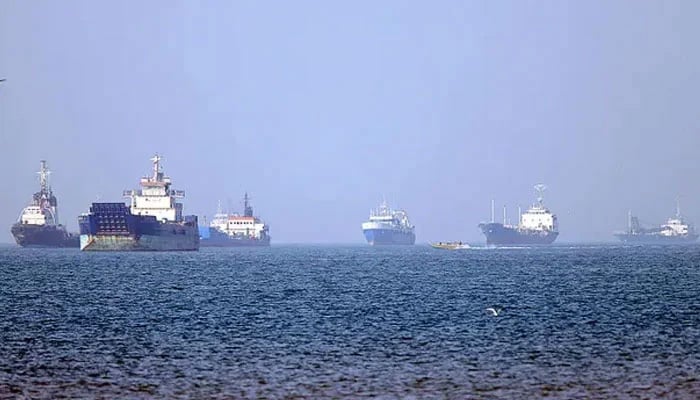
Straits have always concentrated power. Narrow channels of water can move markets, redirect empires and reset the price of energy far beyond their shores.
From Hormuz to Suez, these maritime chokepoints do more than funnel ships: they expose a deeper truth about the modern economy. Global trade runs on the sea as infrastructure – indispensable, strategic and yet treated as a free, open-access resource. That fiction is starting to fail.
Shipping companies pay for vessels, fuel, crews, ports and insurance. They pay canal tolls and freight charges. What they do not pay for is the marine asset that makes commerce possible: the physical medium that carries trade, the ecosystems that absorb waste, the climate systems that buffer risk and the natural processes that keep the global economy moving. That is the invisible subsidy embedded in global trade.
The ocean is not simply a shipping lane. It is natural capital. It is infrastructure. It is the world’s largest productive asset. Yet unlike roads, ports, pipelines or power grids, it barely appears on balance sheets. Modern economies book, finance and maintain built infrastructure. The ocean – the largest trade-enabling asset in the world – remains largely unbooked, underpriced and systematically overused.
That matters far beyond shipping. The ocean underpins what policymakers now call the blue economy: the vast and growing web of industries that depend on marine space and marine systems, from fisheries and offshore energy to subsea cables, coastal tourism and digital infrastructure. We have become comfortable describing the ocean as an economy. We remain far less willing to treat it as capital. That is the real pricing failure.
Fisheries price the catch, but not the reproductive system that sustains it. Offshore oil and gas use the ocean as an extraction platform, a cooling system and a waste sink. Offshore wind depends on marine space and marine stability to power the energy transition. More than 95 per cent of intercontinental digital traffic travels through subsea cables laid across the seabed. The ocean is not just the infrastructure of trade. It is the infrastructure of energy, finance, communications and growth.
The same imbalance runs through the system: value is captured privately, while costs are shifted elsewhere. Markets price short-term risk – delay, disruption, scarcity – but largely ignore the long-term depreciation of the ocean itself.
The law is beginning to catch up with this reality. The High Seas Treaty and the law of the sea increasingly recognise that the ocean is shared, finite and governable. The International Maritime Organisation has already begun pricing shipping emissions. Legally, we are moving, however slowly, towards stewardship. Economically, we still behave as if the ocean were an open-access sink. That disconnect is no longer tenable.
The real question is not whether the ocean generates value and how much of it. The question is who captures it, and who pays for the depletion that follows. Today, the gains accrue disproportionately to shipping firms, commodity traders, insurers, industrial economies and consumers. The costs are outsourced to those least able to bear them: by coastal communities, fisheries, small island states, marine ecosystems and future generations.
The answer is not to fragment the high seas or commodify the ocean. It is to end the fiction that access comes without obligation. The high seas may belong to no one, but that is no case for free, unchecked use. It is a case for collective stewardship: treating the ocean as a shared asset, governed multilaterally and restored collectively.
For centuries, the ocean was treated as a frontier – open, extractable, limitless. That model is now obsolete. The lesson of Hormuz is not about access being weaponised, but about mispricing: a global economy dependent on an asset it still treats as free. That distortion is becoming harder – and more expensive – to sustain.
The writer is an environmental economist and can be reached at: [email protected]