At moments of geopolitical uncertainty, global capital does not disappear; it recalibrates, repositions and seeks new avenues of stability and growth.
The ongoing tensions across the Middle East are not dismantling the region’s economic strength, but they are subtly reshaping investor psychology. For decades, the Gulf has been perceived as a pillar of stability and opportunity, and that perception largely remains intact. However, even a marginal rise in perceived risk prompts investors to rethink concentration and explore diversification. This shift should not be misunderstood as a loss of confidence in the Middle East. It is an evolution in how modern capital behaves. Investors are looking for complementary geographies that can provide growth, cost efficiency and long-term scalability.
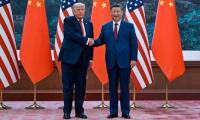
In this emerging landscape, Pakistan finds itself at a unique and largely underappreciated inflexion point. This positioning is further reinforced by a hard-earned reset in Pakistan’s global image. Pakistan has regained respect on the diplomatic front. This enhanced geopolitical relevance serves as a strong foundation for attracting foreign investment into Pakistan.
The opportunity for Pakistan is not to compete with the Middle East, but to position itself as a natural extension of it. The Gulf economies are mature, capital-rich and globally integrated. What they increasingly require are adjacent markets where capital can be deployed efficiently while accessing new growth. Pakistan, by virtue of its demographic size, consumption dynamics and cultural alignment, offers precisely that.
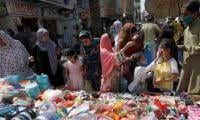
Investors are increasingly seeking undervalued, consumption-driven markets with improving policy environments, criteria that Pakistan strongly meets. However, it is often narrowly perceived through the lens of macroeconomic challenges such as currency volatility, which obscures its deeper, more compelling investment potential. Pakistan is one of the largest consumer markets in the world, with a population exceeding 250 million and growing rapidly. Nearly 60 per cent of its population is under 30. Within this, a significant segment has meaningful purchasing power, driving demand across food, retail and services. This is an active and expanding market.
Pakistan’s economy is strongly consumption-driven, with high money circulation fueling continuous demand and rapid adoption of new products. For investors, this shifts the challenge from creating markets to capturing existing demand. Pakistan offers Middle Eastern investors a strong advantage through cultural, dietary and lifestyle familiarity, which lowers entry barriers and enables proven Gulf business models, especially in food, retail and services, to scale quickly. This is further reinforced by deep regional ties. The economic case is further strengthened by cost arbitrage. Compared to the Gulf, Pakistan offers substantially lower costs across real estate, labour and operations. This creates a compelling margin advantage. In an environment of rising global costs, this combination of scale and affordability becomes highly attractive.
At the same time, Pakistan’s logistical and trade significance is re-emerging. Karachi, historically a key maritime gateway, is once again being recognised as a strategic shipping hub. This revival reflects not only geographic advantage but also the rediscovery of Pakistan’s role in regional trade flows. Pakistan’s food, beverage and retail sectors highlight strong untapped potential. Unlike saturated Middle Eastern markets, Pakistan is underpenetrated, with urbanisation, a growing middle class and changing lifestyles driving demand. The success of multinationals confirms strong profitability and commercial viability, offering clear early-mover advantages for new investors.
Real estate presents a compelling investment opportunity in Pakistan, driven by genuine end-user demand rather than speculation. Rapid urban expansion, alongside a 65-70 per cent urbanisation rate extending into Tier-2, Tier-3 and Tier-4 cities, is creating sustained demand for housing and commercial infrastructure, ensuring stability and long-term value, particularly in mixed-use developments.
This growth can also significantly boost Pakistan’s tourism sector. Despite its extraordinary and diverse landscape, the country generated only around $1 billion in tourism revenue by the end of 2025, compared to approximately $35 billion earned by peers such as Malaysia, Turkey, Egypt and the UAE. Strategic development of hospitality and tourism-linked real estate can help bridge this gap and unlock substantial economic potential.
Beyond domestic opportunities, Pakistan’s potential as a halal export hub adds a strategic dimension. The global halal food market exceeds $2 trillion, with the Middle East heavily reliant on imports. Pakistan is well-positioned to capture this demand. The dairy sector further strengthens this potential. Even a modest share of Gulf imports could generate billions in export revenues while enhancing economic fundamentals and regional integration.
For investors, this creates a dual opportunity. Pakistan is not only a destination for capital deployment within its domestic market, but also a base for production and export back into the Middle East. This integrated model enhances both profitability and strategic alignment, positioning Pakistan as a partner in regional economic expansion.
Another important consideration is the origin of capital within the Middle East. A significant portion of investment in the Gulf has links to Pakistani individuals and businesses. In times of uncertainty, capital tends to gravitate towards familiar, trusted environments. Pakistan can leverage this dynamic by positioning itself as a natural extension of existing investment networks.
Pakistan’s challenge lies in execution, not potential. To convert opportunity into investment, it must provide clarity, predictability and ease of doing business. At the same time, it needs to reshape its global narrative, positioning itself as a high-growth, consumption-driven market rather than a high-risk economy, through consistent messaging backed by credible policy actions. A dedicated investor facilitation body, backed by the government but driven by the private sector, is essential to bridge the gap between opportunity and execution, ensuring coordination, resolving concerns and sustaining investments.
Shifting global capital flows create a timely opportunity for Pakistan to position itself as a natural partner for Middle Eastern expansion. By improving policies, processes and communication, Pakistan can attract greater investment as a complementary, not competing, market.
This is a time-sensitive opportunity that requires decisive action. Beyond economic gains, it offers the potential to strengthen long-term regional relationships and create a sustainable framework for mutual benefit. This must be owned by the state in partnership with the private sector.
The writer is a former global corporate executive (Unilever, PepsiCo, Yum! Brands), a mental health advocate and a founding board member of Taskeen, a pioneering organisation focused on emotional well-being in Pakistan.