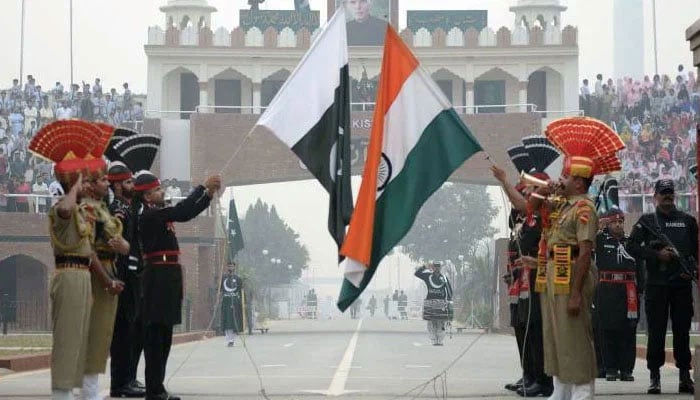
For 79 years, Pakistan and India have remained locked in a dynamic that has proven remarkably resistant to change.
Political cycles, security crises, and hardened narratives have reinforced a status quo in which hostility persists, engagement remains limited and meaningful progress remains out of reach. That dynamic may have been tolerable in a different era, but it is no longer sustainable.
The global environment is shifting rapidly, leaving little room for regions that remain internally divided. Power is diffusing across multiple centres, economic competition is intensifying and diplomatic relevance is increasingly tied to a state’s ability to engage across competing interests rather than remain confined within rigid postures. In such a world, South Asia’s continued fragmentation incurs rising strategic costs.
Pakistan and India together represent one of the largest concentrations of human capital in the world. Yet the region continues to function far below its potential. Trade remains negligible, connectivity is limited and political engagement rarely survives beyond short-lived openings. While other regions adapt to new economic and geopolitical realities, South Asia continues to expend its energy managing a rivalry that yields diminishing strategic returns.
There are moments in international politics when structural shifts create space for recalibration. Those moments do not last indefinitely. They require recognition and political will. This is one of those moments.
Pakistan’s recent diplomatic posture, maintaining working relationships across the US, China and Russia while engaging in regional mediation efforts, reflects an attempt to operate within this evolving landscape. It is an acknowledgement, however imperfect, that strategic relevance now depends on flexibility and engagement.
India, for its part, continues to command significant economic and political weight. But influence in a changing world is not defined by scale alone. It is defined by how that scale is used.
Recent remarks by India’s external affairs minister, including the use of derogatory language in response to Pakistan’s role in facilitating backchannel engagement between the US and Iran and the dismissal of engagement, reflect a posture that prioritises rhetoric over strategic engagement. Such an approach may resonate domestically but is increasingly difficult to sustain in a global environment that rewards connectivity over isolation. It is also becoming harder to reconcile with the expectations of a younger generation that is less invested in inherited hostilities and more focused on opportunity, mobility and economic growth.
This generational shift may be the most underappreciated factor in the future of Pakistan-India relations.
For those who lived through the violence and displacement of 1947 and its immediate aftermath, the weight of history is deeply personal. The trauma of that period shaped national identities and continues to inform political narratives. But for a growing majority of Pakistanis and Indians today, that history is inherited rather than lived.
Their daily realities are defined less by past grievances and more by present constraints: rising costs, limited economic opportunities and the pressures of competing in a globalised economy. They are connected through shared culture, language, digital spaces and increasingly similar aspirations. For this generation, the continuation of hostility is not identity, but constraint.
The idea that perpetual confrontation should define the relationship between two countries with such deep historical and cultural linkages is becoming harder to justify. Calls for economic engagement, cross-border connectivity and even limited normalisation are emerging as practical responses to shared challenges.
This does not imply that core disputes can be resolved quickly, or that deep mistrust can be set aside without consequence. Nor does it ignore the damage caused by years of proxy conflict. But it does suggest that the cost of maintaining the current trajectory is rising.
Ending support for or tolerance of such destabilising practices is not a concession to the other side. It is a prerequisite for any credible attempt to move forward. Stability cannot coexist with a persistent undercurrent of violence, regardless of its source.
At the same time, governments may find it difficult to lead this shift on their own. Political incentives continue to favour hardline positions and any move toward engagement risks being framed as weakness.
This is where civil society, business communities and academic institutions must play a more active role. The shared cultural and historical fabric of Pakistan and India remains intact despite decades of political separation. Family ties, linguistic overlap and common traditions continue to connect populations in ways that state narratives cannot fully sever.
These connections provide a foundation, however fragile, for rebuilding engagement from the ground up. They also serve as a reminder that the current state of relations is not inevitable.
The choice facing Pakistan and India is not between idealism and realism but between competing versions of realism. One version accepts continued hostility as unavoidable, even as it limits economic growth, reduces regional influence and leaves both countries reacting to external pressures. The other recognises that in a changing global order, strategic flexibility, economic cooperation and managed competition offer a more sustainable path forward.
Neither is without risk.
The difference is that one reflects the realities of a world that is moving on, while the other remains anchored in assumptions that no longer hold.
This is not a call for immediate transformation, but for clear recognition of reality. The window to recalibrate is open, but it will not remain so indefinitely. If Pakistan and India fail to adapt, they will simply find themselves shaped by a global environment that has already begun to move beyond the status quo.
This moment, and this generation, demand a different path. The question is whether the region is prepared to take it.
The writer is a non-resident fellow at the Consortium for Asia Pacific & Eurasian Studies. He tweets/posts @umarwrites