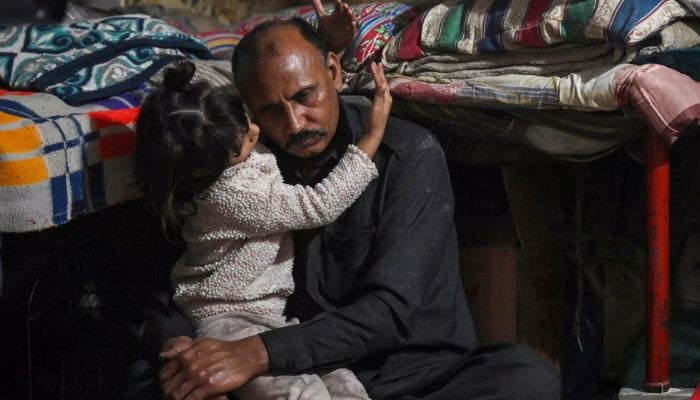
The recent rise in poverty in Pakistan has reopened the poverty debate across academia, policy experts and public discourse. Official estimates revealed that poverty has increased to 28.8 per cent in 2024–25, from 21.9 per cent in 2018–19, reversing the progress made over the past decade.
While much of the discussion has remained focused on one number – the rise in headcount poverty, along with similar yet important explanations such as high inflation, fiscal adjustment, climate-related shocks or the slowing of the economy – the national poverty figure tells only part of the story. The real issue is not that poverty has increased or reversed, but to what extent Pakistan’s poverty reduction was long-lasting and real in the first place? Or was the decline in poverty rate ever as sustainable as we believed it to be?
The answer is not that poverty did not decline. Evidence from past decades clearly shows improvements in household consumption and reductions in measured poverty rates. However, the pace with which these gains have been reversed suggests that much of this progress may have rested on fragile foundations.
There are some deep structural factors and overlooked realities that are essentially important to identify in order to understand why poverty keeps returning: poverty in the country is highly susceptible to economic or natural calamity; expansion of near-poor population that remain at risk to fall back into poverty; inconsistencies in measuring poverty including changes in poverty lines and methodological choices; and deep-rooted persistent inequalities across regions and urban-rural divide as well as inequal distribution of resources and economic opportunities within the country.
In conventional debates, poverty has been treated as a fixed condition rather than a dynamic process, with households classified mostly as poor or non-poor. The previous decline in poverty is mainly attributed to the expansion of the informal sector, rapid urbanisation and high remittance inflows, which did not provide long-term protection against shocks. As a result, households experienced only marginal upward mobility without asset accumulation, savings or job security, leaving millions of people vulnerable to falling back into poverty from even a small shock.
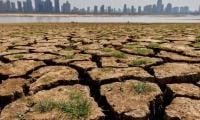
This fragility and poor resilience became evident when successive events like inflation, macroeconomic adjustments, Covid-19 pandemic and country-wide flash floods hit the economy. This led to a shift in poverty discourse, where it is no longer an issue of deprivation but of economic instability, with households moving in and out of poverty rather than achieving a permanent escape.
One of the most under-discussed aspects of Pakistan’s poverty story is the emerging poor population who live just above the poverty line and are at a higher risk of slipping back into poverty during any economic or natural shock. The recent World Bank analysis reports that almost 42 per cent of Pakistan’s aspiring middle class, who are neither poor nor securely middle class, are highly vulnerable and economically insecure. During periods of high inflation or slow growth, these households are likely to fall back into poverty rapidly, leading to sharp swings in national poverty rates. This narrow upward mobility explains why progress made over the years was reversed within a short period of time. While the poverty programs did not entirely fail in reducing poverty, they did not achieve economic security.
Another reason the debate remains incomplete is the way poverty itself is measured. Poverty has mainly been measured by the headcount ratio, defined as the number of people living below a pre-established income or consumption threshold. Although useful, this measure does not take into account the dynamic aspect of poverty – vulnerability of individuals and households to fall back into poverty.
The headcount ratio classifies households as non-poor even if their income levels are slightly above the poverty line, even though a minor shock would push them back into poverty. Such measurement constraints matter because national averages often conceal underlying disparities, particularly in a country where poverty incidence is dramatically uneven across provinces and districts.
According to the recent national survey, the poverty rate is as low as 3.5 per cent in Islamabad and as high as 77 per cent in Tharparkar. This shows how national averages suppress stark spatial inequalities in the country. These disparities became even more pronounced when a multidimensional approach to poverty is taken into account. The latest Multidimensional Poverty Index (MPI) 2025 reports that around 38 per cent of the country’s population is multidimensionally poor, and a further 12.9 per cent is vulnerable to multidimensional poverty.
These inequalities are not incidental; rather, they reflect long-standing discrimination in access to economic resources and opportunities. Regions that have historically lagged in development, such as Balochistan and parts of Sindh, remain trapped in poverty due to limited access to these opportunities and poor service delivery. This would also have major policy implications.
Poverty data is also typically based on large household surveys released at long intervals, which only reflect past conditions. By the time new data is released, the economic conditions may have already changed, reducing the effectiveness of timely policymaking. Also, these measurements capture post-crises outcomes rather than being proactive towards emerging risks and Pakistan’s recent poverty reversal reflects this broader challenge.
The writer is a research fellow at the Lahore School of Economics.