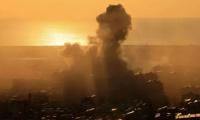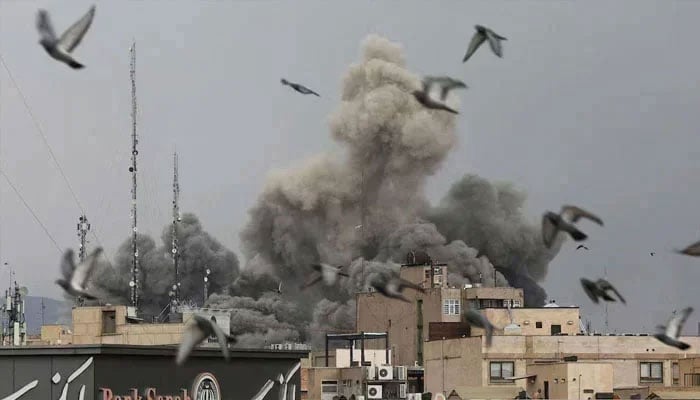
Over the last few weeks, the war between the US-Israel and Iran has escalated significantly, raising fears of a much wider regional conflict.
With shipping already disrupted and oil markets experiencing sharp volatility, analysts warn that Israel or the US might be tempted to consider using tactical nuclear weapons to bring Iran quickly to its knees.
A surrender by Iran, however, is unlikely, as such an act would only make the Iranian population even more determined to resist. Israel is, however, achieving its long-sought objectives of decimating Iran while simultaneously expanding its borders on the pretence of defensive actions.
The present war is being defined by its asymmetric nature. Iran is no comparison to the US or Israel in military might or resources. It has therefore relied heavily on relatively inexpensive unmanned aerial vehicles and cruise missiles to strike at targets across the region. The Chinese and Russian satellite systems have provided Iran the ability to accurately hit US targets in the Gulf countries as well as Israel. Many of these drones cost only tens of thousands of dollars to produce and can be manufactured in large numbers.
Iran is thought to have a stock of 50,000 such drones and is mass-producing them even now so that it can continue drone attacks for many months. In contrast, the defensive systems deployed by the US and Israel to intercept these attacks – such as Patriot missile batteries and other advanced air defence systems – are extremely expensive, costing millions of dollars.
The imbalance has significant strategic implications. Iran’s ability to launch large numbers of low-cost drones means that the US and Israel must respond by deploying high-value interceptor missiles to prevent damage to critical infrastructure and military installations. A prolonged campaign of interception against repeated waves of drones and missiles could impose enormous financial and logistical pressure on US and Israeli defence resources. If the war escalates, Iran can target oil and water filtration installations in the region, which can prove devastating for the Gulf countries as well as for Japan and other South Asian nations.
The primary strategic beneficiary of sustained confrontation with Iran may be Israel rather than the US. Israel has expansionist aims and would like to occupy large regions. Fighting a war that is primarily in the interests of Israel and not the US is foolhardy for the US, and no other US president was drawn into such a situation previously, despite repeated attempts in the past. Trump has, however, obliged and is now trapped.
Moscow has long sought to weaken Western influence in the Middle East and to divert American strategic attention away from other regions. A prolonged confrontation between the US and Iran ties down American military resources in the Middle East, potentially limiting Washington’s ability to focus on other geopolitical theatres such as Eastern Europe or the Indo-Pacific. Second, rising tensions in the Persian Gulf and disruptions to global energy markets tend to drive oil prices upward. As one of the world’s largest energy exporters, Russia benefits significantly from higher global oil prices.
Third, Gulf countries that are wary of prolonged Western military intervention in the Middle East may increasingly seek alternative partnerships or adopt more neutral positions in international politics. The presence of US bases in the Gulf region has resulted in the exact opposite of what they were set up for. It is in the interests of the Gulf countries to have them vacated immediately and rely on regional security pacts with Turkiye, Pakistan and others.
The wars in Iran, Syria, Libya, Iraq and Afghanistan highlight the urgent need for mechanisms capable of stabilising conflicts within the Muslim world before they spiral beyond control. Existing international mechanisms have not always been effective in preventing or containing these conflicts. The UN has deployed peacekeeping missions in numerous regions, but such operations depend heavily on the consensus of the Security Council’s major powers. For this reason, regional organisations have increasingly sought to develop their own mechanisms for maintaining stability. The African Union has deployed peacekeeping missions in several conflict zones across Africa, while European institutions have developed security cooperation frameworks to manage crises within their regions.
Within the Muslim world, there is now an urgent need to create an Islamic Peace Keeping Force (IPKF) that can protect countries from external aggression. Such a force would provide a mechanism for responding rapidly to regional crises before they escalate into prolonged wars or attract large-scale external intervention. In situations such as the current Iran conflict, a credible regional peace-keeping capability could help facilitate mediation, protect civilian populations, and prevent the spread of conflict into neighbouring countries.
A well-designed and strong peace-keeping force would require contributions from multiple member states. A certain figure, such as 0.2 per cent of each country’s GDP, payable annually to a central fund, could be a condition for eligibility. Countries that are financially strong and have strong military capabilities – including Pakistan, Turkiye, Egypt, Saudi Arabia, Indonesia and Malaysia – could lead the initiative by providing contributions in cash or in kind, including trained personnel, logistical support, and operational leadership.
Participating member states could contribute financial resources through a collective peace and security fund dedicated to the purchase of sophisticated armaments, supporting deployments and humanitarian operations. Such a system would distribute responsibilities across the membership while ensuring that operations remain adequately funded.
The mandate of such a force would include several types of operations. It could be deployed to stabilise regions experiencing internal conflict, assist governments in protecting civilian populations and support humanitarian operations during refugee crises or natural disasters. It could also help protect critical infrastructure, such as ports, energy facilities and transportation networks, during periods of heightened regional tension.
Importantly, all deployments would require the consent of the host state or authorisation through collective decision-making within the OIC, ensuring respect for national sovereignty.
The writer is a former federal minister, Unesco science laureate and founding chairperson of the Higher Education Commission (HEC). He can be reached at: [email protected]