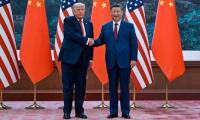
Pakistan’s diplomatic efforts to secure a ceasefire in the Middle East deserve due recognition. One looks forward to the positive outcomes of the Islamabad Peace Summit and its potential to revive the global economy over the medium to long term.
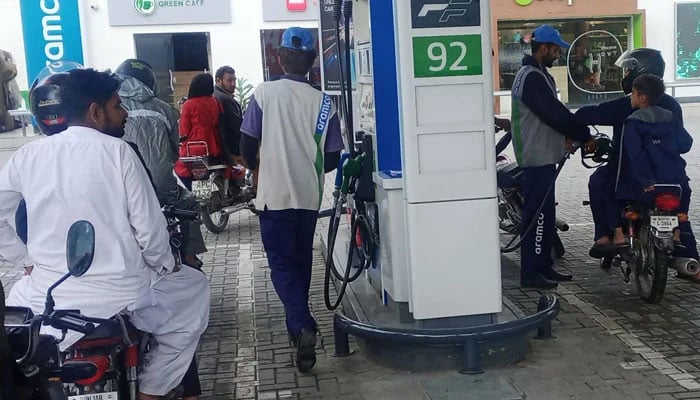
However, short-term diplomacy does not immediately ease supply fears, price spikes or market volatility caused by war, including Pakistan’s recent fuel price decisions. The latter, despite the prime minister’s reduction in the petrol levy, have faced criticism as harsh, and for millions of households, they definitely are.
Petrol and diesel prices directly impact transport fares, food costs, input expenses and inflation expectations. Still, passing through much of the current oil shock is not simply an act of indifference. Pakistan faces a war-induced energy shock at a time when fiscal space is limited, external buffers are still being rebuilt and the IMF programme leaves little room for widespread fuel populism. The government is therefore trying to maintain fiscal discipline, social stability, political capital and programme credibility simultaneously.
Pakistan is not alone. The current oil shock has exposed which economies have the fiscal strength, external buffers and policy room to absorb a sustained rise in fuel costs. Ruchir Sharma argued recently in the ‘Financial Times’ that the countries, both developed and developing, most vulnerable to the present crisis are those with high debt, high deficits and central banks already struggling with inflation. ‘The Economist’, using a similar lens, ranked Pakistan as the second most vulnerable emerging economy to an energy shock. That judgement is not difficult to understand.
Countries are being hit differently for three reasons. The first is dependence on imported fossil fuels. The second is fiscal space. The third is the economy’s energy intensity. A rich importer can often outbid others for scarce supply. A poorer importer cannot. Asia is especially exposed because much of the oil and LNG moving through the Strait of Hormuz is destined for Asian markets. The pressure has therefore surfaced first in economies that import heavily, consume energy intensively and lack the fiscal means to cushion a prolonged shock.
The ceasefire will bring some relief, but not full normality. Oil prices have fallen from their wartime highs and some stranded cargoes may begin moving again. Yet physical markets remain under strain. Shipping confidence has not fully returned. Insurance costs remain elevated. Damaged infrastructure, labour shortages and trust in supply chains may keep supplies tighter and prices higher than pre-war levels for some time.
That is why one expects divergent policy responses to cushion against energy shocks to stay for some time. Some governments are smoothing the blow with subsidies, tax cuts or stabilisation funds. Others are conserving fuel through rationing, lower electricity use, remote work, shorter work weeks and restrictions on official travel.
Thailand and Bangladesh have promoted remote work and reduced air conditioning. Vietnam has encouraged cycling and carpooling. Indonesia has asked civil servants to work from home once a week. Zambia has cut fuel taxes while still facing large increases in kerosene and jet fuel prices. Nepal has shortened its work week. Sri Lanka has capped fuel sales per vehicle.
Pakistan’s response has followed a similar sequence. First came supply management through close monitoring of petroleum stocks and procurement. Then came demand restraint through conservation measures and austerity in official use. Finally, came price pass-through, followed by a selective retreat through the cut in the petrol levy.
This pattern is best understood in light of Pakistan’s fiscal constraints. Governments with stronger balance sheets can delay the pain. Those with weaker ones must distribute it sooner, however unpopular that may be. Pakistan falls in the second group. That is why its pricing policy is more complicated than a simple pass-through story. The Petroleum Development Levy now sits at the centre of the debate. In normal times, it is one tax instrument among many. Under present conditions, it has become one of the few flexible revenue tools available to the state.
The IMF’s position broadly supports this logic. Its March 27 staff level agreement expects Pakistan to maintain a prudent fiscal stance, deliver a primary surplus of 1.6 per cent of GDP in FY26, and move towards an underlying primary balance of 2.0 per cent in FY27. It also points to stronger expenditure discipline and more targeted social protection. That leaves little room for open-ended fuel subsidies. It does allow temporary, targeted and fiscally offset relief. The danger is not short-term use of the levy for relief as such. It arises if cuts in the levy, without compensating measures elsewhere, begin to erode revenue and weaken confidence in the adjustment path.
The macroeconomic consequences are quite foreseeable. Higher fuel prices push inflation up directly through transport, electricity tariffs and gas bills. They also feed into inflation indirectly through freight, food distribution, farm inputs and expectations. The State Bank has already warned that inflation could remain above 7.0 percent through the rest of FY26.
LNG adds another layer of concern. Oil may get the first relief when supply routes reopen. It is reported that 200 tankers carrying 130 million barrels of crude and 42 million barrels of refined fuel are ready to move out of the Gulf once the Strait of Hormuz opens. But LNG is not just a shipping problem. A large part of the strain stems from the damage to Qatar’s capacity itself. The war has knocked out 17 per cent of Qatar’s LNG export capacity, with repairs expected to sideline about 12.8 million tonnes a year for three to five years. That means even if traffic resumes, LNG supply will not return to pre-war normal as quickly as oil flows may. Given Pakistan’s heavy reliance on Qatari LNG, in a market where richer buyers can outbid poorer ones, Pakistan’s gas supplies may remain expensive, if not uncertain.
Compared with peer economies, Pakistan is cushioning the shock less, but its broad direction remains understandable. A government with weak revenues, limited reserves and an ongoing IMF programme cannot behave as though it were an oil-rich state or an economy with ample fiscal headroom. That is why selective relief makes more sense than broad price suppression. I am encouraged to see that targeted support for two and three-wheeler users, through the data triangulation approach I have long argued for on different advisory forums and in these pages, has finally received policy attention and is being implemented.
Pakistan should not return to blanket fuel subsidies under any political pressure. That would weaken the fiscal path, complicate the IMF programme and encourage higher consumption at a moment of external stress. Nor should it rely on an abrupt pass-through without recognising the social and political effects. The better course is to keep pass through as the general principle, while using the levy sparingly and temporarily to finance targeted compensation for lower-income households, small farmers and public transport users through transparent channels. That may help manage the immediate shock. It does not resolve the deeper weakness that the Middle East war has once again exposed: the vulnerabilities of fuel-importing countries.
Even after the war in the Middle East ends, many of them will reshape their energy systems. Some will lean further into nuclear power. Some will revert to coal and for many, including Pakistan, the perfect response lies in renewables. We have already shown that solar can scale quickly when households and firms are given the right incentives. Instead of treating solar as a threat to the system, policymakers should see it as part of the answer to repeated imported fuel shocks.
A well-managed expansion of solar, together with investment in storage, grid modernisation and better pricing design, would reduce exposure to volatile oil markets, ease pressure on the import bill and strengthen energy security over time.
The writer heads SDPI, chairs the board of the National Disaster Risk Management Fund, and serves on the ADBI’s Advisory Board. He posts on LinkedIn @Abidsuleri