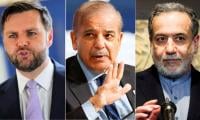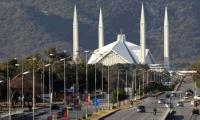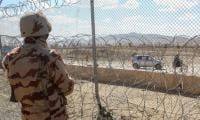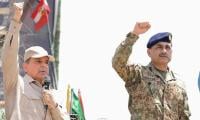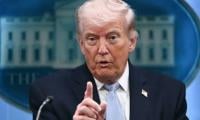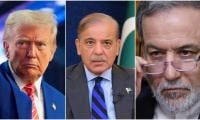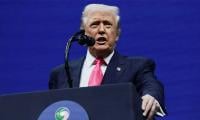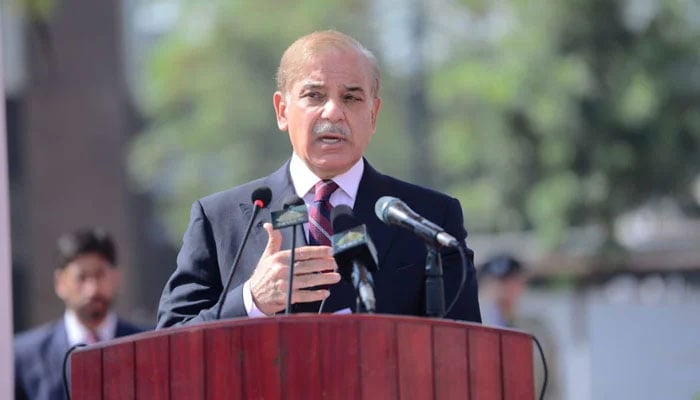
A few minutes after midnight on Tuesday night/Wednesday morning, as tensions edged dangerously close to open war, Prime Minister Shehbaz Sharif made a last-ditch appeal to US President Donald Trump and Iran: extend the deadline, open the Strait of Hormuz and allow a two-week ceasefire to give diplomacy a chance. Within hours, that appeal appeared to bear fruit. Washington paused its planned military action, Iran signalled restraint, and the immediate threat of a wider conflict receded. In an increasingly volatile global order, moments of de-escalation are rare – and when they occur, they demand both recognition and scrutiny. This is one such moment. And the unlikely hero of the moment is Pakistan. This diplomatic miracle by a country caricatured as ‘failed’ for years captures the significance of what has unfolded: a narrow but critical pause in a conflict that threatened to spiral into World War III. The result: a fragile ceasefire and the promise of talks in Islamabad.
For Pakistan, this represents a rare and significant diplomatic success. Historically caught between competing global and regional pressures, Islamabad has often struggled to assert itself as a credible mediator. Yet here, it has managed to carve out space for dialogue where confrontation seemed inevitable. The coordination between civilian and military leadership appears to have been crucial in maintaining this delicate balance. But calling this a ‘miracle’ may also risk obscuring deeper realities. Pakistan has, for now, achieved a pause – and pauses come with challenges. The most immediate challenge lies in the war-mongering, genocidal tendencies of Israel, which continues its attacks on Lebanon. There is also the risk of deliberate or inadvertent escalation, including the possibility of spoilers or false-flag operations. The burden on Pakistan is therefore immense. However, it should be clear that what Pakistan has achieved is already nothing short of spectacular – a genuine diplomatic feat. Sustaining the peace, however, rests primarily with the US and Israel. At a broader level, we are witnessing shifting dynamics in global power. The fact that Washington was willing to pause military action following external mediation signals both the limits of unilateral force and the growing importance of multilateral diplomacy.
For the Arab world, too, this moment may prove instructive. The restraint shown by countries such as Saudi Arabia suggests a recognition that alignment with external powers does not always guarantee security. A more autonomous regional framework – less dependent on the US – is now more necessary than ever in an era where alliances are being rethought in an increasingly multipolar world. For its part, Pakistan has shown that even middle powers can play meaningful roles in crisis diplomacy when they act with agility and coordination. But all such interventions come with limitations. Sustainable peace will require genuine political will from the primary actors, as well as inclusive frameworks that address the full spectrum of stakeholders. For now, the Islamabad talks, set to start on Friday, offer a glimmer of hope. However narrow, however fragile, however frail – a shift from brinkmanship to dialogue should always be appreciated and applauded. At such a moment, it is also important to recognise what this episode represents for Pakistan itself. Too often, domestic discourse is quick to diminish or dissect moments of national achievement through partisan lenses. This is not one of those moments. Pakistan’s diplomatic intervention has, for now, pulled the world back from the brink, and that alone warrants acknowledgement, not cynicism. There are few moments in a nation’s life when internal divisions must give way to a shared sense of purpose. This is one of them. Pakistan has, in this instance, shown the world that it can act as a responsible and effective player on the world stage. That achievement deserves to be owned collectively. Let’s be clear: a new world order is being shaped right before our eyes. And Pakistan is in the room, at the table.