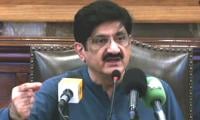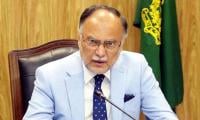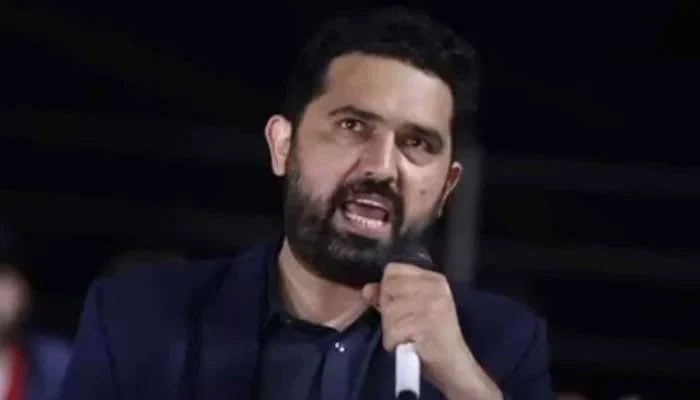
KHAR: Chief Minister Muhammad Sohail Afridi on Sunday said that the provincial government was working to ensure sustainable peace through inclusive engagement with all stakeholders.
Speaking at the Qaumi Amn Jirga at the Bajaur Sports Complex. The chief minister visited Bajaur where he met the local elders.
He talked about the provincial government’s position on peace, development, public rights, and governance.
He added that all political and religious stakeholders had also expressed agreement that military operations were not a viable solution.
He remarked that the government was fully aware of the underlying causes of instability and existing institutional weaknesses.
He stated that the solution lies in taking the public’s voice to the forums where policy decisions are made, and added that they will resort to protest where necessary.
The chief minister said that the merged districts were not being given their due rights and that their National Finance Commission share was being distributed to other provinces.
He added that on one hand resources were not being provided, while on the other, conditions on the ground were being further worsened.
He stated that instead of providing relief, the public was being burdened further, while national resources were being spent on personal luxuries. He questioned what fault the poor people had committed and why they were being made to suffer.
The chief minister underscored that natural resources of the province belonged to its people and future generations, and that these rights cannot be compromised.
He affirmed that the government would pursue all necessary measures to secure these rights. Announcing a major development initiative, the chief minister stated that a comprehensive package of Rs1 trillion was being introduced for the merged districts, with Rs400 billion allocated to the health and education sectors, alongside coverage of other critical development needs.
The chief minister announced the establishment of a university campus in Bajaur, connectivity with the Dir and Swat Motorways, and the operationalization of the Bajaur Nursing College, which remained non-functional since 2007.
He announced that all demands presented in the jirga’s memorandum had been accepted.
He assured that public funds, derived from taxpayers, would be spent on public welfare and that there will be no compromise on development delivery.
He highlighted that all political parties and schools of thought had jointly endorsed a unanimous declaration in the Provincial Assembly stating that military operations were not a solution to establish sustainable peace in the province.
The chief minister said that conflict and war did not benefit the region, destroying infrastructure, weakening institutions, and causing loss of an entire generation of youth.
He noted that the people of Khyber Pakhtunkhwa especially the merged districts endured extensive suffering due to operations, drone strikes, and aerial bombardment, including thousands of funerals and mass displacement of populations, yet durable peace has not been achieved.
He stressed that such a situation cannot be sustained again, and that every effort must be made to avoid a relapse into instability.
He stated that multiple operations had been witnessed over time, and despite 22 major and approximately 16,000 intelligence-based operations, peace was yet to be restored, reinforcing the need for a shift in policy direction.
Reaffirming national commitment, the chief minister stated that the people of tribal districts had willingly embraced Pakistan and they did not require validation of their patriotism. He added that whenever the country faced difficult times, they stood in the front ranks and would continue to do so.
He noted that globally, states prioritized the welfare of their citizens, however, in this context, public interest had often been overlooked in decision-making.
He stated that imposed, closed-door decisions and ineffective policies have contributed to the persistence of militancy.
Without inclusion of primary stakeholders, such decisions cannot yield meaningful outcomes.
The chief minister stated that he has repeatedly proposed the formation of a national jirga comprising political leadership and tribal elders to generate consensus-based, durable solutions but these proposals are continuously being overlooked.
Calling for unity, the chief minister stated that peace and prosperity require collective effort beyond political affiliations.
He urged the public to stand for peace, assuring that the responsibility for development and prosperity will be undertaken by the government, and reaffirmed his personal commitment to stand with the people under all circumstances.
He reiterated that peace, stability, and public welfare remained central to the provincial government’s agenda, and that there will be no retreat from this course.