The world is on the verge of an economic recession. Global GDP is declining. An OECD report projects a decrease of about 0.4pc in global GDP growth (from 3.3pc to 2.9pc) in 2026. At the same time, global debt has surged to $348 trillion, threatening world’s economic, financial, and social systems. The
trade war initiated by United States has further worsened the situation.
Meanwhile, wars and conflicts continue to escalate. It appears United States is seeking more wars. Russia-Ukraine conflict, driven by US and EU, is still ongoing. Instead of working towards a resolution, US has begun creating new conflicts. The US and Israel have attacked Iran, plunging entire region into chaos.
The United States is planning and executing conflicts and trade wars strategically to achieve a clear objective. These conflicts are complex because each one can involve multiple parties. They are designed to maintain its status as a superpower, preserve its dominance, and keep the flawed global order intact to protect its interests.
However, US planning overlook some key aspects. First, centuries ago, Ibn Khaldun described how nations rise and fall and US appears to be following that same pattern. It seems to be in final stage of the cycle he outlined. Second, war has its own dynamics — you can start it, but you cannot fully control its outcomes or consequences. Third, a declining empire may delay its fall through conflicts, but it cannot reverse it. The US can reflect on World War II, when British Empire tried to maintain its power but ultimately declined, while US and USSR emerged stronger. Therefore, ongoing conflicts initiated by US are likely to weaken it further rather than strengthen it.
Despite its efforts and political maneuvering, US has been unable to halt its decline or stop global transformations. The existing global order is losing its influence, and a new order is emerging with new players, including China as a major power. However, China is not interested in empire-building or hegemony. President Xi has presented a vision of a new global order in response to unprecedented global changes: a multipolar world. China believes this can be achieved by reforming current system and transforming it into a multipolar one.
This raises an important question: what new centres of power (poles) will emerge, and which countries will lead them? Historical examples like rise and fall of League of Nations also help us understand global shifts. Additionally, concept of nation-state has become very strong, and any new global order must acknowledge its importance. At the same time, ideological movements have resurfaced in some countries, challenging nation-state concept.
In this context, emerging global order is likely to be multipolar and multilayered. It is expected two major poles will dominate: Global South and Global North. China is likely to lead Global South, while United States will lead Global North.
The US is already an established leader in the North. Meanwhile, China is strengthening its position through initiatives such as Belt and Road Initiative (BRI), Asian Infrastructure Investment Bank (AIIB), Boao Forum, and New Development Bank in collaboration with BRICS. These institutions could eventually rival organisations like IMF, World Bank, and World Economic Forum.
China has also introduced several global initiatives, including Global Development Initiative (GDI), Global Security Initiative (GSI), Global Civilisation Initiative (GCI), and Global Governance Initiative (GGI), all aimed at increasing its global influence.
Within these two major poles, there will likely be multiple layers of sub-poles. In Global South, after China, potential major poles could include Russia, a Muslim bloc (possibly led by Pakistan), Africa, and Latin America. Alternatively, regional organisations such as ASEAN, Arab League, African Union, SAARC (excluding India), and Eurasian groupings (excluding Russia) could serve as poles. In Global North, after US, other poles might include North America, France, Germany, United Kingdom, rest of Europe, and an India-Israel alignment (with India geographically in Global South but strategically aligned with US and Israel).
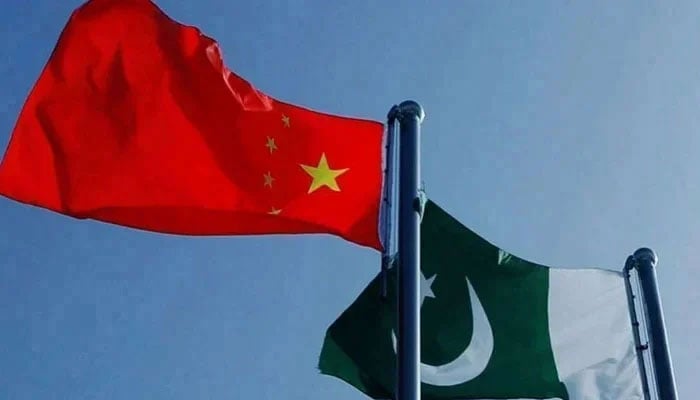
In such a complex, multipolar, and multilayered world, maintaining strong relationships and partnerships will become more challenging. China-Pakistan relationship will also face new dynamics. China will need to adapt to its evolving global role, while Pakistan may take on the leadership of a Muslim bloc, acting as a security provider and stabilising force in regions like Middle East, West Asia, South Asia, and parts of ASEAN.
These new roles will bring both responsibilities and challenges. As a result, China and Pakistan may not be able to focus on each other as closely as before. However, this does not mean their partnership will weaken. Opponents may try to exploit the situation through misinformation and attempts to create divisions between two countries.
To address these challenges, both countries must understand each other’s evolving roles and responsibilities. They should establish new mechanisms and institutions to adapt their relationship to changing global dynamics. The Strategic Dialogue initiative is a positive step in this direction. However, in an era of advanced communication and fifth-generation warfare, both countries must also focus on managing public perception and countering misinformation. Strengthening public diplomacy, communication strategies, and perception management will be essential. This could include creating joint institutions such as a “Joint Communication Centre” or a “Joint Public Diplomacy Centre”.