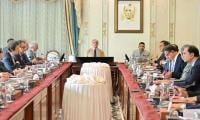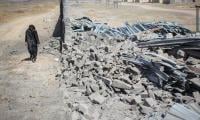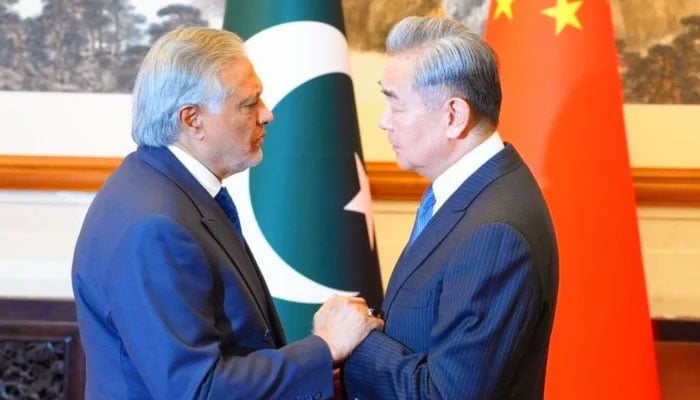
There are moments in global politics when diplomacy feels less like routine statecraft and more like a race against catastrophe. This is one such moment. As tensions in the Middle East spiral dangerously, the joint call by Pakistan and China for restraint, dialogue and an immediate cessation of hostilities offers a necessary lifeline. Pakistan and China have jointly called on the US, Israel and Iran to cease hostilities and start peace talks as soon as possible. The call came following a meeting between Foreign Minister Ishaq Dar and his Chinese counterpart Wang Yi in Beijing on Tuesday, as Islamabad has intensified its efforts to bring an end to the US-Israel war on Iran. Both sides have called for an immediate start to dialogue while emphasising that the sovereignty, territorial integrity, national independence and security of Iran and the Gulf states should be safeguarded. The five-point initiative of China and Pakistan suggests that dialogue and diplomacy are the only viable means of resolving conflicts and that vital infrastructure – energy installations, desalination plants, power generation facilities – as well as peaceful nuclear facilities such as nuclear power plants must remain safe. In a region already on edge, attacks on such targets risk triggering humanitarian disasters far beyond the battlefield. Similarly, the call for safeguarding vessels and crews in the Strait of Hormuz highlights the global stakes of this conflict.
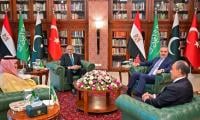
There has been growing speculation that China could act as a guarantor in any future talks between Iran and the US, especially given Tehran’s demand for credible international assurances. Yet there is also realism in the assessment that Beijing may prefer to lend its diplomatic weight without assuming direct responsibility, particularly in a context where trust deficits run deep and where the US and Israel are widely viewed as unreliable negotiating partners. In this, China’s role may be to amplify and legitimise Pakistan’s mediation efforts rather than supplant them. Islamabad, for its part, has moved with notable diplomatic agility. On Sunday, Pakistan hosted foreign ministers from Saudi Arabia, Turkiye and Egypt, signalling a broader regional consensus for de-escalation. Meanwhile, US President Donald Trump has said that regime change in Iran is not Washington’s goal and that his objective is to prevent Iran from acquiring nuclear weapons, adding that the US could wrap up its campaign within two to three weeks. Such statements, however, are met with understandable scepticism. Trump’s unpredictability, combined with shifting goalposts in past conflicts, makes any assurance difficult to take at face value. On the other side, Iran’s Foreign Minister Abbas Araghchi has confirmed that messages have been exchanged with the US, even as he insists that Tehran is not formally negotiating with Washington.
What remains undeniable is the scale and nature of the crisis. Israel and the US started an unprovoked war against Iran on February 28, disrupting not just regional stability but the global energy sector and wider economic systems. Despite all odds, Iran has been fighting back against the world’s sole superpower and an expansionist Israel. While the military balance remains asymmetrical, the political and psychological dimensions of the conflict tell a more complex story. There is a growing perception that while the US and Israel may possess overwhelming firepower, the moral and strategic ground has stayed with Iran. Yet this is not a contest that yields true winners. The longer the war drags on, the narrower the space for diplomacy becomes – and the greater the risk that the conflict metastasises into something far more catastrophic. Depressingly, the phrase ‘third world war’ no longer feels like hyperbole but a plausible outcome of continued escalation. In this bleak landscape, the Pakistan-China initiative offers a rare, if fragile, pathway forward. The alternative is not a happy thought.