UNITED NATIONS/LONDON: Iran on Thursday threatened “crushing” attacks on the United States and Israel, firing missiles at Tel Aviv after US President Donald Trump vowed to bomb the Islamic republic “back to the Stone Ages”, declaring it was time for Tehran to make a deal “before it is too late”, and later also said the tallest bridge in Iran had been destroyed.Iranian military spokesperson Shekarchi said the Strait of Hormuz will be closed “long term” to US and Israel. While Iran’s army commander-in-chief directed the operational headquarters to monitor enemy movements and be ready to counter any method of attack.
Iran’s operational headquarters must monitor “enemy movements with utmost pessimism and accuracy” and be ready to counter any method of attack, the country’s army commander-in-chief Amir Hatami was quoted as saying by state media on Thursday.
Trump posted footage on social media of smoke rising from the B1 bridge in Karaj, around 20 miles southwest of Tehran -- and warned that there would be further destruction unless Iran comes to the table to end the five-week war.
“The biggest bridge in Iran comes tumbling down, never to be used again - Much more to follow! IT IS TIME FOR IRAN TO MAKE A DEAL BEFORE IT IS TOO LATE, AND THERE IS NOTHING LEFT OF WHAT STILL COULD BECOME A GREAT COUNTRY!” Trump said.
Iranian state television had earlier reported two US-Israeli strikes on the bridge.
“A few minutes ago, the American-Zionist enemy once again targeted the B1 bridge in Karaj,” state TV said, adding that an initial strike had caused two civilian casualties.
It said the later attack took place as emergency teams were deployed to the site to help victims of the first strike. The B1 bridge, which was still under construction, is considered the Middle East´s tallest according to Fars/Iranian media, with a 447-foot (136-meter) column.
The secretary-general of the Gulf Cooperation Council (GCC) called for the UN Security Council to authorise the use of force to protect the Strait of Hormuz from Iranian attacks.
Iran has placed a stranglehold on the key shipping lane—threatening fuel supplies and roiling the global economy—in retaliation for US-Israeli strikes that triggered the month-old Middle East war.
“Iran has closed the Strait of Hormuz, prevented commercial vessels and oil tankers from transiting, and imposed conditions on some to pass through the strait,” said the GCC secretary-general, Jasem Mohamed AlBudaiwi.
He was speaking in New York at the first Security Council meeting on cooperation with the GCC, which comprises Saudi Arabia, the United Arab Emirates, Bahrain, Qatar, Kuwait and Oman.
“We call upon the Security Council to assume its full responsibility and take all necessary measures to protect maritime routes and ensure the safe continuation of international navigation,” AlBudaiwi said.
Bahrain has proposed a draft resolution that would greenlight states to use “all necessary means” to assure free transit through the Strait of Hormuz.
However, the measure has divided the 15-member Security Council.
According to diplomatic sources, Russia, China and France—who each hold veto privileges—have voiced strong objections despite several modifications to the text. “The use of force cannot bring peace. Political settlement is the fundamental way forward,” said Chinese ambassador Fu Cong. “Authorizing member states to use force would amount to legitimizing the unlawful and indiscriminate use of force, which would inevitably lead to further escalation of the situation and lead to serious consequences,” he added.
Russia, a long-time ally of Tehran, says it will not support what it calls one-sided measures that fail to address the root causes of the conflict.
Meanwhile, French President Emmanuel Macron has said a military operation to free the strait is “unrealistic.”
A fifth version of the draft text, which the United States supports, was distributed to member states on Thursday and emphasises any force would be “defensive in nature.” ”No country should be able to hold the world’s economies hostage to try to gain leverage in a dispute,” US ambassador Mike Walz told the Security Council.
Bahrain, which currently chairs the 15-member Security Council, has presented it with the fourth draft of a resolution that would authorise “all necessary means” to protect commercial shipping.
The Group of Seven countries and the Gulf Cooperation Council countries will hold a meeting next week to discuss the situation in the Strait of Hormuz, France’s Foreign Ministry spokesperson Pascal Confavreux said at a news conference on Thursday.
British foreign minister Yvette Cooper on Thursday said some 40 countries who joined a virtual meeting on the Strait of Hormuz crisis had demanded “the immediate and unconditional reopening” of the vital shipping route.
“Iran is trying to hold the global economy hostage in the Strait of Hormuz. They must not prevail. To that effect, partners today called for the immediate and unconditional reopening of the Strait and respect for the fundamental principles of freedom of navigation and the law of the sea,” Cooper said in a statement after the talks.
Italy’s foreign minister Antonio Tajani said he had called for a “humanitarian corridor” for fertiliser and other essentials through the Strait of Hormuz to avoid a food disaster in Africa.
A total of 37 countries have signed a statement, first published last month, expressing “readiness to contribute to appropriate efforts to ensure safe passage through” the shipping lane. Britain, France, Germany, Italy, Japan and the Netherlands are among those to have signed it. The United States, China, and most Middle Eastern countries have not, according to a list provided by the UK government.
Russian Foreign Minister Sergei Lavrov discussed the situation around the safety of navigation in the Strait of Hormuz with Iran’s Foreign Minister Abbas Araghchi on Thursday, Russian state news agencies reported.
Oil surged and stocks fell on Thursday after Donald Trump threatened more heavy strikes on Iran and offered no solution to reopening the key Strait of Hormuz. International oil benchmark, Brent North Sea crude, which had fallen below $100 a barrel ahead of Trump’s speech, went on to rally around eight percent to above $109 per barrel, but had retreated to about $106 by late afternoon in Europe. US average retail gasoline prices are now set to climb to between $4.25 and $4.45 a gallon by next week.
Iranian authorities Thursday executed a teenager convicted over January protests after a fast-track trial rights groups labelled as “grossly unfair”, as the Islamic republic ramps up executions during the war with the US and Israel.
Amir Hossein Hatami, 18, was sentenced to death in February along with six others by a Tehran revolutionary court and was hanged at dawn in the notorious Ghezel Hesar prison outside the capital, according to Norway-based NGO Iran Human Rights.
The Iranian judiciary’s Mizan Online website said he acted “against national security” on behalf of Israel and the United States by breaking into “a military centre and destroying it in order to seize the weapons stored there” during the protests.
Iran on Thursday threatened “crushing” attacks on the United States and Israel, firing missiles at Tel Aviv after US President Donald Trump vowed to bomb the Islamic republic “back to the Stone Ages”.
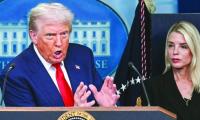
In a White House address, Trump said the US was “very close” to achieving its objectives but warned its attacks would intensify if Iran did not reach a negotiated settlement.
Iran’s response was immediate, with Israeli air defences pressed into action. Four people were reportedly lightly injured in the Tel Aviv area. AFP journalists in Jerusalem hear fresh blasts on Thursday evening.
In Tehran, AFP journalists reported a series of loud explosions, sending reverberations across the city. The targets were unclear.
Iranian state TV said that US-Israeli strikes hit a bridge in Karaj, west of Tehran, twice Thursday, with the first strike leaving two civilian casualties and the second coming as emergency teams were deployed.
The country’s two largest steel plants have meanwhile been forced offline by several waves of US and Israeli attacks, the companies said.
A fire broke out near Iran’s Mashhad airport in the northeast of the country after a projectile hit a fuel tank in the area, media reported.
Strikes hit a century-old medical centre in the Iranian capital, causing extensive damage, the country’s health ministry said.
Despite the bombardments, families gathered at Tehran’s Melat park, with men smoking water pipes and children running around playgrounds, to mark the 13th day after Nowruz, the Persian New Year, when people traditionally picnic outdoors, AFP journalists said.
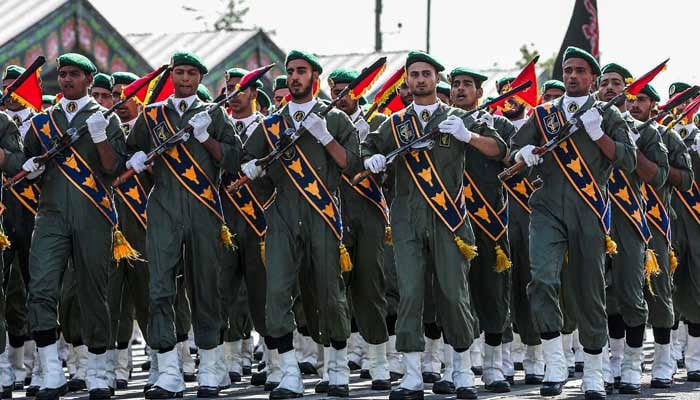
A 30-year-old resident told AFP there was an increase in checkpoints throughout the city manned by Iran’s Revolutionary Guards.
In Israel, Jewish Israelis were celebrating Passover, which some were forced to do underground due to Iran’s attacks.
The war continues to disrupt shipping, with British Foreign Secretary Yvette Cooper stressing the “urgent need” to reopen the Strait of Hormuz, where one-fifth of the world’s oil usually passes.
Trump has urged oil-importing countries to seize the key waterway, which has been virtually closed since the war began, though French President Emmanuel Macron said Thursday a military operation to liberate the strait is “unrealistic”.
Italy called for a “humanitarian corridor” to be opened through the strait for fertiliser, to head off a food disaster in Africa.
Trump has said talks to end the war could be possible with Iran’s new leadership, which he described as “less radical and much more reasonable” than their predecessors.
Tehran has dismissed Washington’s ceasefire overtures, describing US demands to end the conflict as “maximalist and irrational”.
Iraq’s oil export revenues in March dropped more than 70 percent from February, an Iraqi official said Thursday. Even the Himalayan kingdom of Bhutan is feeling the impact as fuel prices spiked.
Eighteen European countries on Thursday urged Israel and Hezbollah to stop fighting as their latest conflict reached one month and with fears over Israeli plans to control part of southern Lebanon post-war.
China’s foreign minister Wang Yi said on Thursday that US and Israeli attacks on Iran were a violation of international law, Chinese state media reported, as he held calls with his EU, German and Saudi counterparts.
Wang also stressed that the UN Security Council (UNSC) — of which China is a permanent member—“should prevent the escalation of conflict, and not legalise unauthorized military actions”, state broadcaster CCTV said, as the international body debates a draft resolution on the use of force in the Hormuz strait.
China said that US and Israeli strikes on Iran were the “root cause” of the Strait of Hormuz blockage.
Iranian authorities have arrested the prize-winning rights lawyer Nasrin Sotoudeh, her daughter said on Thursday, as activists accuse the Islamic republic of cracking down on civil society during the war with Israel and the United States.
UN chief Antonio Guterres warned that the Middle East conflict risked spiraling into a wider war, as he called for an immediate halt to US-Israeli strikes on Iran and Iranian attacks on its neighbors.
”We are on the edge of a wider war that would engulf the Middle East with dramatic impacts around the globe,” the secretary-general told reporters in New York.
Russian President Vladimir Putin on Thursday called for intensifying political and diplomatic efforts to end the Middle East war during a phone call with Saudi Crown Prince Mohammed bin Salman.
Citigroup and Goldman Sachs stepped up security in Paris on Thursday, telling staff they can work from home, after authorities thwarted an attack against another US financial institution that French prosecutors said might have been linked to a pro-Iran group.
Iran said it carried out drone attack on US fighter jets at Al Azraq Base in Jordan on Thursday. Iran’s Fars news agency lists several bridges in Kuwait, Saudi Arabia, Abu Dhabi and Jordan as potential targets of Iranian military operations
Iran’s Revolutionary Guards said that they had targeted an Amazon AMZN.O cloud computing centre in Bahrain in retaliation for attacks on Iran, according to a statement carried by state media.
Iran is drafting a protocol with Oman to monitor traffic in the Strait of Hormuz, the official IRNA news agency cited Deputy Foreign Minister Kezem Gharibabadi as saying on Thursday.
The US embassy in Baghdad warned that pro-Iran armed groups in Iraq may attack the city in the coming one or two days.
Iraq’s oil export revenues in March dropped more than 70 percent from February, an Iraqi official said Thursday, after the Middle East war disrupted the oil industry.
TotalEnergies in March managed to buy almost all oil shipments that did not need to pass through the now-closed Strait of Hormuz, market data shows, enabling the French energy giant to make a massive profit.
Iraq has begun exporting crude using tanker trucks through Syria, its oil ministry said.
The Philippines said that Iran has pledged to allow safe passage for shipments of oil to the import-dependent archipelago through the Strait of Hormuz.
French President Emmanuel Macron said Donald Trump’s mocking comments about his marriage did not merit a response, calling them “neither elegant nor up to standard”.
On Wednesday, Trump made fun of the French president and his wife at a private lunch as he lambasted NATO allies for not joining the war against Iran. The US president imitated a French accent and said that Macron’s wife “treats him extremely badly” and that Macron was still “recovering from the right to the jaw”.
Cyber threats against Iranians both in the country and abroad have surged during wars and protests over the past nine months, a rights group said Thursday.
Iran is not looking to enrich uranium to the levels needed to build an atomic bomb, Tehran’s envoy to the United Nations’ atomic agency told AFP on Thursday.
Reza Najafi, Iran’s ambassador to the International Atomic Energy Agency, also said that US-Israeli strikes on the Islamic republic’s Bushehr nuclear power plant constitute a “war crime” under international law.
Bangladesh has hiked prices of liquefied petroleum gas used for cooking and compressed natural gas in some cars by 29 percent, as the Mideast war worsens an energy crunch.
Several Chinese airlines, including national carrier Air China, said they will raise their fuel surcharges on domestic flights from Sunday as the war in the Middle East drives up oil prices globally.
India will cap monthly increases in aviation turbine fuel prices for domestic flights at 25 per cent, the government said in a statement on Thursday.
The Czech Republic and Romania said they would cut the excise tax on diesel as prices soar because of the Middle East war.
Yemen´s Houthi rebels announced a fourth missile attack targeting Israel on Thursday, after stepping into the Middle East war in support of their ally Iran last week.
Houthi spokesman Yahya Saree said in a video statement that the group had fired a “barrage of ballistic missiles targeting vital Israeli enemy targets” in the Tel Aviv area.
The Israeli military said earlier it had detected a missile launched from Yemen.
Secretary of Defense Pete Hegseth has asked General Randy George to step down as chief of staff of the US Army, a US official said on Thursday.
The official confirmed a report from US broadcaster CBS which said George had been asked to take immediate retirement.