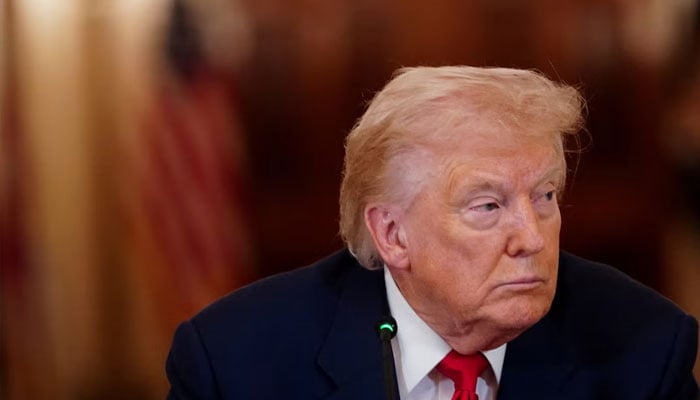
WASHINGTON: Donald Trump was in the Oval Office during the third week of the Iran war when a group of his most trusted advisers came to deliver some unwelcome news.
Trump’s pollster, Tony Fabrizio, found growing public opposition to the war he launched, with gas prices over $4 per gallon, stock markets at multi-year lows and 13 U.S. service members confirmed killed. Key supporters criticised the conflict, and millions were preparing protests. White House chief of staff Susie Wiles warned Trump that the longer the war continued, the more it could hurt his approval and Republicans’ midterm prospects.
A month into the largest oil shock in modern history, global growth forecasts are being slashed, shortages are emerging across Europe and Asia, and energy traders warn the world has yet to feel the full severity of the disruption. A prolonged closure of the Strait of Hormuz, the narrow waterway that is the primary exit route for oil and gas from the Persian Gulf, could tip the global economy into recession.
The mounting political and economic toll has left the president looking for an off-ramp. Trump told them he wants to wind down the campaign, wary of a protracted conflict that could hobble Republicans heading into the midterms. At the same time, he wants the operation to be a decisive success.
Allies say Trump is seeking a way to declare victory, end the fighting and stabilise the economy before political damage deepens. In a primetime address on April 1, he touted military successes while warning of further strikes on Iran’s energy infrastructure. The next day, he told TIME that Iran was eager to negotiate, claiming the U.S. had inflicted devastating damage. Yet within the West Wing, officials, including Defense Secretary Pete Hegseth, were alarmed by Tehran’s widespread retaliatory attacks across the region.
The Pentagon disputes the account. “Long before Operation Epic Fury launched, we had already anticipated, war-gamed, and fully prepared for every possible Iranian response, from the weakest possible reaction to the most extreme escalation,” Hegseth’s chief spokesman Sean Parnell tells TIME.
Yet it seems increasingly unlikely Trump will achieve the broader objectives he trumpeted—permanently blocking Tehran’s path to a nuclear weapon, dismantling its ballistic missile program, and replacing the Islamic Republican’s theocratic hardliners with a friendlier regime—on the compressed timeline the White House has embraced.
In his speech, Trump pledged to ramp up the fighting and wind it down. He has vowed to use unprecedented means to unleash devastating force against Iran but tells TIME that he would never allow artificial intelligence to make lethal decisions. Beyond that, there are very few options he appears willing to take off the table.
The Administration believed a swift, overwhelming opening strike on Iran would force limited retaliation, based on past experience, and avoid a prolonged conflict. However, escalating Iranian responses and widening regional conflict have challenged that strategy, narrowing the president’s options and complicating an orderly exit.
On Feb. 11, Netanyahu came to Washington for a private meeting with the President that stretched for hours. Iran was playing for time, Netanyahu told Trump and would race toward a bomb in secret. The plan of attack was set in motion nearly a month before it was executed, according to two senior U.S. officials. It took weeks of meticulous coordination, much of it conducted in close consultation with Israeli counterparts.
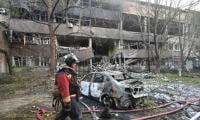
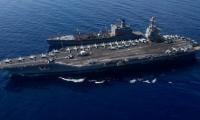
Operation Epic Fury began with a sweeping round of strikes that killed Iran’s supreme leader. Tehran’s response was expansive: volleys of missiles and drones targeting U.S. bases in Iraq and Syria, barrages against Israeli cities, harassment of commercial shipping in the Persian Gulf, and coordinated attacks by proxy militias across the region. Hegseth was among those taken aback.
The administration also appeared to be taken by surprise when Iran reached for a source of leverage: control over the Strait of Hormuz. As gas prices skyrocketed, Trump sought to recast the higher costs as a necessary trade-off—a short-term burden in service of eliminating the threat of a nuclear-armed Iran.
Trump also faced a Catch-22 of sorts. He wants to end the war, but not without achieving objectives that would definitively prevent Iran from inching closer to a nuclear weapon. In internal discussions, some national-security officials warned a sustained assault might do more to accelerate Tehran’s ambitions than deter them. As the fighting drags on, Trump has been struck by Tehran’s resolve.
Independent analysts say reopening the strait would likely require either a sustained military occupation with U.S. boots on the ground or a negotiated end to hostilities. Neither path is simple. Netanyahu and Saudi Crown Prince Mohammed bin Salman are inclined to prolong the conflict, viewing it as a rare opportunity to weaken a common adversary. But they also recognise their dependence on Trump’s timeline.
How the war may shape November’s elections—and what those results will mean for the rest of his presidency—is a question that hangs over Trump’s decisions. Some advisers detect a note of resignation in the president’s thinking. In private discussions, he often points out that the party in power tends to lose ground in the midterms. But history also suggests there can be worse outcomes for a president who takes the nation to war than losing an election.