ISLAMABAD: Pakistan is intensifying diplomatic engagement with the United States, maintaining close coordination to promote de-escalation and facilitate a path towards meaningful negotiations, the Foreign Office said on Thursday.
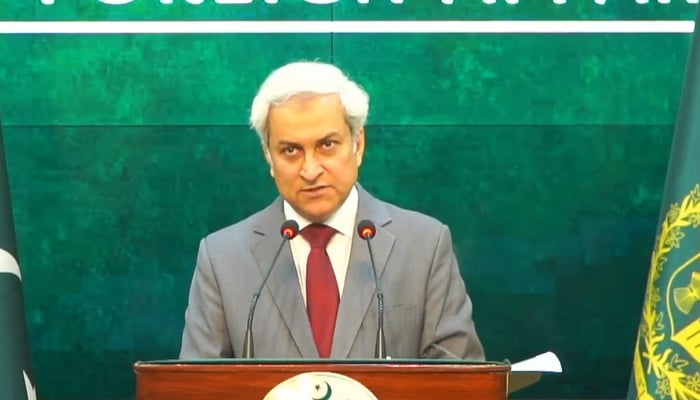
“Pakistan is actively working to create a conducive environment for de-escalation and dialogue,” Foreign Office spokesperson Tahir Andrabi told reporters in Islamabad, adding that the next phase would focus on meaningful negotiations among relevant stakeholders.
The more than month-long war between the US, Israel and Iran, which began on February 28 and has affected the wider Middle East. The conflict has also had serious economic consequences, with Iran’s effective blockade of oil and gas shipments through the Strait of Hormuz since the attacks began, causing economic challenges across the world.
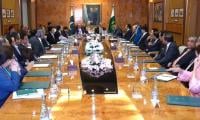
Pakistan also recently hosted key regional ministers — from Saudi Arabia, Turkiye, and Egypt — and relayed messages between Washington and Tehran.
The spokesperson, while speaking during the weekly briefing, said both Iran and the United States had expressed confidence in Pakistan’s role and appreciated its facilitation efforts. Pakistan has also offered to host and facilitate negotiations as part of its broader diplomatic outreach.
Addressing questions, FO official Tahir Hussain Andrabi said there was no information regarding Israel’s role or participation in the ongoing negotiation process. He added that Pakistan remained in contact with the United States, European partners, as well as OIC and GCC countries.
“Despite challenges and obstacles, Pakistan will continue its efforts to promote facilitation and dialogue,” Andrabi said, stressing that the country’s objective was to achieve de-escalation and a sustainable solution through meaningful negotiations.
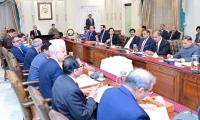
He clarified that discussions around a four-country consultative process should not be prematurely seen as an alliance, noting that the focus remained on enhancing mutual cooperation among participating states.
“These consultations are being held in the context of promoting shared interests and increasing coordination,” Andrabi said, adding that Pakistan was not exerting pressure on any party but supporting dialogue and diplomacy.
He also underscored that Iran, as a sovereign country, determines its own policies, and Pakistan’s diplomatic efforts should not be interpreted as coercive.
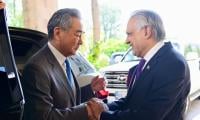
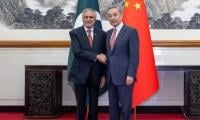
Referring to Deputy Prime Minister and Foreign Minister Ishaq Dar's visit to China, he said that the joint five-point peace plan by China and Pakistan had received recognition at both regional and global levels.
The spokesperson said the plan had been shared with Iran, the United States and other relevant stakeholders, while consultations remained ongoing. He noted that the five points presented in Beijing were aligned with the communiqué issued after the four-country meeting in Islamabad.
Pakistan’s diplomatic efforts, he added, were being seen as a significant step towards achieving a ceasefire, reducing tensions and ensuring sustainable peace.
Pakistan appreciates the support of all countries backing peace efforts, Andrabi said, adding that various global leaders, including those from Malaysia and European countries, have supported Islamabad’s diplomatic outreach.
He said the President of the European Council has also expressed support, while countries seeking peace worldwide are recognising Pakistan’s efforts.
Permission has been granted to 20 Pakistani-flagged vessels to transit, Andrabi said, terming it a positive and constructive step for regional peace and stability.
He added that Pakistani-flagged ships are continuing their movement as per the scheduled plan, although information regarding their destinations and further details is not currently available. Pakistan’s efforts in this regard are being appreciated both regionally and globally, he noted.
Separately, the Foreign Office confirmed that Pakistan had sent a delegation to Urumqi, China, for talks with Afghanistan.
Pakistan is being represented in the talks by senior government officials, he added, noting that details regarding the full composition of the delegation and participants are not currently available.
The meeting in the northwestern city of Urumqi comes after Deputy Prime Minister and Foreign Minister Ishaq Dar travelled to Beijing on Tuesday to meet his Chinese counterpart Wang Yi.
China has sought to mediate in the escalating conflict between Pakistan and Afghanistan. Pakistan says it is targeting extremists who have carried out cross-border attacks.
Islamabad launched air strikes on Afghanistan on February 26 as the Taliban were providing a safe haven to militants carrying out attacks in Pakistan.
There has been no change in Operation Ghazab-lil-Haq and operations are continuing, Andrabi said, adding that security forces have carried out actions against terrorists in recent days.
He stressed that the operation has not been affected by ongoing negotiations and continues as usual.
Separately, the FO spokesperson said India’s attempt to assign a separate identity to the Shia community reflects ignorance of Islam and is a dangerous trend.
He stressed that Shia and Sunni are different schools of thought within Islam and should not be portrayed as majority and minority.
The spokesperson added that India is attempting to fuel sectarianism and create divisions within Pakistani society, warning that such a stance could prove harmful not only for Pakistan but also for India itself.