The article, ‘Demystifying the PTI’ (March 29) by Ahsan Iqbal attempts to intellectualise what is, at its core, a defence of a discredited status quo.
It borrows the language of sociology and structural change yet arrives at conclusions that are politically convenient and analytically weak. It acknowledges that Pakistan has transformed, demographically, technologically and socially, but refuses to confront the most consequential outcome of that transformation: a decisive public rejection of the old political order embodied by parties like the PML-N.
Let us state this plainly: the PTI is not the byproduct of ‘engineered narratives’. It is the political expression of accumulated public grievance, forged over decades of misgovernance, corruption and systemic exclusion. This anger was neither manufactured in television studios nor amplified in WhatsApp groups. It is rooted in lived experience, in years of economic strain, institutional erosion and a governing model that privileged the few while marginalising the many.
When the Panama Papers brought to light offshore financial arrangements linked to global elites, including the family of Nawaz Sharif, they did not create public distrust; they validated long-standing concerns. For many citizens, these revelations reinforced a perception of unequal accountability and deepened the sense that political power had long operated without sufficient transparency. To dismiss this as mere narrative construction is to overlook the public’s capacity to interpret and respond to evidence placed before it.
The article’s insistence that public perception was artificially constructed ignores a fundamental truth: perception does not shift at a national scale without a corresponding reality. Societies do not abandon entrenched political loyalties because of fleeting digital trends. They do so when the system ceases to deliver justice, opportunity, and dignity in any meaningful sense.
The claim that the 2013-2018 period represented a model of governance deserving continuity collapses under scrutiny. Infrastructure was built, yes, but governance cannot be reduced to visible projects alone. It must be judged by economic resilience, institutional integrity and human development. By 2018, Pakistan was confronting a widening current account deficit, mounting external debt, and yet another return to the IMF. Energy policies, often celebrated as solutions, imposed long-term financial liabilities that continue to burden the economy. If this was success, it was success precariously constructed and ultimately unsustainable.
Criticism of the PTI’s 2014 protest as destabilising is equally selective. Political agitation has long been embedded within Pakistan’s democratic practice. Those who now decry it have themselves relied upon it when expedient. Democracy cannot be conditional. It cannot be invoked at convenient times and discarded in challenging times.
The narrative surrounding the 2018 elections continues to be debated, but what is beyond dispute is that electoral credibility must be assessed consistently across time. If concerns about transparency are to be raised, they must be applied universally rather than selectively. In contrast, the 2024 elections have drawn widespread concern, with multiple national observers and international organisations, including the Commonwealth, pointing to serious irregularities that call into question the integrity of the electoral process. These concerns reflect not partisan interpretation, but documented observations that demand accountability and reform.
Beyond elections, the current political environment has been marked by continued concerns regarding human rights. Restrictions on media freedom, limitations on political expression, arrests of opposition figures and constraints on peaceful assembly have contributed to a shrinking civic space. Such patterns, when sustained, risk undermining democratic norms and eroding public trust in state institutions. A democratic system cannot function effectively where dissent is curtailed and participation is unevenly permitted.
The PTI has never claimed infallibility. Its tenure in government was marked by formidable challenges, including economic fragility and the global disruption of Covid-19. Yet it confronted these crises without retreating into denial. It stabilised an economy on the brink, expanded social protection through initiatives such as Ehsaas, and initiated structural reforms in welfare and digital governance. These were not performative gestures, but substantive attempts to address entrenched inequalities.
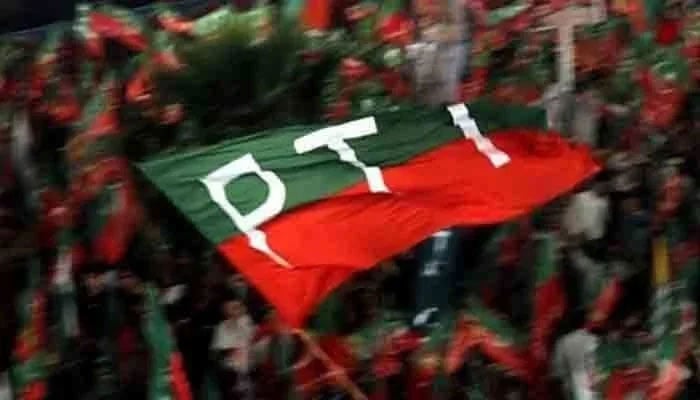
The characterisation of the PTI as a ‘cult’ is perhaps the most revealing weakness in the argument. It substitutes analysis with dismissal. When millions of citizens across class, geography and generation mobilise around demands for accountability and justice, this is not blind allegiance but rather democratic consciousness asserting itself. Political passion is not unprecedented. Figures such as Zulfikar Ali Bhutto inspired similar fervour. What distinguishes the present moment is that this engagement is no longer mediated by traditional gatekeepers of political power.
Notably, the article itself concedes that traditional parties failed to evolve. They sidelined youth, resisted internal democratisation and remained confined within dynastic frameworks. That admission alone explains the PTI’s emergence. When political systems close themselves off, alternatives do not merely arise; they become inevitable.
The discourse on ‘political engineering’ is likewise marked by selective memory. Pakistan’s political trajectory is deeply intertwined with such interventions, and few major actors can claim complete detachment from them. The PML-N itself has, at different junctures, navigated and benefited from alignments with unelected power structures. To now position itself solely as a victim is historically inconsistent.
As for the developments following 2022, procedural correctness alone does not suffice. A vote of no-confidence may be constitutionally valid, but democracy is not defined by procedure in isolation. It is defined by the conditions within which those procedures unfold. When political participation is constrained, media expression curtailed and dissent discouraged, the essence of democracy is eroded, even if its formal structures remain intact.
The central failure of the article lies in its framing. It treats the PTI as an anomaly to be explained away, rather than a political reality to be understood. The PTI is not a distortion of Pakistan’s political landscape but a correction. It represents a rupture with a system that concentrated authority within a narrow elite while excluding the broader citizenry from meaningful participation.
One may dissect demographics, critique digital mobilisation or question leadership styles. None of this alters the underlying reality. The PTI embodies the political awakening of a society that has outgrown patronage politics, dynastic entitlement and unaccountable governance. The party did not manufacture discontent; it gave it voice. It did not invent distrust; it responded to it. It did not impose itself upon the electorate; it was chosen by it.
Until the structural drivers of this transformation, corruption, exclusion, and the persistent absence of accountability, are genuinely addressed, no exercise in narrative reconstruction will reverse it. This is a moment of political reckoning that reflects a deeper and irreversible shift in the relationship between the state and its citizens.
The writer is a senior politician and former federal minister, currently serving as the central information secretary of the PTI.