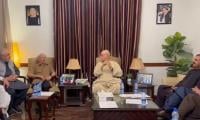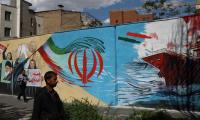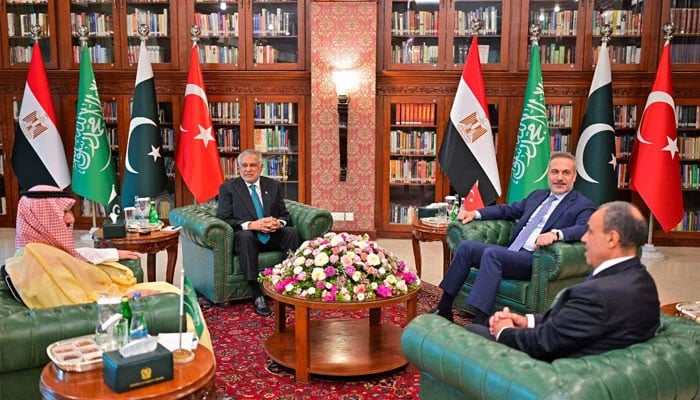
Pakistan’s diplomacy is at the centre of a rapidly shifting and deeply dangerous global moment. The quadrilateral meeting hosted in Islamabad – bringing together the foreign ministers of Pakistan, Saudi Arabia, Turkiye and Egypt – was an attempt, however modest, to inject reason into a region sliding towards wider war. The call issued from Islamabad for an “immediate and permanent end” to the ongoing conflict in the Middle East is important: holding both urgency and realism. As Foreign Minister Ishaq Dar has showed, dialogue and diplomacy remain the only viable path forward. That much is self-evident. The alternative is continued escalation between the US and Iran following the US-Israel attacks, something that risks not only further devastation in Iran but a broader conflagration with global consequences. Pakistan’s offer to facilitate negotiations between Washington and Tehran is, in this context, a significant step. According to official statements, both sides have expressed confidence in Islamabad’s role. This is not a claim of breakthrough, as Prime Minister Shehbaz Sharif has been careful to note. But it does signal that Pakistan is attempting to act as a bridge between long-standing adversaries at a time when credible intermediaries are in short supply.
The stakes are massive here: the war has already triggered serious economic repercussions, particularly through disruptions to oil and gas shipments via the Strait of Hormuz. For countries like Pakistan, heavily dependent on energy imports, such instability translates directly into inflationary pressure, fiscal strain and slower growth. What is unfolding, therefore, is not a distant geopolitical contest but a crisis with immediate domestic consequences. Yet, while Pakistan has stepped up diplomatic engagement – including ongoing consultations with China and other partners – the ultimate trajectory of this conflict lies elsewhere. Much depends on the signals emanating from the White House. The oscillation in rhetoric from US President Donald Trump who one day speaks of de-escalation and the other day pops up with threats to target Iran’s critical infrastructure, is what is making this crisis even more unpredictable and downright dangerous. Diplomacy requires consistency and intent from the principal actors, something the Americans and Israelis lack. It is in this fraught environment that Pakistan’s role should be assessed. Islamabad is not shaping outcomes single-handedly – nor can it. But it is attempting to create space for dialogue at a time when such space is rapidly shrinking. That, in itself, is a contribution.
The regional response also reveals contrasting approaches to this moment. In India, political reactions to Pakistan’s growing diplomatic visibility have ranged from unease to outright criticism, with External Affairs Minister S Jaishankar facing rightful domestic backlash over the perceived drift in India’s foreign policy, particularly its muted stance on the unfolding crisis. Notably, former Indian foreign secretary Nirupama Menon Rao has publicly warned that silence in the face of assassinations, civilian deaths and overt displays of force is not neutrality but often interpreted as consent. These comparisons, however, should not obscure the larger point. This is not a moment for regional one-upmanship but one that demands coherence, credibility and moral clarity from all states with a stake in stability. Pakistan’s diplomacy, if it is to be meaningful, must sustain its current momentum with consistency and restraint. And let’s face it: in a world edging towards fragmentation, even incremental efforts at de-escalation matter. Pakistan’s initiative may not determine the outcome of this crisis, but it has, at the very least, positioned the country on the side of dialogue over destruction.