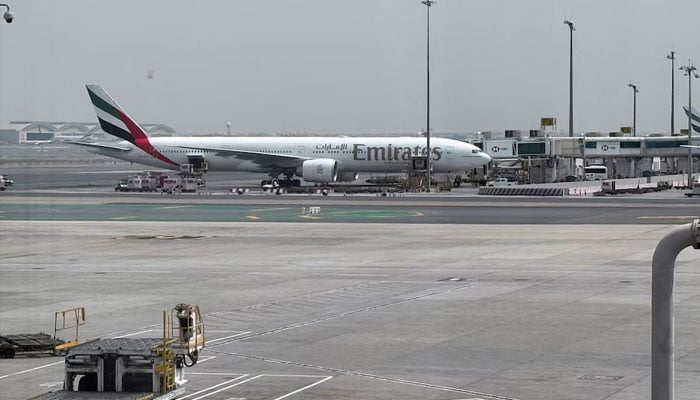
KARACHI: It has been 30 days since the February 28 strikes by the United States and Israel on Iran, yet flight operations across the Middle East remain severely disrupted.
In just one month, approximately 100,000 flights have been cancelled across the region. Conservative estimates suggest that nearly 30 million passengers have been unable to travel due to these cancellations.
The aviation sector is incurring losses worth billions, driven not only by mass cancellations but also by soaring fuel prices. Industry experts warn that these losses could increase further in the coming weeks. Even if the conflict were to end immediately, restoring normal flight operations could take several years.
According to sources, prior to February 27, major Middle Eastern airports handled significant daily traffic. These included Dubai 1,250 flights, Abu Dhabi 480, Sharjah 344, Doha 700, Riyadh 672 and Tel Aviv’s Ben Gurion airport 378, among others.
However, following the escalation, airspace closures in several countries — including Kuwait, Bahrain, Iraq, Lebanon, and Iran — have brought flight operations to a complete halt. Despite difficult conditions, the United Arab Emirates has managed to maintain limited operations, though flight activity across its airports has not exceeded 20pc of normal capacity.
Overall, more than 3,000 daily flights across key Middle Eastern airports are currently either cancelled or non-operational. Due to the prevailing uncertainty, several airports have stopped scheduling flights altogether.
Experts estimate that with an average of 300 passengers per flight, the cancellation of 100,000 flights has impacted over 30 million travellers, highlighting the massive scale of disruption in the region’s aviation network.