KARACHI: Political reactions in India to Pakistan’s growing diplomatic visibility in facilitating contacts between Iran and the US have ranged from sharp criticism to visible unease, with opposition leaders accusing the government of a foreign policy setback.
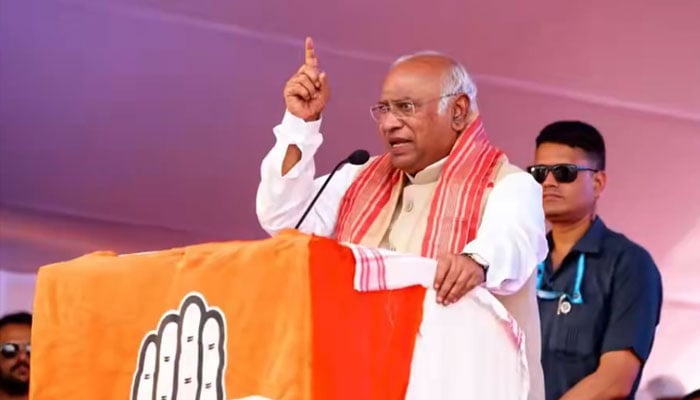
Jairam Ramesh, a member of parliament from the Indian National Congress, led the charge in a strongly worded post on X (formerly Twitter). He first attacked Pakistan in his post -- though the crux of Ramesh’s criticism lay not in this, but in his concern over what he described as Islamabad’s renewed global acceptance. He noted that Pakistan, once “isolated” has now “acquired a new acceptance”, and argued that its emergence reflected “the colossal failure of the Modi [government’s] foreign policy”.
Ramesh also linked this development to India’s ties with Washington, questioning how Indian Prime Minister Narendra Modi had allowed such a shift despite showcasing close relations with US President Donald Trump through high-profile events. He suggested that even efforts to “appease the US” had failed to translate into diplomatic leverage, concluding that the government’s “personality-driven foreign policy” had begun to unravel.
The Congress politician’s remarks reflect what analysts describe as a broader churn in India’s political and media discourse, as Pakistan’s role in regional diplomacy has drawn international attention.
Writing in The Print, senior journalist and editor Shekhar Gupta pointed to the discomfort across the political spectrum. “The opposition will attack the government, because it must. Touchingly, even the government has struggled for the right answers...”.
Gupta observed that Pakistan has historically demonstrated “strategic clarity”, even if such choices have come at a cost. “From day one, Pakistan scored over India on one count: strategic clarity”, he wrote -- though his conclusion was more to placate the Indian government than to offer strategic clarity.
The BJP has had its share of defenders from within India’s fractured media spectrum. Commentary on the Firstpost website by journalist Sreemoy Talukdar criticised the opposition’s reaction as exaggerated and politically driven. “It has been disappointing, though not unexpected, to watch Indian opposition and the usual suspects go ballistic over Pakistan’s ‘mediation’ in Iran”, he wrote, adding that claims of a diplomatic defeat for India were either misplaced or driven by political imperatives.
The intensity of the debate has also coincided with parallel developments in the information space. Just days earlier, Pakistan exposed a coordinated disinformation campaign -- linked to Indian and Afghan social media accounts posing as Iranian users. The campaign falsely alleged that Pakistan had facilitated oil shipments to the US through the Strait of Hormuz, claims widely dismissed by analysts.
Meanwhile, Pakistan’s Foreign Office on Saturday rejected remarks by India’s Ministry of External Affairs regarding Pakistan’s Shia community, terming them “cynical and diversionary” and an “exercise in deflection masquerading as concern”.
The response followed comments attributed by India to COAS-CDF Field Marshal Syed Asim Munir.