ISLAMABAD: A sharp controversy has erupted in energy sector as LNG terminal operators and industry experts challenge Pakistan State Oil’s (PSO) decision to invoke force majeure on LNG supplies, calling the move questionable and potentially unjustified, and damaging to the country’s credibility, even as gas shortages loom.
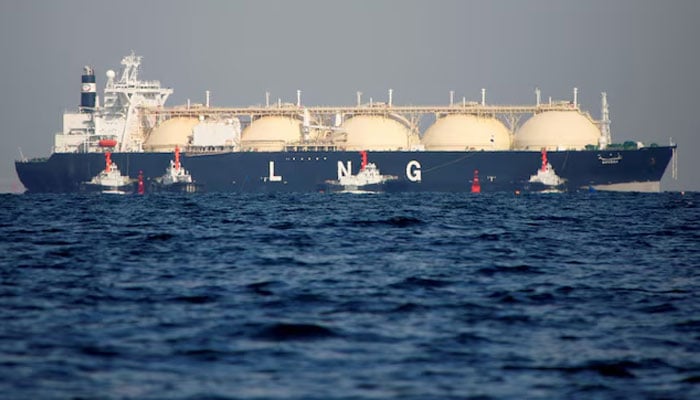
The dispute comes at a critical moment, with regasification of existing LNG cargoes set to end on March 27 and April 2, after which Pakistan is expected to face a complete halt in RLNG availability. Despite this, stakeholders point out that the country’s LNG terminals remain fully operational, continuing to handle marine operations, storage, and regasification without disruption. Under existing contractual arrangements, entities such as PSO and Pakistan LNG Limited are responsible for supplying LNG to these terminals.
At the centre of the disagreement is whether PSO’s force majeure claim is justified. While the company links its decision to an upstream force majeure declared by QatarEnergy amid regional tensions, industry experts argue that upstream disruptions do not automatically validate downstream claims, particularly when alternative supply options remain available in the global market.
Talking to this scribe, the experts insist that Pakistan could still procure LNG from other suppliers, including the spot market, citing recent examples of countries like Bangladesh securing cargoes under similar conditions. They argue that PSO, as the designated LNG supplier, retains the responsibility to ensure availability of gas molecules, regardless of disruptions in contracted volumes. “Terminals are infrastructure assets, not commodity suppliers,” a senior official remarked, emphasising that operational continuity at terminals negates the basis for invoking force majeure at that level.
However, when contacted, PSO spokesperson said the declaration of force majeure was contractually justified and consistent with governing LNG supply arrangements. PSO imports LNG solely for onward sale to Sui companies at the FSRU flange and has no role in terminal operations or regasification. The terminal and regasification agreements are independently managed by Sui companies and PLL.
“The force majeure declared by PSO is a direct consequence of the upstream force majeure declared by QatarEnergy. Under the applicable tripartite agreements between PSO and the Sui companies, such upstream events are recognised and allow PSO to pass through the impact downstream. Therefore, PSO’s declaration is valid and in line with contractual provisions.”
According to the spokesperson, the assertion that PSO should arrange LNG from alternative sources, including the spot market, is not tenable under force majeure conditions. Spot LNG prices are currently around four times higher than PSO’s contracted rates. Procurement at such elevated prices is a policy decision requiring approval from the government and willingness of the buying entities, given the significant cost implications. Furthermore, the operational status of LNG terminals does not invalidate PSO’s force majeure.
Meanwhile, LNG terminal stakeholders have warned that suspending capacity payments under force majeure would yield minimal financial relief—estimated at $15–20 million per month, an amount far lower than the cost of a single LNG cargo. Pakistan imports roughly 100 LNG shipments annually, making such savings marginal in the broader energy equation.
More critically, they caution that any disruption in payments or contractual commitments could undermine Pakistan’s standing with international investors. The country’s LNG infrastructure involves significant foreign investment—from Dutch, American, Qatari, and Singaporean partners—with total exposure nearing $1 billion. Contracts governing these projects have been publicly tendered and honoured for over a decade, and any deviation could complicate future financing and deter investment.
The stakes are particularly high given LNG’s central role in Pakistan’s energy mix. Since the commissioning of LNG terminals in 2015 and 2018, RLNG-based power generation has expanded rapidly, reducing reliance on furnace oil from 45 per cent in 2015 to less than 1 per cent in 2025. This shift has saved the country nearly $5 billion while improving grid stability and supporting industrial growth.
With domestic gas production on the decline and global LNG markets becoming increasingly competitive, experts stress that policy consistency and contractual discipline are essential to securing future supplies. The ongoing dispute over force majeure, they warn, exposes deeper structural tensions in the country’s LNG framework—between suppliers, intermediaries, and infrastructure operators—at a time when the country can ill afford uncertainty in its energy chain.