In my March 13 column, I had cautioned based on Vedic astrology that: “The coming days, particularly around 21 March, when the Sun enters Aries to mark the astrological new year, are predicted to be a crucial turning point for regional geopolitics as well as for Pakistan.”
This year, the moment coincided with heightened tensions in the Gulf, as the world awaited the consequences of an ultimatum issued by US President Donald Trump to Iran over the Strait of Hormuz, amid fears of retaliatory strikes that could destabilise the entire region. Yet, in an unexpected move, President Trump announced a five-day postponement of military action, offering a brief window for diplomacy. That pause aligned strikingly with the very period astrologers had marked as most sensitive.
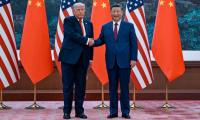
There was a time when Pakistan struggled for diplomatic visibility in Washington. Today, however, the landscape appears to be shifting dramatically, with the US leadership publicly engaging with Pakistan at the highest levels. This transformation raises a critical question: can Islamabad turn this historic moment into a meaningful diplomatic breakthrough in its own best interests?
If Pakistan succeeds in hosting and facilitating constructive dialogue between the US and Iran, the benefits could be very fruitful. Internationally, Pakistan’s diplomatic perception would be significantly enhanced, positioning it as a credible and effective mediator. Such recognition would not only elevate Pakistan’s voice in global forums but could also open the door to deeper economic cooperation, increased foreign investment and stronger defence partnerships.
The economic dividends could be even more pronounced if negotiations lead to the easing or removal of sanctions on Iran. Access to affordable Iranian oil could ease inflationary pressures, while the long-delayed Iran-Pakistan gas pipeline project could finally move forward, ensuring a stable, cost-effective energy supply. Increased bilateral trade and improved border connectivity would further bolster economic prospects for both neighbouring nations.
However, Vedic astrologists are warning that such opportunities of this magnitude come with equally significant risks. Astrological interpretations for early April, associated with the fire sign of Aries, point toward a period of daring decisions and bold actions, but also caution against carelessness and overconfidence. The same energy that encourages hope and initiative can, if unchecked, lead to miscalculation and destruction.
Astrological interpretations also highlight zodiac connections, such as the role of Gemini, ruled by Mercury, in fostering communication and removing misunderstandings in the next month. According to the horoscope made by Vedic astrologers regarding COAS-CDF Field Marshal General Asim Munir and US President Donald Trump, the common zodiac star that brings the two world leaders closer is Gemini, whose ruling planet, Mercury, would play a decisive role in removing global misunderstandings in the coming month. People born under Gemini are leaders, very intelligent and dynamic at every stage of life.
Although Mercury’s influence in the next month may help reduce confusion in decision-making, Mars could affect the pace of events. The stakes become even higher if tensions escalate into a broader Gulf conflict. In such a scenario, Pakistan may find it difficult to maintain neutrality, particularly given its longstanding ties with Saudi Arabia. Our direct or indirect involvement in a regional war would carry severe economic and security consequences ranging from rising energy costs to internal instability.
Today, Pakistan stands at a crossroads where meaningful mediation could not only prevent crises but also secure a stronger, more dignified position internationally. Astrological predictions further suggest that the period, particularly up to April 10, calls for patience and restraint. The role of anti-Pakistan elements, both within the region and beyond, trying to sabotage peace efforts, also needs our urgent attention.
The coming days, if handled with wisdom and care, would mark the beginning of a new chapter in which Pakistan emerges not only as an active player in global affairs but also as a stabilising factor for ensuring regional stability and world peace.
The writer is a member of the National Assembly and patron-in-chief of the Pakistan Hindu Council. He tweets/posts @RVankwani