Pakistan has been continually attacked by TTP militants, now known as Fitna tul Khawarij, since the American withdrawal from Afghanistan in 2021.
Despite the earnest positive engagement with the Afghan Taliban regime, no efforts were made by the regime to abide by its counterterror international law obligations under UN Security Council Resolution 1373. As a consequence, Pakistan suffered 5495 civilian and military casualties between 2021 and March 2026.
The terror network of TTP has been operating right under the benign gaze of the Taliban regime in Afghan provinces like Kunar, Khost, Nangarhar, Paktia and Paktika. Due to its irredentist claims over Pakistan’s territory and a desire to benefit from a conflict economy, the Taliban regime half-heartedly mans around 400 crossing points as opposed to over 1400 points manned by Pakistan. Instead of reining in a farraginous blend of terrorists belonging to every hue and stripe, the Taliban regime has been actively encouraging these entities.
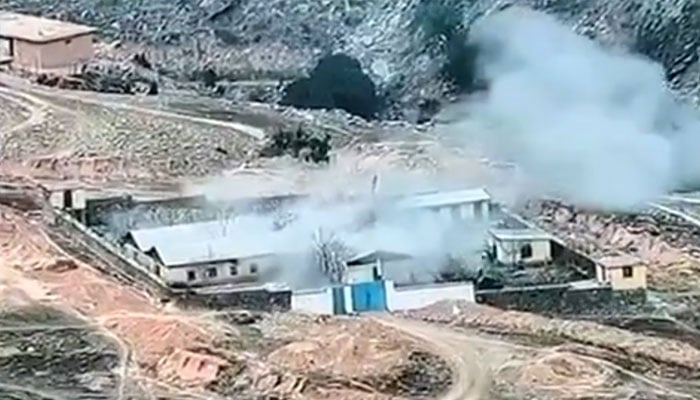
When Pakistan launched intelligence-based operations against the TTP, including some fire raids against their bases, the Taliban regime crossed the Rubicon by attacking Pakistani posts along the border at 53 places. It was a blatant act of aggression by a terror-sponsoring regime in support of a non-state terrorist group operating from their soil. Pakistan responded to that aggression stoutly, launching air, artillery and ground attacks against the points of TTP ingress and egress – as Operation Ghazab Lil Haq.
The ragtag Afghan soldiers bolted, leaving their posts in Pakistan’s hands, while their propaganda arm, like Al Mirsad, went into overdrive, framing these defensive operations as a violation of Afghanistan’s sovereignty. Al Mirsad etc are misrepresenting the precision attacks against the terror training facilities housed in Abu Dujana National Police Training Centre in Kandahar and a drone factory near former NATO Camp Phoenix as attacks against civilian infrastructure.
The politico-strategic objective of Ghazab Lil Haq is to compel the Afghan Taliban regime to renounce support of terrorist entities like the TTP, while the operational objective is to maintain domination along the Pakistan-Afghanistan border to curtail the freedom of movement of the TTP, besides degrading their terror potential.
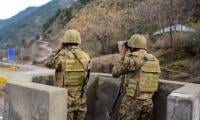
Along the Pak-Afghan border, Pakistan is dominating the hostile fire positions of the TTA, while along the Balochistan front, Pakistan’s security forces continue to dominate the frontier across Qilla Saifullah, Zhob, Naushki, Chaman, Chiltan and Sambaza, through aggressive patrolling and surveillance. Over 243 Afghan check posts have been destroyed, while 43 have been captured, destroying 219 artillery, tank and APC pieces. In addition, Pakistan has targeted 80 terror support facilities in Afghanistan through precise aerial strikes.
The Taliban regime has sent a few low-quality drones targeting civilian and military areas in Kohat, Quetta and Islamabad, but all have been neutralised through soft as well as hard kills by Pakistani air defence elements. The PAF has kept up the tempo through precise targeted strikes against TTA bases, logistic dumps and TTP training camps in Khost, Paktia, Paktika and Nangarhar. The PAF has also targeted Bagram Air Base and Jalalabad Ammunition Depot.
Unfortunately, the Taliban regime is being supported by countries like India, which hosted the Taliban’s acting foreign minister Amir Muttaqi in Delhi in October 2025 and laid the foundations of an anti-Pakistan effort through covert military and material support to the Taliban regime. There have been some reports of drones like Loa-120 and Orbiter 3 UAV, held by the Taliban regime through some foreign country’s collaboration. Whosoever provides them with such weaponry is in breach of international law obligations mandated by the UN Charter for counterterrorism.
Pakistan, meanwhile, is acting in accordance with its right of self-defence under Article 51 of the UN Charter, while selectively targeting terror infrastructure in Afghanistan. Pakistan’s armed forces have conducted thousands of intelligence-based operations to fill the security gaps being exploited by the TTP and its affiliates, while the government has sent back around 2.2 million Afghans to Afghanistan between 2023 and 2026, out of which 68 per cent were undocumented individuals.
Pakistan needs to factor in the historical fact that in the last 100 years of Afghanistan’s existence no non-Pashtun ruler has held the reins in Kabul except Habibullah Khan III,(Bacha-yi- Saqqa) and the need for a credible Pahstun countervailing faction against the ideological puritans from Kandahar as well as the militant Kabul factions, in the event of an internal power struggle in Afghanistan. Pakistan needs to open channels to those Afghan factions that are amenable to reason and leverage the US, Chinese, Russian, Turkish and Saudi influence to put maximum diplomatic pressure on the Taliban regime to withhold its support to terrorist entities like the TTP.
How quickly Pakistan can attain its strategic objectives will be a function of its resolute and consistent approach vis-a-vis the Taliban regime, plus its diplomatic ability to isolate the Taliban regime from powers like India that are supporting the Taliban regime for myopic geopolitical expediencies.
The temporary Eid pause was a good confidence-building gesture by Pakistan. There should be no quarters given, however, to the TTP leadership, even if they lie ensconced in the comfort of Kabul Green Zone, which must feel the inexorable heat of Operation Ghazab Lil Haq.
The writer is a security and defence analyst. He can be reached at: [email protected]